

A renal diet menu is most useful when it gives you a practical place to start without pretending every dialysis patient needs the exact same foods or portions. This 7-day example is built around simple meals, lower-sodium cooking, regular protein, and foods that are commonly easier to fit when potassium or phosphorus need attention.
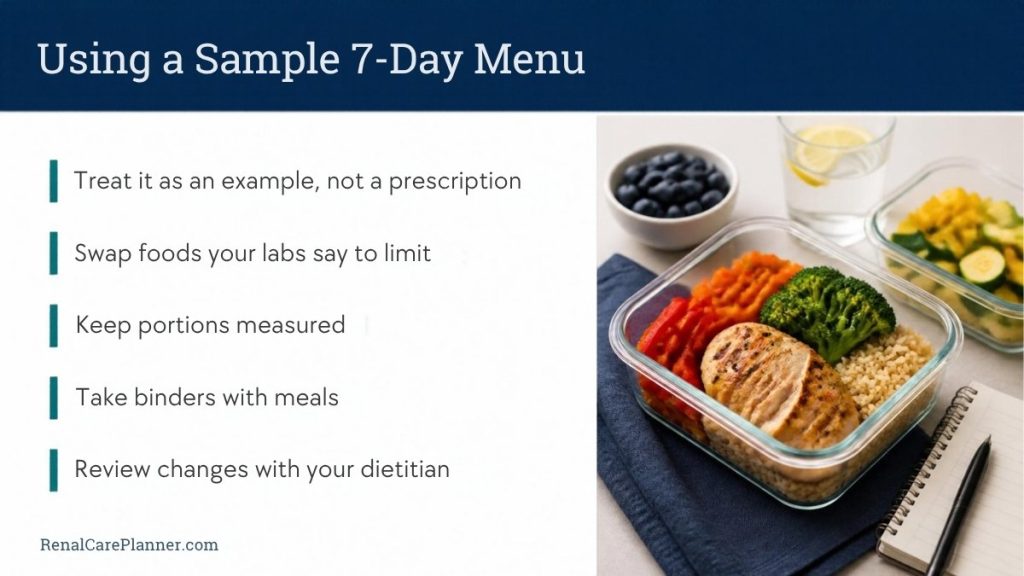
Quick answer: Use this as an example menu, not a prescription. Your potassium, phosphorus, fluid, protein, calorie, carbohydrate, and sodium needs can be different from another person’s, even if you receive dialysis at the same center. Your renal dietitian can help you swap foods and portions based on your labs and treatment plan.

Affiliate disclosure: This article may contain affiliate links. If you buy through one of these links, Renal Care Planner may earn a commission at no additional cost to you. See our Affiliate Disclosure.
Before using a renal diet menu
People receiving hemodialysis commonly need to pay attention to sodium, phosphorus, potassium, protein, and fluid. The exact balance is individualized. The National Kidney Foundation notes that potassium limits depend on blood levels and that people on hemodialysis usually need more protein. Fluid guidance can also vary depending on urine output and treatment schedule.
If you are still learning the basics, read What Can You Eat on Hemodialysis? first. It explains why two patients can receive different diet instructions.
7-day renal diet menu
The meals below intentionally repeat a few ingredients. That makes the plan more realistic for grocery shopping and meal prep, instead of requiring a completely different set of foods every day.
Day 1
- Breakfast: Cinnamon apple Cream of Wheat, plus egg whites if you need additional protein
- Lunch: Lemon-herb chicken rice bowl with cabbage and cucumber
- Dinner: Garlic-herb chicken, white rice, and green beans
- Snack: Apple slices or plain crackers with a small portion of chicken salad
Day 2
- Breakfast: Egg-white pepper scramble with toast and a small serving of berries
- Lunch: Apple-cucumber chicken salad in lettuce wraps or on bread
- Dinner: Baked white fish with couscous and cucumber-lettuce salad
- Snack: Air-popped herb popcorn
Day 3
- Breakfast: Blueberry cinnamon French toast
- Lunch: Leftover fish or chicken with rice and a side salad
- Dinner: Cabbage and turkey skillet served over white rice
- Snack: Pear slices or unsalted crackers
Day 4
- Breakfast: Cream of Wheat with cinnamon and diced pear
- Lunch: Chicken and cabbage pasta
- Dinner: Simple chicken tacos with cabbage slaw
- Snack: Berries with a small piece of toast
Day 5
- Breakfast: Egg-white scramble with bell peppers and toast
- Lunch: Chicken rice bowl with cucumber, lettuce, lemon, and herbs
- Dinner: Baked fish, white rice, and green beans
- Snack: Cinnamon apple toast
Day 6
- Breakfast: French toast with strawberries or blueberries
- Lunch: Chicken salad sandwich with cucumber and lettuce
- Dinner: Turkey and cabbage skillet with rice
- Snack: Herb popcorn or a small serving of grapes
Day 7
- Breakfast: Cream of Wheat with apple and cinnamon
- Lunch: Leftover chicken pasta with cabbage and peppers
- Dinner: Lemon-herb chicken with couscous, cucumber, and lettuce
- Snack: Pear, apple, berries, or another fruit that fits your potassium plan
For step-by-step instructions for many of these meals, see 12 Easy Renal Diet Recipes for Dialysis Patients.
A simple renal diet menu chart
| Meal | Build it around | Easy examples |
|---|---|---|
| Breakfast | Grain + protein + fruit if appropriate | Cream of Wheat + egg whites + apple |
| Lunch | Fresh protein + rice/pasta/bread + vegetables | Chicken rice bowl with cabbage and cucumber |
| Dinner | Protein + starch + vegetable | Baked fish + couscous + green beans |
| Snack | Small portion that fits your labs and fluid plan | Apple, berries, popcorn, crackers, chicken salad |
Grocery list for this 7-day menu
Protein
- Fresh chicken breast
- Lean ground turkey
- Plain white fish such as cod or tilapia
- Eggs or carton egg whites
Grains and starches
- White rice
- Pasta
- Couscous
- Cream of Wheat
- Bread
- Small flour tortillas
- Plain popcorn kernels or unsalted popcorn
Fruit
- Apples
- Pears
- Blueberries or strawberries
- Grapes
Vegetables
- Cabbage
- Cucumber
- Bell peppers
- Onions
- Green beans
- Lettuce
Flavor and pantry basics
- Olive oil
- Lemon or lime
- Cinnamon
- Garlic powder
- Onion powder
- Black pepper
- Dill, parsley, oregano, cumin, or paprika
Make the menu easier to follow
A good renal cookbook can help when you are tired of repeating the same meals. Our kidney-friendly cookbook guide compares beginner and meal-planning options and explains why dialysis patients should be careful with protein advice written for pre-dialysis CKD.
One beginner option in the roundup is The 30-Minute Renal Diet Cookbook for Busy Beginners. Treat any general renal cookbook as inspiration, then compare its portions and protein guidance with your dialysis dietitian’s recommendations.
How to adjust this menu when potassium is a concern
Potassium limits are not the same for everyone. If your care team has told you to lower potassium, serving size matters. NIDDK lists foods such as apples, berries, grapes, pears, pineapple, bell peppers, cabbage, cucumber, green beans, lettuce, and several other fruits and vegetables among lower-potassium choices when eaten in the listed serving sizes.
That does not mean you need to eat only those foods. It means they can be useful starting points when your potassium is running high and your dietitian has asked you to make changes.
How to adjust this menu when phosphorus is a concern
One practical place to start is with packaged foods. NIDDK recommends checking ingredient lists for phosphorus additives, including words containing “PHOS.” Freshly prepared proteins and basic ingredients can make it easier to see what is actually in your meal.
If you take a phosphorus binder, use it exactly as prescribed. Do not change the dose or timing based on an online menu.
How to adjust this menu for diabetes
If you also have diabetes, your meal plan needs to account for carbohydrate amounts and blood glucose goals as well as dialysis nutrition. Do not use the fruit, bread, rice, or snack portions on this sample menu as your personal diabetes plan. Ask your renal dietitian or diabetes care team how to adjust portions.
How to adjust this menu for fluid restriction
Some foods count toward fluid even when you do not drink them from a cup. Soup, gelatin, ice cream, popsicles, and other foods that are liquid at room temperature are common examples. Many fruits and vegetables also contribute water. Your care team should give you an individualized fluid goal if you need one.
See How to Manage Fluid Restriction on Dialysis for more practical ideas.
Questions to bring to your renal dietitian
- Which of my recent labs should guide my food choices right now?
- Do I currently need to limit potassium?
- How much protein should I aim for in a meal?
- What is my sodium goal?
- How much fluid can I have each day?
- Do my diabetes medications change how I should use a sample menu like this?
- Which foods do I not need to restrict right now?
Frequently asked questions
Is there one official renal diet menu for dialysis patients?
No. Dialysis diet plans are individualized. Lab values, remaining kidney function, dialysis schedule, medications, nutritional status, diabetes, and appetite can all change the plan.
Can I repeat meals during the week?
Yes. Repeating a few breakfasts or lunches can make grocery shopping and cooking easier. Variety matters over time, but a menu does not need seven completely different breakfasts, lunches, and dinners to be useful.
Can I use a CKD meal plan if I am on dialysis?
Use caution. Earlier-stage CKD meal plans may intentionally reduce protein, while people receiving hemodialysis commonly need more protein. That is one reason RCP separates general renal-diet content from dialysis-specific guidance.
Free tools: Track drinks and high-fluid foods across the week with the Fluid Log, and note how the menu worked for you in the 90-Day Dialysis Planner.
Related Renal Care Planner resources
- 12 Easy Renal Diet Recipes for Dialysis Patients
- What Can You Eat on Hemodialysis?
- Best Kidney-Friendly Cookbooks for a Renal Diet
- How to Manage Fluid Restriction on Dialysis
Sources
- National Institute of Diabetes and Digestive and Kidney Diseases: Eating & Nutrition for Hemodialysis
- National Kidney Foundation: Hemodialysis and Your Diet
General education only. This sample menu is not a prescribed renal diet and does not replace individualized guidance from your renal dietitian, nephrologist, or dialysis care team. Your nutrition and fluid needs may change over time based on labs, treatment, medications, and health conditions.