

Cooking for someone with kidney disease can turn an ordinary question like “What should I make for dinner?” into a much bigger job. Caregivers may be trying to balance sodium, potassium, phosphorus, protein, appetite, fluid limits, diabetes, and the person’s own preferences at the same time. The goal does not need to be a perfect renal meal. It needs to be something manageable, repeatable, and appropriate for the person you are helping.
Quick answer: For caregivers, the most useful renal cooking resources are often the ones that reduce decisions: 30-minute meals, five-ingredient recipes, simple grocery lists, and short meal plans. Use them as practical starting points, then adjust recipes around the nutrition guidance the person’s renal dietitian has actually given them.

Affiliate disclosure: This page contains Amazon affiliate links. If you click a link and make a qualifying purchase or sign up for an eligible Amazon program, Renal Care Planner may earn a commission or bounty at no additional cost to you. As an Amazon Associate we earn from qualifying purchases. See our Affiliate Disclosure.
Why quick renal cooking matters for caregivers
Caregivers are often doing more than cooking. There may be transportation, appointments, medications, treatment days, work, children, and ordinary household responsibilities happening at the same time. A recipe that technically fits a renal diet but takes an hour and fourteen ingredients may not be useful on a real Tuesday night.
That is why quick-cooking kidney resources can be valuable. The best ones reduce prep time and decision fatigue without pretending that every person with kidney disease needs the same restrictions.
What to look for in a caregiver-friendly renal cookbook
- Short ingredient lists. Five or six ingredients are easier to repeat and keep stocked.
- 30-minute or less meals. Useful when cooking is only one part of the caregiving day.
- Meal plans and grocery lists. These reduce the number of decisions that have to be made each week.
- Clear serving sizes. Portion size can matter as much as the food itself.
- Nutrition information. Sodium, potassium, phosphorus, and protein information can help when comparing a recipe with the person’s individualized plan.
- The correct stage of kidney disease. A stage 4 CKD cookbook is not automatically appropriate for someone receiving hemodialysis.
Quick renal cooking books caregivers may want to browse
The Stage 3 Kidney Disease Mediterranean Diet Cookbook for Seniors
Why it may appeal to caregivers: The 5-ingredient, 20-minute format is exactly the kind of low-friction cooking structure that can help when a caregiver is juggling meals with appointments, medications, transportation, and other responsibilities.
The book is positioned by its publisher for adults with stage 3 CKD and uses a Mediterranean-style approach. Renal Care Planner does not independently endorse claims that a cookbook can slow CKD, prevent dialysis, or restore energy.
Important: This is an earlier-stage CKD book, not a dialysis-specific cookbook. If the person you care for receives hemodialysis, use it for recipe ideas only and compare the nutrition guidance with their renal dietitian’s recommendations.
The 30-Minute Stage 4 Kidney Disease Diet Cookbook for Seniors
Why it may appeal to caregivers: The title is built around quick preparation, five-ingredient recipes, and a 28-day plan. That combination can be especially useful for someone regularly preparing meals for an older adult with stage 4 CKD.
At the time this list was prepared, the title was shown as included with Kindle Unlimited for eligible members, with a paperback option also available.
Important: This is a stage 4 CKD cookbook, not a dialysis-specific cookbook. If the person you care for receives hemodialysis, their protein and other nutrition targets may be different.
The Newly Diagnosed Stage 4 Kidney Disease Diet Cookbook for Seniors
Why it may appeal to caregivers: More than 150 recipes and a structured 30-day meal plan can reduce the weekly “what do I cook?” problem, especially when helping an older adult who is newly adjusting to kidney-diet changes.
At the time this list was prepared, the title was shown as included with Kindle Unlimited for eligible members.
The Practical Food List for Kidney Disease Bible
Why it may appeal to caregivers: Sometimes the difficult part is not cooking the recipe. It is knowing what to buy. A food-list format plus a 28-day plan can make grocery planning easier for someone shopping and preparing meals on another person’s behalf.
At the time this list was prepared, the title was shown as available through a Kindle Unlimited trial for eligible readers.
What to Eat on Dialysis When Nothing Sounds Good
Why it may appeal to caregivers: Poor appetite and nausea can make meal preparation especially frustrating because the person may reject foods they normally eat. This title is directly focused on stage 5 kidney disease and dialysis, making it more relevant to caregivers supporting someone whose appetite has become difficult.
The supplied Kindle price at the time this list was prepared was $2.99.
A simpler way to plan the week
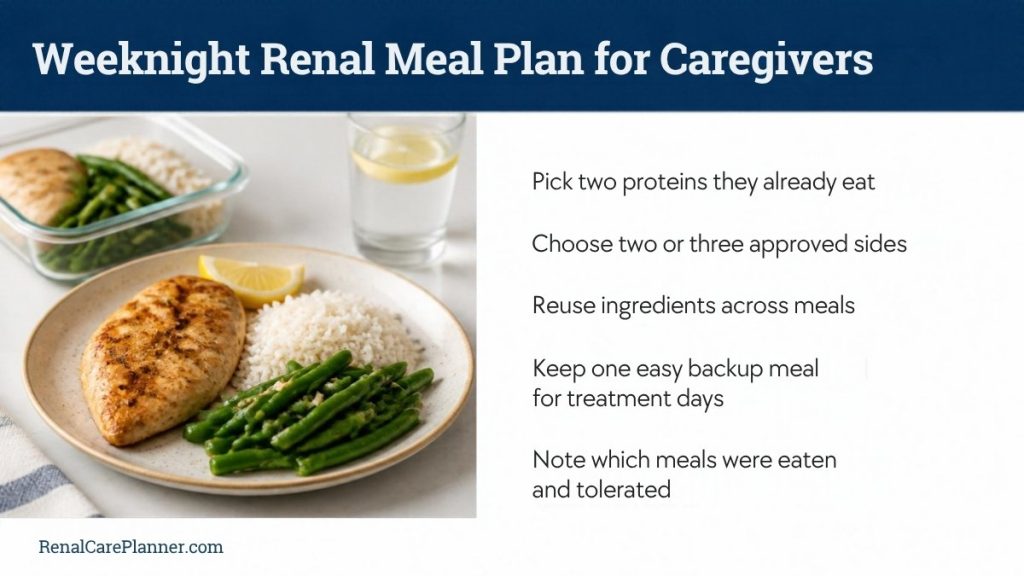
Instead of trying to invent seven completely different dinners, caregivers can make the week easier by repeating a basic structure:
- Choose two simple proteins the person already eats.
- Choose two or three side dishes that fit their current guidance.
- Repeat ingredients across several meals so groceries get used.
- Keep one very easy backup meal for treatment days or low-appetite days.
- Write down which meals were actually eaten and tolerated well.
This is often more useful than chasing a perfect meal plan that is too complicated to maintain.
If the person you care for is on dialysis
Be careful with generic “renal diet” cookbooks. Many are written for people with earlier-stage CKD and may emphasize lower protein. People receiving hemodialysis commonly need more protein, and potassium, phosphorus, sodium, and fluid recommendations can change based on labs and treatment.
Start with What Can You Eat on Hemodialysis? for the basic differences, then use cookbooks for ideas rather than as a replacement for the renal dietitian’s plan.
Free tools: Keep binder and medicine timing in view while you plan meals with the Medication List, and note which meals were eaten and tolerated in the 90-Day Dialysis Planner.
Related Renal Care Planner resources
- What Caregivers Should Know: Supporting Someone New to Dialysis
- What Can You Eat on Hemodialysis?
- Best Renal Diet Cookbooks on Kindle
General education only. Renal Care Planner does not provide individualized nutrition advice. Kidney-diet recommendations vary by kidney function, dialysis status, lab results, medications, urine output, diabetes, appetite, and other health conditions. A caregiver should follow the nutrition plan provided to the person receiving care and contact their renal dietitian or care team when that plan is unclear.