

Driving yourself to dialysis can feel like a big piece of independence. You do not have to wait on anyone, you come and go on your own schedule, and you do not have to ask family for one more favor. Many people on hemodialysis do drive. But the drive home is different from the drive there, and it is worth thinking through before a rough treatment day makes the decision for you.
Quick answer
There is no single yes-or-no answer. Whether you can safely drive home depends on how you usually feel after treatment and how you feel on that particular day. Hemodialysis can cause low blood pressure, dizziness, cramps, and tiredness that lasts for hours. Talk with your care team about your own pattern, never drive if you feel lightheaded, weak, confused, or not yourself, and always have a backup ride ready for the days when driving is not safe.
Why the drive home is different
During hemodialysis, extra fluid is removed from your body over a few hours. According to the National Institute of Diabetes and Digestive and Kidney Diseases (NIDDK), common side effects include sudden low blood pressure, which can cause weakness, dizziness, or nausea, and muscle cramps. Many people also feel tired or washed out for several hours after a standard treatment.
None of those are things you want while merging onto a freeway. Some people feel fine after every treatment. Others feel fine most days and wiped out on a few. The important thing is to know your own pattern and to be honest with yourself about the days that are off.
For more on why blood pressure can drop, see Why Does Blood Pressure Drop During Dialysis?
Signs it’s a “not today” day
Consider not driving, and tell staff before you leave, if:
- Your blood pressure dropped during treatment or staff had to give fluid or stop early
- You feel lightheaded, dizzy, or unsteady when you stand
- You had bad cramps that are still lingering
- Your vision is blurry or you feel foggy or confused
- You feel unusually weak or exhausted
- You took a new medication that makes you drowsy
- A needle site is still bleeding or needs attention
If you are unsure, that is your answer for today. A ride home costs much less than an accident.
If this sounds familiar
You have driven yourself home every treatment for a year. Today your pressure dropped near the end, and you still feel a little floaty in the parking lot. You tell yourself it’s only 15 minutes. That is exactly the day to sit back down in the lobby, let staff know, and call your backup ride.
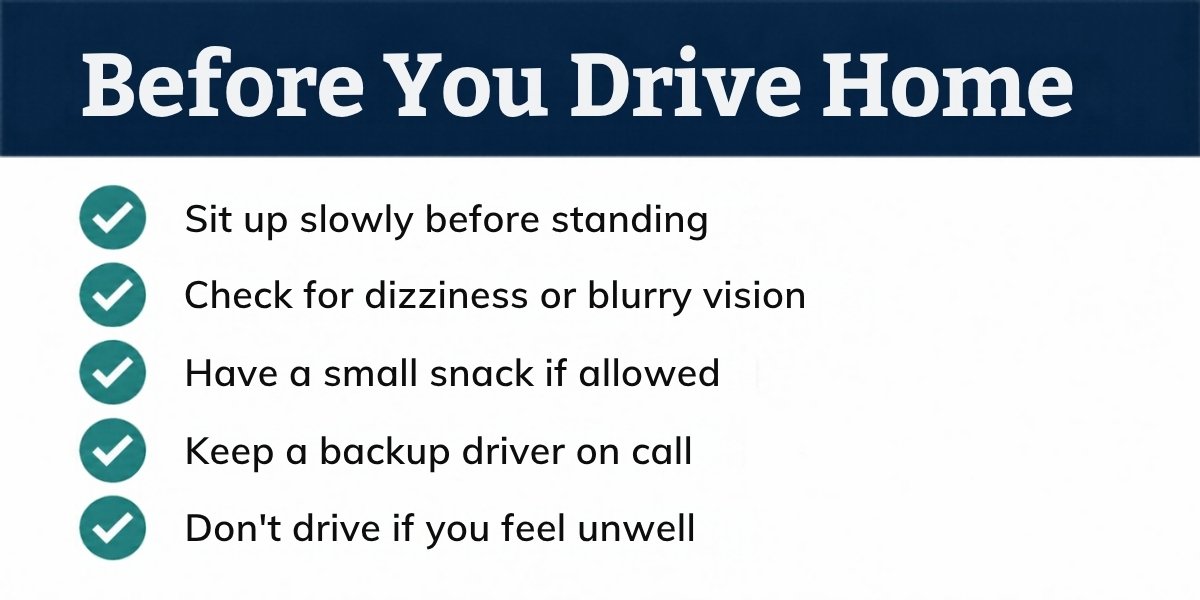
Before you get behind the wheel
- Give yourself time. Sit in the lobby for a few minutes before walking out, and stand up slowly.
- Check in with staff. Ask how your blood pressure looked at the end of treatment if they didn’t tell you.
- Do a quick self-check in the car. If you feel off once you are seated, don’t start the engine.
- Protect your access. Avoid seatbelt pressure across a fresh needle site on a fistula or graft arm.
- Keep the drive simple. Avoid side errands right after treatment if you tend to fade later.
The first weeks of dialysis
NIDDK notes that adjusting to hemodialysis can take a few months, and the first weeks often bring the most changes in how you feel. Many people find it helpful to have someone else drive at first, until they know their usual pattern and their care team has fine-tuned their treatment. See Adjusting to Dialysis: What the First 90 Days Can Really Be Like.
Build your backup plan now
Even confident drivers need a plan B. Put these in your phone before you need them:
- One or two people who can pick you up on short notice
- A rideshare or taxi app, set up and ready to use
- Your health plan’s transportation benefit number, if you have one
- Where you can safely leave your car overnight if needed
Your dialysis social worker can help you find transportation programs in your area. See What to Do If Your Ride to Dialysis Falls Through and Dialysis Transportation in California.
Questions to ask your care team
- Based on how my treatments have gone, do you have any concerns about me driving home?
- Are any of my medications likely to make me drowsy or dizzy after treatment?
- What signs should make me call for a ride instead of driving?
- If my blood pressure drops during treatment, should I wait before leaving?
- Can the social worker help me set up a backup transportation option?
Know your pattern
Writing down how you feel after each treatment, including any blood pressure drops, makes it easier to spot which days are likely to be “not today” days. The free Daily Treatment Tracker keeps it to one row per treatment.
Questions for My Dialysis Team →
Want it all in one place? The 90-Day Dialysis Planner keeps treatment notes, patterns, and questions together for three months.
Where to go next
- You feel wiped out after treatment: Adjusting to Dialysis: The First 90 Days
- Your blood pressure drops: Why Does Blood Pressure Drop During Dialysis?
- You get cramps: Why Do I Get Cramps During Dialysis?
- You need another way to get there: What to Do If Your Ride to Dialysis Falls Through
The main thing to remember
Driving yourself can be a real source of independence, and many people on dialysis do it. But how you feel after treatment can change from one session to the next. Know your usual pattern, check in with yourself and staff before you leave, and keep a backup ride ready so a “not today” day is an easy call.
Sources
General education only. This guide offers general information and does not decide whether it is safe for you to drive. Driving safety depends on your health, treatment, medications, and how you feel on a given day. Talk with your care team about your situation, follow your state’s driving rules, and do not drive if you feel unwell. In an emergency, call 911.