

When a child starts hemodialysis, school can quickly feel like one more thing to manage. Treatments take big blocks out of the week, energy comes and goes, and you may worry about a catheter or fistula in a crowded hallway. The good news is that schools have tools for exactly this situation. With the right plan in place, many children on dialysis keep learning, keep their friends, and stay connected to normal childhood.
Quick answer
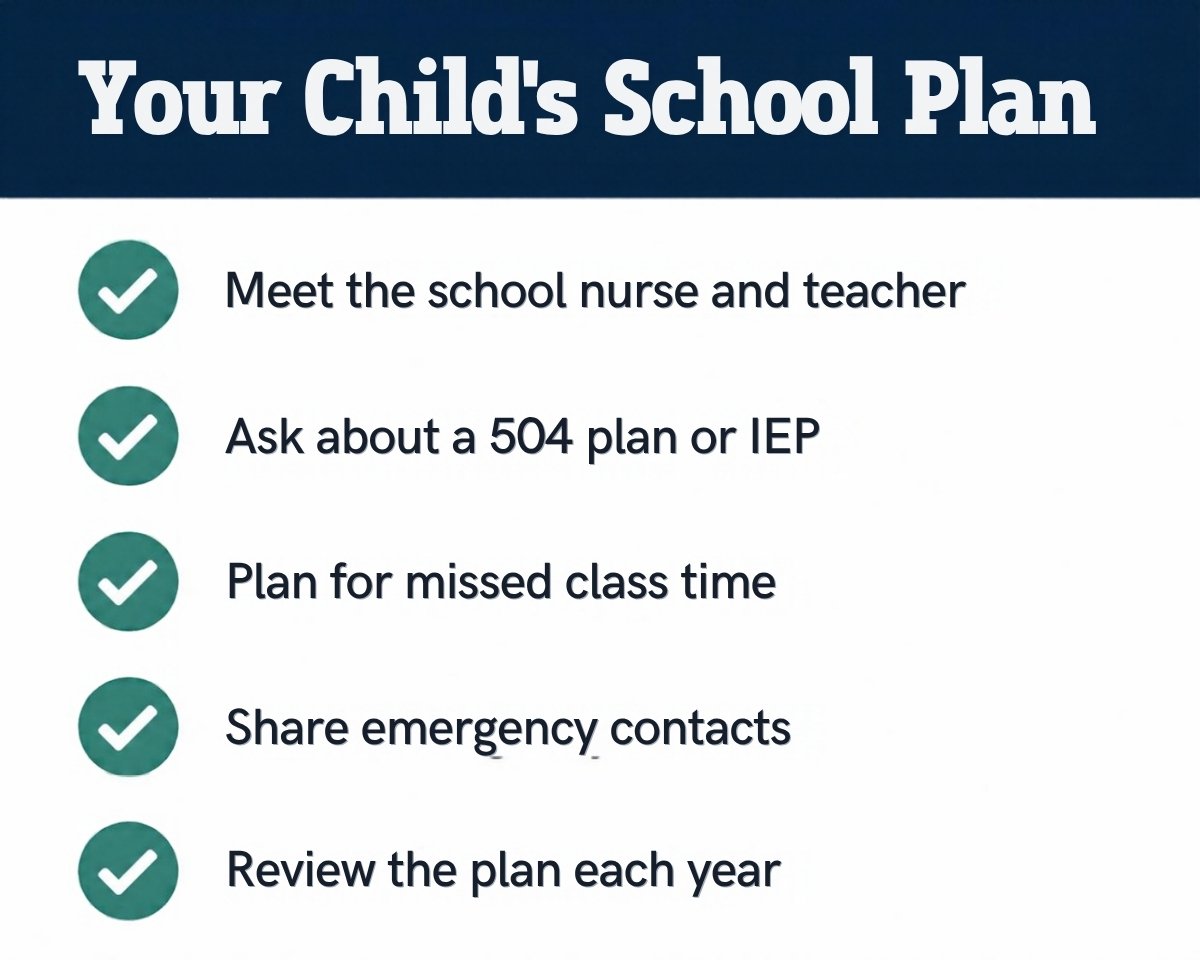
Meet with the school early, ideally the school nurse, your child’s teacher, and a counselor or administrator. Set up an individualized health plan that covers medications, access protection, and emergencies. Ask about a 504 plan or an IEP for formal accommodations. Plan for frequent absences, since a guide from the Council for Exceptional Children notes that students on dialysis often miss about three full or partial days a week. Options like partial-day schedules, shortened assignments, and home or hospital instruction can help. Your child’s dialysis social worker can help you coordinate.
The first school meeting
Ask for a meeting before your child returns to school, or as soon as possible after starting dialysis. Useful people to include:
- The school nurse
- Your child’s teacher or teachers
- A counselor, administrator, or 504/special education coordinator
- If possible, someone from your child’s dialysis or nephrology team, by phone or letter
Bring your child’s treatment schedule, a medication list, and a letter from the care team describing what the school needs to know.
The individualized health plan
The Council for Exceptional Children’s tip sheet recommends an up-to-date individualized health plan that all staff working with the student understand. It typically covers:
- Medications given during the school day
- How to protect the access, especially a catheter, from bumps and pulling
- What to do in an access emergency, and an emergency kit that stays with the student
- Food and fluid guidance from the renal dietitian, if relevant at school
- Who to call and when
504 plans and IEPs
Public schools offer two common types of formal plans:
- A 504 plan provides accommodations so a student with a disability or chronic health condition has equal access to school. Many students on dialysis use a 504 plan.
- An IEP (Individualized Education Program) provides special education services when a condition affects learning enough to need specialized instruction. Chronic health conditions may qualify under “other health impairment.”
Ask the school, in writing, to evaluate your child for a 504 plan or IEP. Written requests create a clear record and start the process.
Accommodations to ask about
Drawn from the Council for Exceptional Children’s guide for students on dialysis:
- Extra time between classes to avoid crowded halls and protect the access
- Modified PE, or another way to earn PE credit, if the care team recommends it
- Permission to rest when fatigued
- Shortened or prioritized assignments focused on core skills
- Flexible scheduling, such as partial days
- Home or hospital instruction to fill gaps from absences
Absences and catching up
Frequent absences are expected with hemodialysis, and a transplant can mean several weeks out of school. Plan ahead:
- Ask whether your district offers home or hospital instruction, and how to qualify
- Agree on how missed work will be sent and returned
- Ask whether some schoolwork can be done during treatment
- Make sure absences for treatment are documented as medical
Some families also look at independent study or online programs. These can offer flexibility, but they can also be isolating, so weigh the social side too.
If this sounds familiar
Your 10-year-old started dialysis in August and has already missed 20 days. The school sent a truancy letter, and you were stunned. Send the school a written request for a 504 evaluation and a meeting, and attach a letter from the care team. A formal plan turns “too many absences” into a documented medical need with a plan for catching up.
Friends and feeling normal
- Let your child decide what classmates know, as much as their age allows
- Keep them connected on missed days with a classmate buddy, video calls, or class updates
- Protect fun. Field trips, parties, and clubs matter. Plan around treatment instead of skipping them.
- Watch for emotional strain. Absences, procedures, and feeling different can lead to anxiety or sadness. Talk to the care team or school counselor if you notice changes.
Questions to ask
The school:
- Who will be trained on my child’s health plan and emergency kit?
- How do we request a 504 plan or IEP evaluation?
- Does the district offer home or hospital instruction?
- How will missed work be handled?
The care team:
- Can you write a letter for the school about my child’s needs?
- Are there activity limits, like PE or sports, the school should know about?
- Can the social worker or child life team help coordinate with the school?
Keep contacts in one place
Keep the clinic, nephrologist, school nurse, and teacher contacts together so everyone can reach each other quickly.
My Dialysis Care Team & Contacts →
Tracking absences, symptoms, and school questions? The 90-Day Dialysis Planner keeps treatment notes, patterns, and questions together for three months.
Where to go next
- Your child has a catheter: Can You Shower With a Dialysis Catheter?
- Protecting a fistula or graft: How to Protect Your Fistula or Graft
- Your child is a teenager: Teens on Dialysis: Friends, Sports and Feeling Different
- Getting support for your family: What Does a Dialysis Social Worker Do?
The main thing to remember
Your child’s school can adjust to dialysis, but it needs a plan. Meet early, put a health plan and a 504 plan or IEP in writing, and agree on how absences and missed work will be handled. Protect your child’s friendships and fun as carefully as their schoolwork.
Sources
- Council for Exceptional Children: Quick Tip Sheet for Supporting Students on Dialysis
- DaVita: Going to School on Home Dialysis
General education only. This guide offers general information about supporting a child on dialysis at school. School procedures and eligibility for 504 plans, IEPs, and home or hospital instruction vary by district and state. Renal Care Planner does not provide legal, educational, or medical advice. Work with your child’s care team and school, and contact a parent advocacy organization if you need help.