

Most dialysis guides are written for the patient. But on treatment days, someone else is often doing the driving, the waiting, and the watching. If you are that person, it helps to know what is happening on the other side of the clinic doors, what a normal pick-up looks like, and what is worth mentioning to staff. This guide walks through a typical in-center treatment day from where you are standing.
Quick answer
In-center hemodialysis usually runs about four hours, three times a week, plus time for check-in, setup, and finishing. Plan for the visit to take longer than the treatment itself, and keep your phone on in case the end time shifts. At pick-up, expect your loved one to be tired. Notice whether they seem steadier or shakier than usual, whether the needle sites are covered and not bleeding through, and whether anything seems off. Tell staff before you leave if something seems wrong. Call 911 for chest pain, trouble breathing, fainting, or bleeding that will not stop.
Before you leave home
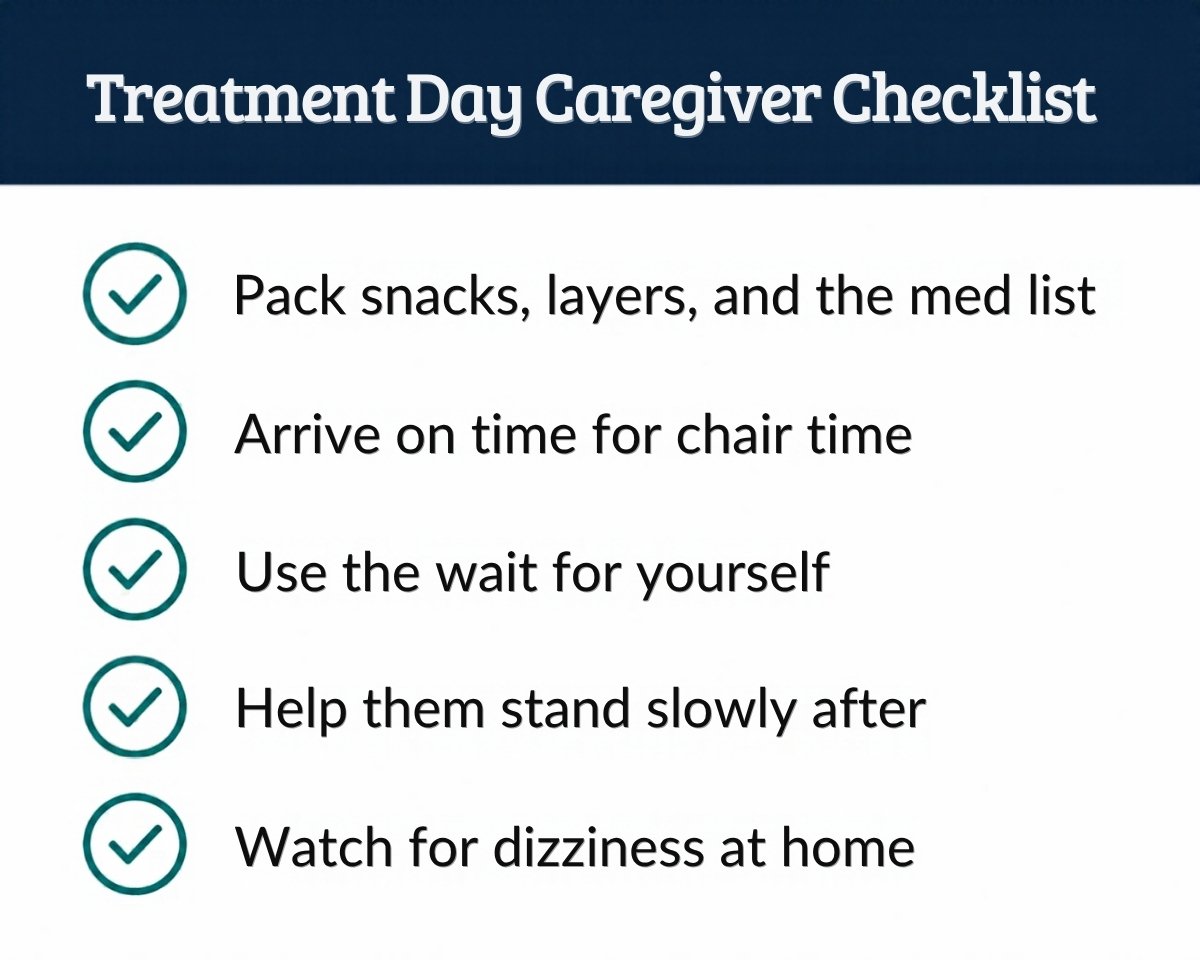
- Know the chair time, not just the appointment time. Many clinics want patients to arrive a little early. Ask what time they actually expect you.
- Check the bag. Blanket, headphones, phone charger, and anything the clinic allows. See How to Prepare for Dialysis: Night-Before and Morning Checklist.
- Dress for the access. Easy-to-reach sleeves or a catheter-friendly top. Our Dialysis Clothing Guide has ideas.
- Leave a buffer for traffic and parking. Late arrivals can shorten treatment or push back the whole day.
At drop-off
Many clinics do not allow visitors on the treatment floor, or only allow them in limited situations, partly for infection control and partly for space and privacy. Ask your clinic what its policy is. Even if you cannot go in, drop-off is a good moment to:
- Confirm your phone number is on file for the day
- Ask roughly when treatment should end
- Mention anything unusual from the last day or two, if your loved one wants you to, such as a fall, a missed medication, or feeling unwell
If the clinic does not have you listed as someone they can talk to, see Getting the Dialysis Clinic to Talk to You: HIPAA for Caregivers.
What happens inside while you wait
Knowing the sequence helps you understand why end times move. Before treatment, staff typically weigh the patient, check vital signs, and assess the access. Then two needles are placed in a fistula or graft, or the catheter is connected, and the machine runs. The machine and staff monitor blood pressure and other readings throughout. For a step-by-step look, see Does Dialysis Hurt? What Patients May Feel During Hemodialysis.
At the end, staff return the blood, remove the needles, and hold pressure on the sites until bleeding stops. That last step alone can take a while, which is one common reason pick-up times drift.
The hours in between
Four hours, three times a week, is a lot of time. How you use it can make caregiving more sustainable.
- Use it for yourself, not just errands. A walk, a meal, a nap in your own bed. You are part of the routine too.
- Batch the household jobs. Grocery runs, pharmacy pick-ups, or meal prep fit well into treatment blocks.
- Keep your phone on and charged. If treatment ends early or something comes up, the clinic needs to reach you.
- Trade off with someone. Even one treatment a week covered by a sibling or friend gives you back hours.
If you are an IHSS provider in California, note that waiting time during a long treatment is generally not paid time. See Can IHSS Pay for Time at Dialysis?
At pick-up: what is usually normal
The National Institute of Diabetes and Digestive and Kidney Diseases notes that many people feel tired or washed out for several hours after a standard treatment. That is common, especially in the first few months. Things you will often see:
- Tiredness and wanting to go straight home and rest
- Bandages or gauze over the needle sites
- Feeling a little cold
- Being slow to stand up
What matters most is how today compares with their usual. A quick look before you leave the building is worth it:
- Are they steadier or shakier than usual?
- Are the bandages dry, or is blood coming through?
- Do they seem confused, unusually pale, or short of breath?
- Did they mention cramping, dizziness, or nausea during treatment?
If this sounds familiar
Your mom usually walks out on her own, but today she needed the wall to steady herself and said she “dropped” during treatment. It might have been a single rough session, or it might be part of a pattern. Either way, ask staff before you leave whether her blood pressure was low today and whether there is anything you should watch for tonight.
The ride home and the rest of the day
- Take your time getting to the car. Standing up and walking right after treatment can bring on dizziness for some people.
- Protect the access arm. Avoid seatbelt or bag pressure over a fistula or graft.
- Know what to do about bleeding. Ask the clinic ahead of time what they want you to do if a needle site starts bleeding at home, and how long to hold pressure before calling.
- Plan an easy evening. A simple meal that fits their diet and a quiet night often help.
When to speak up or get help
Call 911 for chest pain, trouble breathing, fainting or unresponsiveness, signs of a stroke, or bleeding from the access that does not stop with firm pressure.
Call the dialysis clinic or the on-call number for new or worsening problems that are not emergencies, such as unusual swelling or redness at the access, a fever, a change in the thrill or buzz of a fistula if your loved one checks it, or symptoms that are different from their usual after-treatment pattern.
Ask the clinic for its after-hours number now, before you need it, and save it in your phone.
Questions to ask the clinic
- What time should we arrive, and about when should I plan to pick up?
- Can visitors come onto the treatment floor, and when?
- Who will call me if treatment runs late or ends early?
- What should I do if a needle site bleeds after we get home?
- What is your after-hours number?
- Is there anything specific I should watch for after treatment?
Notice patterns, not just bad days
A simple log of how each treatment day went makes it easier to tell the care team what is changing. Use the free Daily Treatment Tracker to record weight, blood pressure, and symptoms in one row per treatment.
My Dialysis Care Team & Contacts →
Want it all in one place? The 90-Day Dialysis Planner keeps treatment notes, patterns, and questions together for three months.
Where to go next
- You keep noticing the same changes: When a Rough Day Becomes a Pattern
- Blood pressure drops are a concern: Why Does Blood Pressure Drop During Dialysis?
- Your loved one is wiped out after treatment: Adjusting to Dialysis: The First 90 Days
- The ride is the hard part: What to Do If Your Ride to Dialysis Falls Through
The main thing to remember
You are not just the driver. You are often the person who sees your loved one right before and right after treatment, which makes you good at noticing when something is different. Plan for the day to run long, use the waiting hours for yourself, and take a minute at pick-up to compare today with their usual. If something seems off, say so before you leave.
Sources
General education only. This guide describes a typical in-center hemodialysis treatment day in general terms. Clinic routines, visitor policies, and what is normal for each patient vary. Renal Care Planner does not provide medical advice. Follow your clinic’s instructions, ask the care team about anything that concerns you, and call 911 in an emergency.