
If your dialysis team tells you that your potassium is running high, one of the first things you may search for is a low potassium foods chart. A chart can help, but it only works when you understand the serving sizes behind it. A large portion of a lower-potassium food can still add up to a significant potassium load.
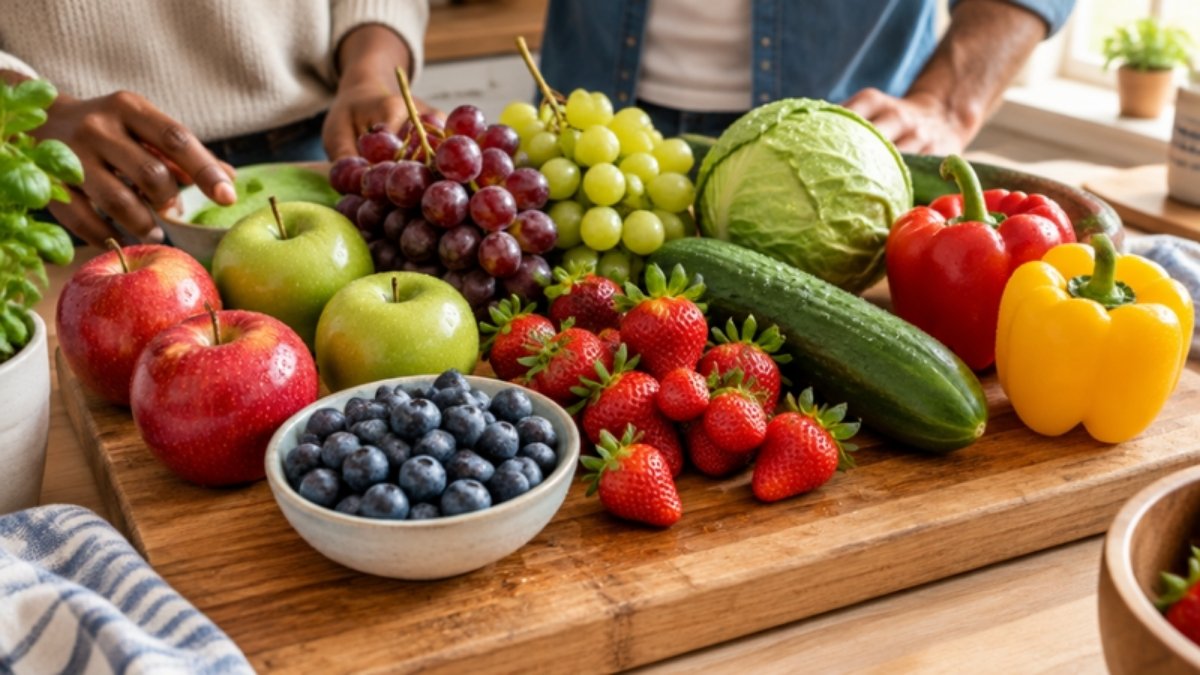
Quick answer: NIDDK lists many fruits and vegetables as lower in potassium when they provide 200 mg or less per listed serving. Examples include apples, berries, grapes, pears, pineapple, bell peppers, cabbage, cucumber, green beans, lettuce, and several others. Whether you personally need a low-potassium diet depends on your blood potassium level, dialysis schedule, medications, and care plan.
Affiliate disclosure: This article may contain affiliate links. If you buy through one of these links, Renal Care Planner may earn a commission at no additional cost to you. See our Affiliate Disclosure.
Do all dialysis patients need low-potassium foods?
No. Potassium is essential for normal nerve, muscle, and heart function. The issue is having too much or too little in the blood. The National Kidney Foundation notes that potassium limits for people receiving hemodialysis should be based on specific blood levels. People receiving more frequent home hemodialysis may have different needs.
If your potassium is in your care team’s goal range, do not start eliminating fruits and vegetables just because they appear on a generic “foods to avoid” list.
What counts as a lower-potassium serving?
NIDDK’s potassium guide classifies the fruits and vegetables below as lower in potassium at 200 mg or less per serving. For that chart, one fruit serving is generally one small piece, 1/2 cup fresh, canned, or cooked fruit, or 1/2 cup juice. A vegetable serving is generally 1/2 cup fresh or cooked vegetables or 1 cup raw leafy vegetables.
Serving size matters. Two or three servings at once do not remain a single lower-potassium serving.
Low potassium foods chart: fruits
| Lower-potassium fruit choices | Practical serving idea |
|---|---|
| Apple | 1 small apple or sliced apple with a meal |
| Applesauce | 1/2 cup |
| Berries | 1/2 cup |
| Grapes | 1/2 cup |
| Peaches | 1 small fruit or about 1/2 cup |
| Pears | 1 small pear or about 1/2 cup |
| Pineapple | 1/2 cup |
| Plums | Small serving |
| Tangerines | Small serving |
| Watermelon | Keep the portion measured, especially if you also have a fluid limit |
| Fruit cocktail | 1/2 cup, drain canned liquid |
| Canned apricots | 1/2 cup, drain canned liquid |
| Lemon and lime | Use for flavoring foods and water if it fits your fluid plan |
NIDDK also lists cranberry juice, grape juice, grapefruit, papaya, and rhubarb among lower-potassium choices in the specified serving sizes. If you take medicines that interact with grapefruit, follow your pharmacist or prescriber’s instructions.
Low potassium foods chart: vegetables
| Lower-potassium vegetable choices | Easy way to use them |
|---|---|
| Bell peppers | Scrambles, rice bowls, tacos, salads |
| Cabbage | Slaw, skillet meals, stir-fries |
| Cucumber | Salads, sandwiches, rice bowls |
| Green beans | Simple dinner side |
| Cauliflower | Roasted or steamed side |
| Carrots | Measured side dish or salad ingredient |
| Fresh broccoli | Measured serving as a side |
| Corn | Measured side or mixed into a bowl |
| Eggplant | Roasted or sauteed |
| Lettuce | Salads, sandwiches, wraps |
| Fresh mushrooms | Scrambles or skillet meals |
| Raw onion | Flavor for salads and sandwiches |
| Okra | Roasted or cooked as a side |
| Cooked summer squash | Measured side dish |
| Kale | Use a measured serving rather than assuming unlimited portions |
Higher-potassium foods people commonly ask about
Higher potassium does not automatically mean “never eat.” It means portion and frequency may need more attention if your blood potassium is high. NIDDK lists examples such as:
- Bananas
- Oranges and orange juice
- Kiwi
- Dried fruit such as raisins and prunes
- Avocado
- Potatoes and sweet potatoes
- Tomatoes, tomato juice, and tomato sauce
- Cooked spinach
- Winter squash
- Beans, lentils, and split peas
Your renal dietitian may still fit some of these foods into your eating plan in smaller portions or less often. Do not turn a comparison chart into a permanent banned-food list.
Easy lower-potassium food swaps
| If you often eat | A lower-potassium option may be |
|---|---|
| Banana | Apple, berries, grapes, pear, or pineapple |
| Orange juice | Apple, grape, or cranberry juice if juice fits your fluid and diabetes plan |
| Tomato-heavy salad | Cucumber, cabbage, lettuce, and bell pepper salad |
| Tomato sauce | Olive oil, garlic, herbs, lemon, or another non-tomato sauce |
| Large potato side | Rice, pasta, or another starch recommended by your dietitian |
| Avocado topping | Cabbage slaw, cucumber, lettuce, or a small herb dressing |
What about rice, pasta, bread, and cereal?
Potassium is not only found in fruits and vegetables. NIDDK’s potassium guidance uses examples such as white rice instead of brown or wild rice, white bread and pasta instead of whole-wheat versions, and cooked rice or wheat cereals instead of bran cereals when someone specifically needs to lower potassium.
This is one of the unusual parts of renal nutrition: a food that is considered “healthier” in the general population is not automatically the best choice for every dialysis patient with a specific lab problem.
Check salt substitutes for potassium chloride
A product marketed as “low sodium” or “salt substitute” can contain potassium chloride. NIDDK advises people who need to control potassium to check ingredient lists for potassium chloride and to use herbs and spices instead of salt substitutes when appropriate.
That makes the ingredient list just as important as the Nutrition Facts panel when you are shopping.
Can cooking lower potassium?
Some preparation methods can lower potassium in certain vegetables. NIDDK specifically describes boiling or leaching as techniques that can reduce potassium. The amount removed varies by the food, cut size, cooking method, and serving size, so this is not a way to turn every high-potassium food into an unlimited food.
Want a food reference you can keep in the kitchen?
Our renal diet cookbook guide includes food-reference books as well as recipe books. Two current options are The Ultimate Food List for Kidney Disease: Low Potassium and Low Phosphorus Food Choices and The Kidney Disease Food List Bible. These are general kidney-disease resources, so compare their recommendations with your dialysis dietitian’s guidance rather than treating them as your personal prescription.
How this fits into a dialysis meal
If you have been told to lower potassium, a simple meal-building pattern might look like a fresh protein, a measured starch, and one or two lower-potassium fruit or vegetable choices. For actual meal ideas, see:
- 12 Easy Renal Diet Recipes for Dialysis Patients
- 7-Day Renal Diet Menu for Hemodialysis
- What Can You Eat on Hemodialysis?
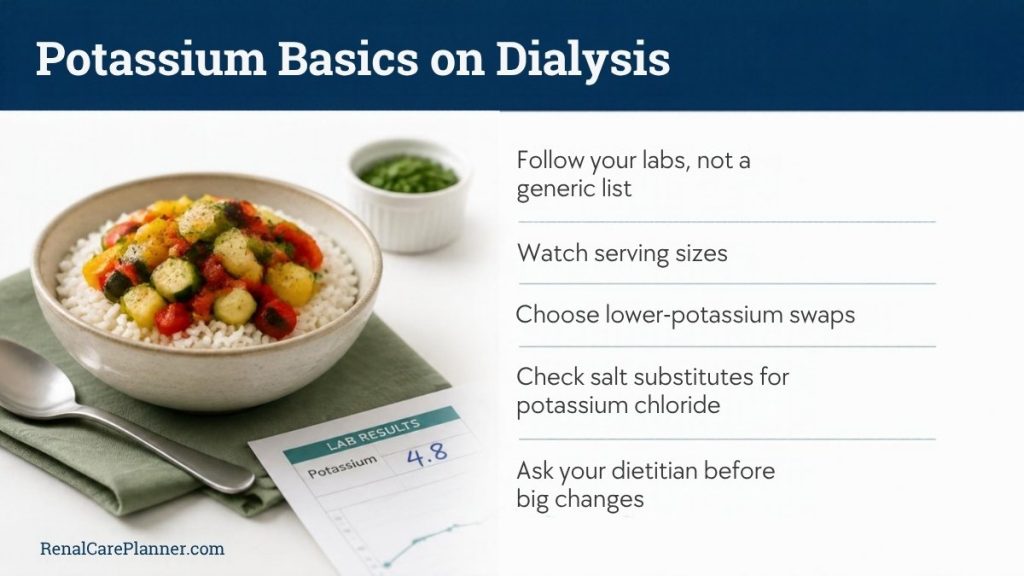
Free tools: Bring your potassium questions to your dietitian with Questions for My Dialysis Team, and keep lab notes and food changes together in the 90-Day Dialysis Planner.
Frequently asked questions
What foods have almost no potassium?
Instead of looking for “zero potassium” foods, it is usually more useful to compare realistic serving sizes and your total intake. Your dietitian can help identify the biggest contributors in your current diet.
Are low-potassium foods always kidney-friendly?
No. A food can be lower in potassium but still contain a lot of sodium, phosphorus additives, sugar, or other ingredients that matter to you. Look at the whole food and your overall plan.
Can potassium be too low on dialysis?
Yes. Both high and low blood potassium can be dangerous. That is why potassium restriction should be guided by your blood tests and care team rather than by a generic online chart.
Should I stop eating fruits and vegetables if my potassium is high?
Not automatically. Portion changes, lower-potassium choices, preparation methods, medication review, and dialysis attendance can all matter. Work with your renal dietitian on the specific changes that fit your labs.
Sources
- NIDDK: Healthy Eating for Adults with Chronic Kidney Disease
- NIDDK: Eating & Nutrition for Hemodialysis
- National Kidney Foundation: Hemodialysis and Your Diet
General education only. Renal Care Planner does not provide individualized nutrition advice. Potassium needs can be different from one dialysis patient to another and can change over time. Follow the potassium target and food guidance given by your renal dietitian and dialysis care team.