

Few things frustrate a dialysis caregiver more than driving someone to treatment three times a week and then hearing, “Sorry, we can’t share that because of HIPAA.” The federal privacy rule does protect patients, but it also gives clinics more room to talk with caregivers than many people realize. Knowing how it works, and setting things up ahead of time, usually fixes the problem.
Quick answer
HIPAA allows a dialysis clinic to share information that is relevant to your role with a family member or friend who is involved in the patient’s care, as long as the patient agrees or does not object when given the chance. It does not require the clinic to share. The easiest fix is for the patient to tell the clinic, ideally in writing on the clinic’s authorization form, that you can be included. A legal personal representative, such as an agent under a health care power of attorney, generally has the same right to information as the patient, within the scope of that authority.
What HIPAA actually allows
According to the U.S. Department of Health and Human Services, which enforces HIPAA, a health care provider can share relevant information with family, friends, or others involved in someone’s care in a few common situations:
- The patient gives permission.
- The patient is present and does not object. For example, a nurse explains post-treatment instructions while you are standing next to the patient, and the patient is fine with it.
- The patient is not present or cannot respond, and staff decide, using professional judgment, that sharing is in the patient’s best interest.
HHS gives everyday examples, such as a doctor discussing medications with a caregiver who calls with a question, or giving mobility information to a relative driving the patient home. The information shared should be what you need for your role, not the patient’s full medical history.
Why clinics still say no sometimes
HIPAA permits sharing, but it does not require it unless you are the patient’s personal representative. A clinic or staff member may choose to be cautious, especially if:
- They don’t know you or can’t confirm who you are on the phone
- There is nothing in the chart showing the patient wants you included
- The patient is not there to say it is okay
- Staff are new or the clinic has a strict internal policy
That caution is usually a sign the clinic is trying to protect the patient, not shut you out. The fix is to give them what they need to feel confident.
How the patient can give permission
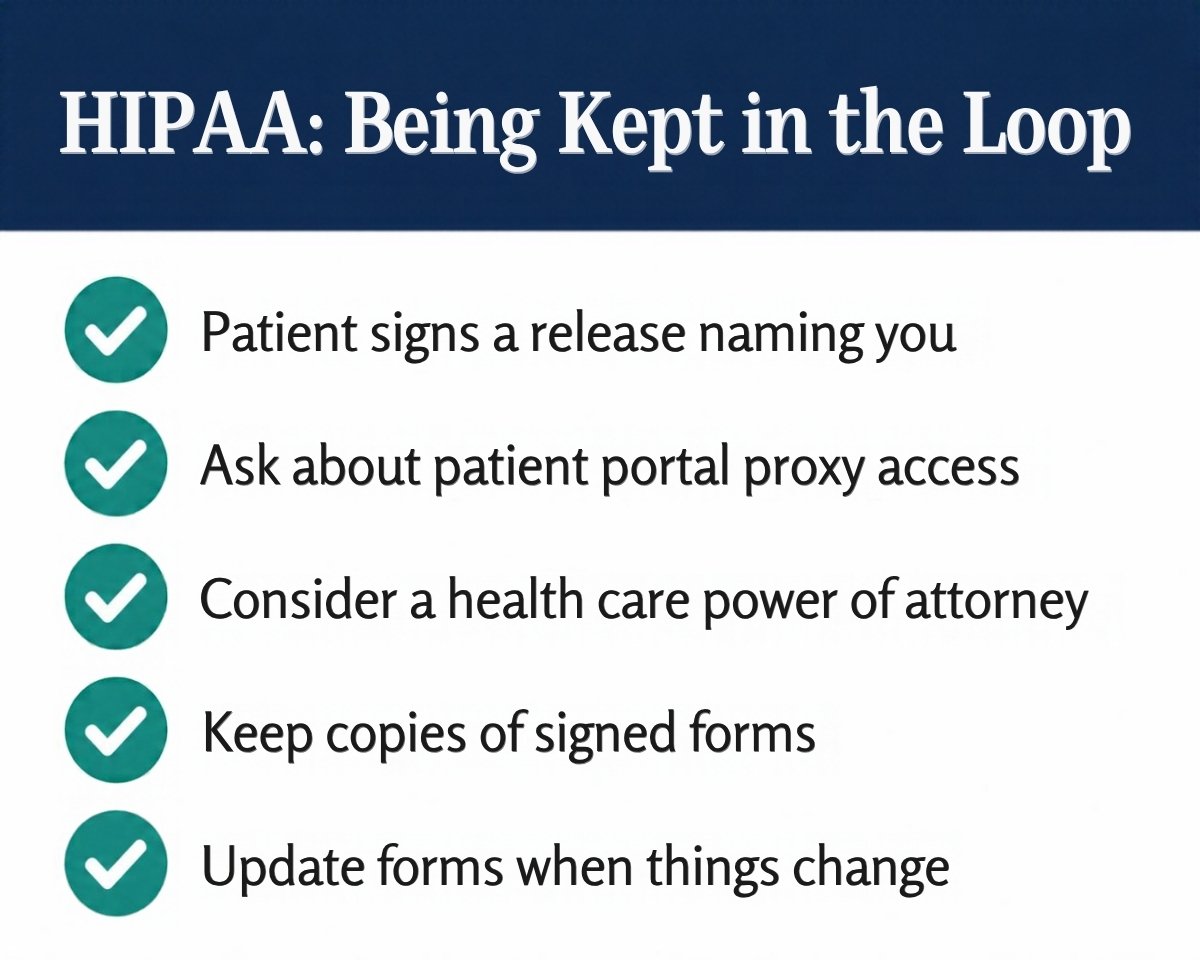
- Tell staff directly. The patient can say, “This is my daughter, Ana. You can talk to her about my treatment.”
- Sign the clinic’s authorization form. Most clinics have a form listing the people they can share information with. Ask the front desk or social worker. A form in the chart outlasts staff changes.
- Be specific if they want limits. A patient can allow you to hear about schedules and how treatment went, but not other topics. That is their choice.
- Review it once in a while. If a different person takes over driving, update the form.
When you are a personal representative
HHS explains that a personal representative is someone with legal authority to make health care decisions for the patient. For adults, that can include an agent under a health care power of attorney or a court-appointed guardian. In general, the clinic must treat a personal representative like the patient for privacy purposes, within the scope of their legal authority.
If you hold that role, bring a copy of the document to the clinic so it can be placed in the chart. If you do not, and the patient wants you to have that role in the future, they can ask their social worker or an attorney about an advance health care directive. State law shapes these documents, so get guidance for your state.
If this sounds familiar
Your dad’s treatment was cut short last week, and when you called to ask why, the clinic would not say. Your dad was fine with you knowing; nobody had written it down. A two-minute conversation at his next treatment, plus the clinic’s authorization form, can prevent that call from going the same way again.
Choose one point person
When several relatives call the clinic separately, staff get confused, messages get mixed up, and patients can feel talked about. It usually works better if one person is the main contact for day-to-day questions and then shares updates with the rest of the family. The patient should still decide who that is.
What to say at the front desk
“I’m Ana, Mr. Reyes’s daughter. I drive him on Mondays and Wednesdays. He’d like me added to the list of people you can talk to. Can we fill out whatever form you need while he’s here?”
Doing this in person, with the patient present, is usually the fastest route.
The patient always keeps the final say
Some patients want family closely involved. Others want to keep certain things private, even from people who help them every day. Both are valid. If your loved one prefers to share less, respect that and focus on the information you truly need, such as pickup times and what to watch for after treatment.
Questions to ask the clinic
- Do you have a form for adding people the clinic can share information with?
- How will you confirm it’s me when I call?
- Who should I call if treatment runs late or is shortened?
- If I have a health care power of attorney, where should I bring a copy?
- Is there a time each week when I can ask the nurse or social worker questions?
Keep the right names and numbers handy
Record who at the clinic you should call, who is on the authorization list, and the questions you want to ask, all in one place.
My Dialysis Care Team & Contacts →
Questions for My Dialysis Team →
Want it all in one place? The 90-Day Dialysis Planner keeps treatment notes, patterns, and questions together for three months.
Where to go next
- You are not family: Caring for a Friend or Neighbor on Dialysis
- You are new to caregiving: What Caregivers Should Know: Supporting Someone New to Dialysis
- You keep noticing the same changes: When a Rough Day Becomes a Pattern
- You need help with the bigger picture: What Does a Dialysis Social Worker Do?
The main thing to remember
HIPAA is usually not the wall it seems. Clinics may share what you need to know when the patient agrees or does not object, and a signed authorization in the chart makes that easy for staff. Set it up together, pick one point person, and let the patient decide how much is shared.
Sources
- HHS: HIPAA and Family Members and Friends
- HHS FAQ: When Does HIPAA Allow a Provider to Discuss a Patient’s Information With Family?
- HHS Office for Civil Rights: Sharing Health Information With Family Members and Friends
- HHS: Personal Representatives
General education only. This guide summarizes federal HIPAA guidance from the U.S. Department of Health and Human Services as of October 2026. Clinic policies and state laws can add requirements. Renal Care Planner does not provide legal advice. For questions about powers of attorney, guardianship, or advance directives, talk with an attorney or your dialysis social worker.