

Dialysis can make dating feel complicated. You might wonder when to bring it up, how someone will react, how to plan a dinner date with a fluid limit, or whether anyone will want to take this on with you. Plenty of people on dialysis date, fall in love, and build lasting relationships. It mostly comes down to timing, honesty, and choosing people who see you, not just your treatment schedule.
Quick answer
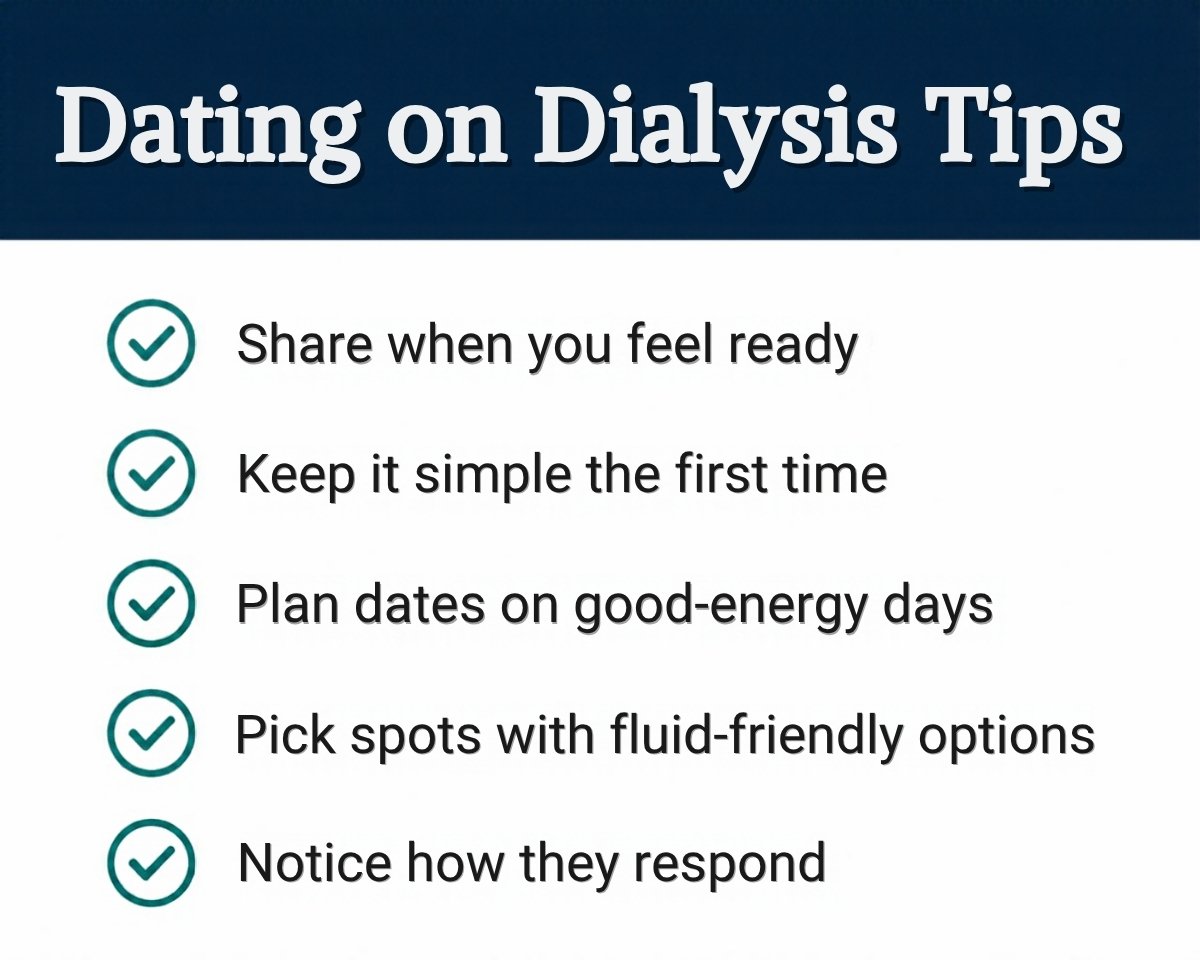
There’s no single right time to tell someone, but many people share it once there’s real interest, often within the first few dates and before things get serious. Keep it simple and matter-of-fact, then let them ask questions. Plan dates that fit your treatment days and food and fluid plan. If dialysis is affecting your energy, mood, or intimacy, that’s worth bringing up with your care team. The National Kidney Foundation notes that many of these issues are treatable.
When to tell someone
- You don’t owe a first date your medical history. It’s fine to wait until you know there’s mutual interest.
- Don’t wait too long. Dialysis shapes your schedule, so it tends to come up quickly. Sharing before things get serious avoids surprises and builds trust.
- Some people share early on purpose, even in a dating profile, to filter for people who are okay with it. That’s a valid choice too.
How to say it
“I want to tell you something so you know why I’m busy certain afternoons. My kidneys don’t work, so I do dialysis three times a week. It’s a big part of my schedule, but it’s not all of who I am. Ask me anything.”
Keeping it calm and factual sets the tone. If you treat it as a normal part of your life, the other person is more likely to as well.
Handling reactions
- Questions are normal. Most people don’t know what dialysis is. Answer what you’re comfortable with.
- Give them a little time. Some people need to process before they respond.
- If someone backs away, that’s information about them, not your worth. It’s better to know early.
- Watch for the opposite problem, too: someone who wants to manage your health instead of date you.
Planning dates around dialysis
- Pick your best days. Many people feel better on non-treatment days or before treatment than right after.
- Choose flexible restaurants where you can order simply and ask for less salt.
- Plan your fluid ahead. A small glass and sipping slowly helps. See How to Manage Fluid Restriction on Dialysis.
- Try non-food dates: museums, walks, movies, concerts, game nights.
- Dress for your access so you’re comfortable. See Dialysis Clothing Guide.
If this sounds familiar
You’ve been on three great dates, and they just asked to get dinner Wednesday night, right after your treatment. You’ve been dodging it. Suggest Thursday instead, and use that dinner to tell them. “Wednesdays I have dialysis” is a natural opening, and you’ll be on a day when you feel more like yourself.
Energy and intimacy
The National Kidney Foundation notes that kidney disease and dialysis can affect intimacy through fatigue, hormone changes, medications, body image, and stress. It also says most of these problems are treatable and encourages talking with your doctor or social worker. It’s a normal topic for your care team, even if it feels awkward to raise. With a partner, honest conversation helps more than guessing.
Confidence
Scars, a fistula, or a catheter can make some people self-conscious. That’s understandable. Many find that the right person cares far more about who you are than what your arm looks like. If body image or low mood is holding you back from dating, it’s worth talking about with a counselor or your social worker.
Bring the awkward questions too
Write down questions about energy, medications, or intimacy before your next appointment so you don’t talk yourself out of asking.
Where to go next
- Keep it all in one place: The 90-Day Dialysis Planner
- Your partner’s side: When Your Partner Starts Dialysis
- Feeling down: Depression and Dialysis
- Food and fluid: How to Manage Fluid Restriction on Dialysis
The main thing to remember
Dialysis is part of your story, not a dealbreaker. Share it when there’s real interest, say it simply, plan dates for your good days, and bring energy or intimacy concerns to your care team. The right person will make room for your schedule.
Sources
- National Kidney Foundation: Sexual Health and Kidney Disease
- International Society for Sexual Medicine: How Might Kidney Disease Impact Sexuality?
General education only. This guide offers general relationship and lifestyle information. Renal Care Planner does not provide medical or mental health advice. Talk with your care team about energy, medications, sexual health, and diet.