

When your spouse or partner starts dialysis, it can feel like the relationship changes overnight. Suddenly you’re driving to treatment, reading food labels, tracking medications, and watching for symptoms. Your partner may feel guilty, frustrated, or tired in ways that are hard to talk about. Many couples get through this and stay close, but it usually takes some intention to keep the relationship from turning into a patient and a caregiver.
Quick answer
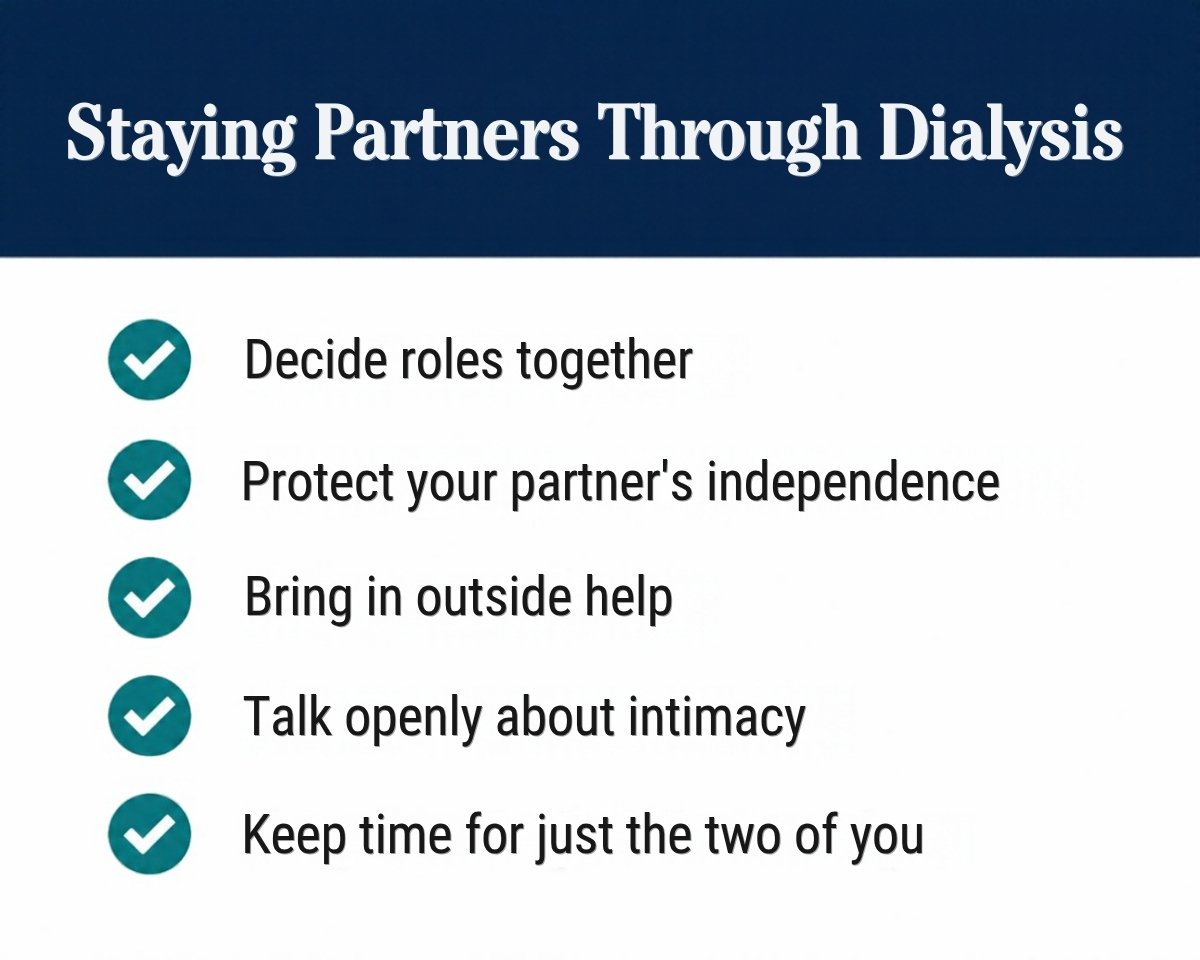
Talk openly about how roles are changing, and decide together who does what instead of one person quietly taking over. Let your partner keep as much independence as possible. Bring in other help, like family, friends, transportation programs, or IHSS in California, so you’re not doing it all. Talk honestly about fatigue and intimacy. The National Kidney Foundation notes many intimacy problems linked to kidney disease are treatable. And protect regular time together that isn’t about dialysis.
Shifting roles
Tasks that used to be shared, or used to belong to your partner, may suddenly land on you. Sit down together and list what has changed: driving, cooking, bills, household chores, appointments. Decide who takes what, what can be dropped, and what other people can do. Revisit it every month or so, especially in the first 90 days when things are changing fast. See Adjusting to Dialysis: The First 90 Days.
Protecting your partner’s independence
- Let your partner speak for themselves at the clinic
- Ask before helping with things they can still do
- Resist policing food and fluid. Share concerns kindly, then let the care team and your partner lead.
- Keep their roles in the household and family wherever possible
Sharing the load
- Accept help from others. A friend or relative covering one ride a week matters.
- Look into transportation programs. See Dialysis Transportation in California.
- Check IHSS if you’re in California. Spouses have special rules, but some help can be paid. See Spouse Caregivers and IHSS.
- Protect your job. FMLA can cover time caring for a spouse. See FMLA and Dialysis.
Feelings on both sides
It’s common for the person on dialysis to feel like a burden, and for the partner to feel worried, overwhelmed, or even resentful at times. Neither makes you a bad partner. Saying these things out loud, kindly, usually works better than holding them in. If conversations keep turning into arguments, a counselor or the dialysis social worker can help.
If this sounds familiar
You realize the only things you and your husband talk about anymore are his weight, his labs, and who’s driving Friday. You miss just being married. Try one small thing: one evening a week where dialysis is off-limits as a topic. It sounds simple, but many couples say it changes the whole week.
Fatigue and intimacy
The National Kidney Foundation notes that fatigue, hormone changes, medications, body image, and stress can all affect intimacy for people with kidney disease, and that most of these problems are treatable. It encourages talking with the doctor or social worker, and points out that closeness, like touch, hugging, and time together, matters even when energy is low. Talk with each other without blame, and encourage your partner to raise it with the care team.
Protecting time together
- Plan date nights for non-treatment days, when your partner usually feels better
- Keep shared hobbies, even in smaller doses
- Plan trips that include dialysis away from home. See Can Dialysis Patients Travel?
- Take time for yourself, too. You’ll be a better partner for it.
Get the logistics out of your conversations
A shared contact sheet and treatment tracker keep the logistics organized, so they don’t take over every conversation.
Where to go next
- Keep it all in one place: The 90-Day Dialysis Planner
- Caregiver basics: What Caregivers Should Know
- Treatment days: The Dialysis Treatment Day From the Caregiver’s Side
- Feeling like a burden: “I Feel Like a Burden”
- Depression: Depression and Dialysis
The main thing to remember
You’re still partners, not just a patient and a caregiver. Decide roles together, let your partner stay as independent as possible, bring in outside help, and protect time that isn’t about dialysis. Honest conversations about the hard parts, including intimacy, keep you close.
Sources
- National Kidney Foundation: Sexual Health and Kidney Disease
- Frequent Hemodialysis Network Trials: Perceived Caregiver Burden
- U.S. Department of Labor: FMLA
General education only. This guide offers general information for couples affected by dialysis. Renal Care Planner does not provide medical, legal, or mental health advice. Talk with your care team, social worker, or a counselor about your situation.