

Rides three times a week. Help with meals, medications, and appointments. Missed plans because you’re wiped out after treatment. It’s easy to start feeling like you’re taking more than you give. If that’s where you are, you’re not alone. Feeling like a burden is one of the most common emotional struggles people describe on dialysis, and there are real ways to ease it.
Quick answer
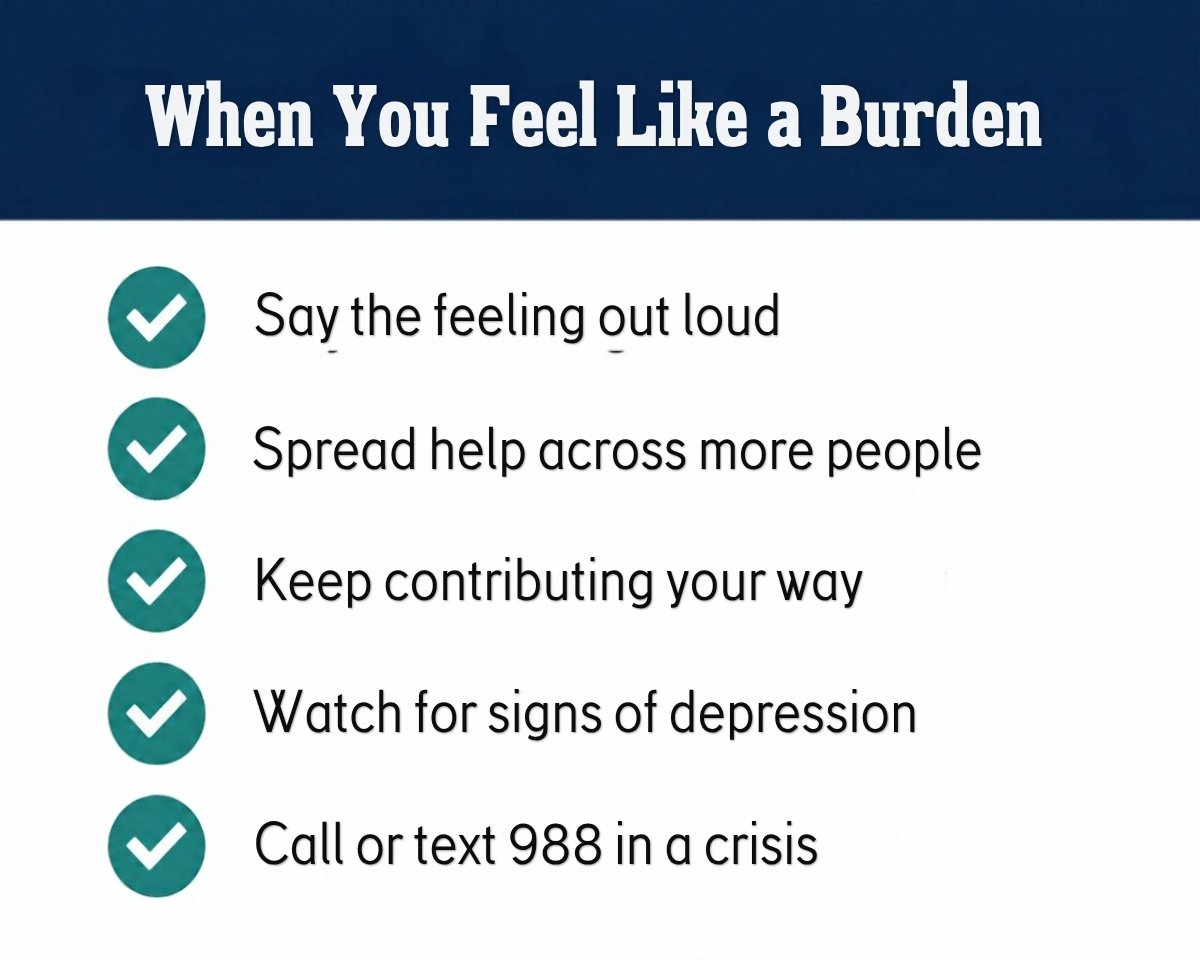
Name the feeling out loud to the people helping you. They often don’t see it the way you do. Spread the help across more people and programs so no one person carries it all. Keep doing the things you can, in your own way. And if the guilt is constant, comes with hopelessness, or you start feeling everyone would be better off without you, tell your care team or social worker right away. Those can be signs of depression, which is common on dialysis and treatable.
Why the feeling shows up
Dialysis changes roles quickly. Someone who used to drive, earn, cook, or care for others may suddenly need help with those things. Research on dialysis patients has found that “self-perceived burden” is common and closely tied to mood and quality of life. Fatigue makes it worse: when you’re tired, small favors can feel bigger than they are.
Talking about it
Many people hide the feeling and try to need less, like skipping a ride or not mentioning a symptom. That usually backfires. A direct conversation tends to help both sides.
“I’ve been feeling like I’m taking up a lot of your time, and it bothers me. Can we talk about what’s working for you and what’s too much? I’d rather know than guess.”
Often the person helping says they want to, and also admits one or two parts that are hard. That’s useful: now you can fix those parts instead of feeling guilty about everything.
Spreading the help around
- Transportation programs. Medi-Cal, Medicare Advantage plans, and local services may cover rides. See Dialysis Transportation in California.
- IHSS in California. If you qualify, a paid provider can help with home tasks and medical accompaniment. See IHSS for Dialysis Patients.
- A rotation. Three people doing one ride a week each is easier than one person doing all three.
- The social worker. They know local resources. See What Does a Dialysis Social Worker Do?
Ways you still contribute
- Take on tasks you can do sitting down or on non-treatment days: bills, planning, phone calls, homework help
- Keep your role as a listener, advisor, or the one who remembers birthdays
- Manage your own care as much as you can, like tracking medications and fluids
- Say thank you specifically, and return favors in your own way
- Volunteer or mentor other patients if you have the energy
If this sounds familiar
You’ve started telling your daughter you “don’t need anything” even when you do, because she already drives you to treatment. Then you end up struggling with groceries alone and feeling worse. Try picking one thing you’ll stop hiding, and one thing you’ll take back off her plate. Small trades like that rebuild the balance.
When it’s more than guilt
Talk to your care team, social worker, or doctor soon if you notice:
- Guilt or hopelessness most days for two weeks or more
- Losing interest in things you used to enjoy
- Skipping treatments or meds because “what’s the point”
- Thoughts that others would be better off without you
If you’re having thoughts of harming yourself, call or text 988 (Suicide & Crisis Lifeline) or call 911. More on spotting patterns: Depression and Dialysis.
Bring it up at your next visit
Add “I’ve been feeling like a burden” to your question list so it doesn’t get lost in a busy visit.
Where to go next
- Keep it all in one place: The 90-Day Dialysis Planner
- Your partner: When Your Partner Starts Dialysis
- The early months: Adjusting to Dialysis: The First 90 Days
- Rides: What to Do When Your Ride Falls Through
The main thing to remember
Needing help doesn’t erase what you bring to the people around you. Talk about the feeling, share the load across more people, keep contributing in the ways you can, and get support if the guilt turns into hopelessness.
Sources
- National Kidney Foundation: Depression and Kidney Disease
- PubMed: Research on self-perceived burden in hemodialysis
- 988 Suicide & Crisis Lifeline
General education only. This article offers general information and is not medical or mental health advice. If you’re struggling, talk with your care team, social worker, or a mental health professional. In a crisis, call or text 988 or call 911.