

Living alone on dialysis is common, and many people do it well for years. The key is having a plan for the moments when no one’s around: feeling dizzy after treatment, a bleed from your access at night, a missed ride, or a power outage. A little setup now gives you independence with a safety net.
Quick answer
Set up a daily check-in with someone you trust, especially on treatment days. Keep a backup ride list. Know exactly what to do if your access bleeds at home, and keep gauze nearby. Post your emergency information on the fridge and keep your phone with you. Make sure your clinic has current emergency contacts. Consider a medical alert device, and talk to your social worker if daily tasks are getting harder.
Daily check-ins
Pick one or two people who’ll hear from you every day, at a set time. A text after you get home from treatment works well. Agree on what happens if you don’t answer: they call, then call a neighbor, then call for a wellness check. Some people use phone location sharing or a medical alert device with fall detection.
After treatment
- Get up slowly. Sit on the edge of the bed or chair before standing.
- Don’t drive if you’re dizzy or wiped out. See Can You Drive Yourself Home After Dialysis?
- Have easy meals ready so you’re not cooking when you’re tired
- Keep the path from your door to your bed clear to prevent falls
Access bleeding plan
Bleeding from a fistula or graft site after you get home is one of the scariest things to face alone. Ask your nurse to walk you through exactly what to do and how long to hold pressure, and keep gauze in more than one room. Generally, you apply firm pressure with clean gauze to the needle site. If bleeding is heavy or won’t stop, call 911. Don’t wait. If you have a catheter and it’s damaged or bleeding, follow your clinic’s instructions and call 911 for heavy bleeding.
More on caring for your access: Protecting Your Fistula or Graft.
If this sounds familiar
You live alone, and last week you felt shaky after treatment and nearly fell getting out of the car. No one would have known for hours. That’s a good reason to set up a “home safe” text with your sister, and to tell your nurse about the shakiness, since your fluid removal or blood pressure may need adjusting.
What to keep posted at home
- A sheet on the fridge: “I’m on dialysis,” your access type and arm, clinic name and phone, nephrologist, and emergency contacts
- Your current medication list
- Your treatment schedule
- A note to protect your access arm (no blood pressure cuffs or IVs on that arm)
Paramedics often look on the fridge. Some people also keep this info on their phone’s emergency medical ID.
Backups
- Rides: keep two backup options. See What to Do When Your Ride Falls Through.
- Emergencies and outages: keep an emergency kit and know your clinic’s backup plan. See Dialysis Emergency Plan.
- A key: leave a spare with a trusted neighbor or use a lockbox so help can get in.
- Pets: have someone who can care for them if you’re hospitalized.
When to ask for more help
If you’re falling, missing meals or medications, struggling with housework, or missing treatments, talk with your social worker. In California, IHSS may pay for in-home help. See IHSS for Dialysis Patients. Meal delivery programs and home health services may also help.
Build your fridge sheet in minutes
Use the contacts and medication tools, print them, and put a copy on your fridge and in your bag.
Where to go next
- Keep it all in one place: The 90-Day Dialysis Planner
- Feeling isolated: Depression and Dialysis
- Low blood pressure: Why Blood Pressure Drops During Dialysis
- Getting rides covered: Dialysis Transportation in California
The main thing to remember
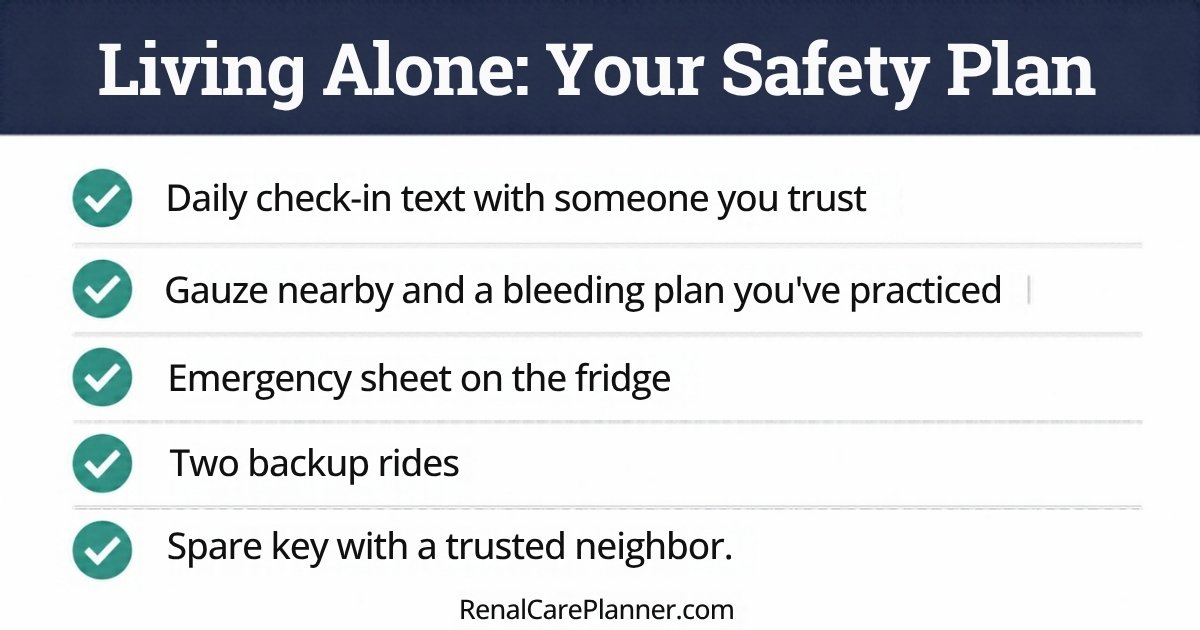
Living alone on dialysis works best with a plan: a daily check-in, a bleeding plan you’ve practiced, emergency info on the fridge, and backups for rides and outages. Asking for help when things get harder keeps you independent longer.
Sources
- National Kidney Foundation: Hemodialysis Access
- National Kidney Foundation: Planning for Emergencies
- California Department of Social Services: IHSS
General education only. This article offers general safety information and is not medical advice. Follow your care team’s instructions for access bleeding and emergencies. In an emergency, call 911.