
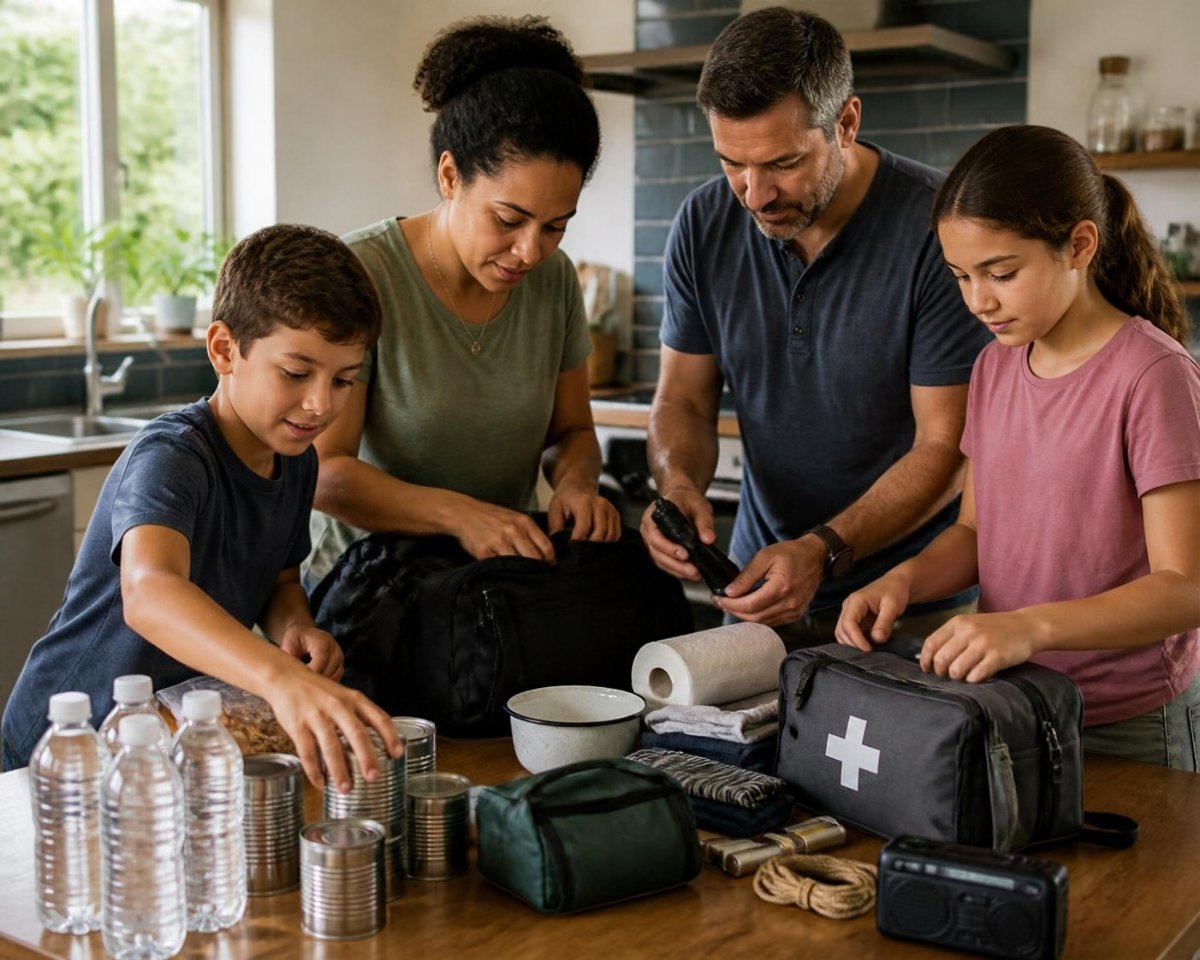
Most people can ride out a few days of a power outage or an evacuation. For someone on hemodialysis, a missed treatment or two during a wildfire, earthquake, flood, or public-safety power shutoff can quickly become serious. The good news is that a little planning now makes a big difference later. This guide turns the federal emergency guidance for dialysis patients into a plan you can actually put together this week.
Quick answer
Build an emergency go-bag, ask your clinic for its disaster plan and a backup clinic, keep a written list of your medications and treatment details, and keep a 5 to 7 day supply of medicines on hand. Ask your renal dietitian about the 3-day emergency diet for people on dialysis and keep those foods at home. If your clinic closes, call its emergency number first, then your backup clinic, then your regional ESRD Network. In a medical emergency, call 911.
Why dialysis needs its own emergency plan
According to the CDC, power can be out for days during an emergency, and closed roads can make it impossible to reach a dialysis center or hospital. In-center hemodialysis depends on electricity, clean water, staff, and transportation all working at once. When one of those breaks down, you need a plan for where you will get treatment and how to stay as safe as possible until you do.
Step 1: Ask your clinic these questions now
The federal guide for dialysis patients starts with your facility. Bring these questions to your next treatment:
- Can I have a copy of the clinic’s disaster plan?
- What is the clinic’s emergency phone number if the building is closed?
- Which backup clinics should I use, one nearby and one farther away?
- How will the clinic contact me in an emergency, and is my phone number current?
- What should I do if an emergency happens while I am on the machine?
- Can the dietitian review the 3-day emergency diet with me?
Step 2: Pack an emergency go-bag
Keep it somewhere easy to grab, and check it every six months for expired food, dead batteries, and outdated paperwork. Based on the CMS emergency guide for people on dialysis, a go-bag can include:
- Bottled water (amount based on your fluid plan) and shelf-stable foods from your emergency diet list
- Manual can opener and measuring cups and spoons
- Flashlight, battery or hand-crank radio, and extra batteries
- Cell phone charger and a charged power bank
- First-aid kit and hand sanitizer
- Cash in small bills
- Walking shoes and a change of clothes
- A blanket (dialysis clinics, shelters, and cars can be cold)
- Your medication supply and medical paperwork (see below)
- Food and water for pets, if you have them
If you already carry a treatment-day bag, see What to Bring to Dialysis. Your go-bag is different: it is meant to keep you going for several days, not just one session.
Step 3: Keep your papers and contacts with you
If you end up at an unfamiliar clinic or hospital, the staff will need to know your treatment details quickly. Keep printed copies in a waterproof bag:
- Photo ID and insurance cards
- Your medication list with doses and allergies
- Your treatment schedule, access type, and a copy of your dialysis orders if the clinic will provide one
- Names and numbers for your clinic, backup clinics, nephrologist, primary care doctor, and pharmacy
- Your regional ESRD Network’s patient phone number
- Family, caregiver, and out-of-area emergency contacts
- Copies of any advance directive or health care power of attorney
The CMS guide also suggests a medical ID bracelet or wallet card, but not on your access arm.
Step 4: Keep extra medicines on hand
The federal guide recommends keeping a 5 to 7 day supply of all prescription medicines and checking expiration dates monthly. If you use insulin or other diabetes supplies, keep the same 5 to 7 day supply of those, too. Ask your pharmacist or care team how to safely keep extra supply on hand, especially if your insurance limits early refills.
Step 5: Know about the 3-day emergency diet
There is a special, stricter eating plan designed for people on dialysis who cannot get treatment during an emergency. It limits fluid, potassium, and protein waste to slow the buildup that dialysis normally removes. It does not replace dialysis. The goal is to get treatment as soon as possible, ideally within three days of your last session.
Because this plan is different from your everyday diet and depends on your own health, review it with your renal dietitian before an emergency, and keep the recommended foods at home. The full plan and shopping list are in the CMS guide linked in the Sources section below.
If this sounds familiar
The power company sends a text saying your area may be shut off for fire weather this weekend. You have treatment Saturday morning. Call your clinic today, not Saturday: ask whether they expect to stay open, where you would go if not, and whether they want to move your treatment. Then check that your phone, power bank, and go-bag are ready.
If your clinic closes or you cannot get there
- Call your clinic’s emergency number for instructions.
- If you can’t reach them, call your backup clinic. Tell them you are a displaced dialysis patient and when your last treatment was.
- Call your regional ESRD Network if you still cannot find a place for treatment. Networks help patients locate treatment during emergencies.
- Tell your family where you will be treated.
- Start the emergency diet and limit fluids as your dietitian explained.
- Arrange transportation and check road conditions before you leave.
Call 911 for trouble breathing, chest pain, severe weakness, confusion, or any other emergency. Do not wait for a dialysis appointment if you feel very unwell.
California-specific tips
- Public Safety Power Shutoffs: Sign up for outage alerts from your electric utility, and ask whether you qualify for a medical baseline program, which can bring extra notice before shutoffs.
- Wildfire evacuations: Pick a backup clinic outside your usual area, in case your whole region is affected.
- Earthquakes: Ask your clinic what to do if shaking starts during treatment, and keep your go-bag near an exit.
- Your ESRD Network: California is served by regional Networks. Ask your clinic which one serves you and save its patient phone number.
Questions to ask your care team
- What is our clinic’s plan if the power goes out or the building is damaged?
- Which backup clinics should I use, near and far?
- Can the dietitian go over the 3-day emergency diet with me?
- How should I keep extra medicine on hand?
- What should I do if an emergency happens while I’m connected to the machine?
- Which ESRD Network serves this clinic, and what is its patient number?
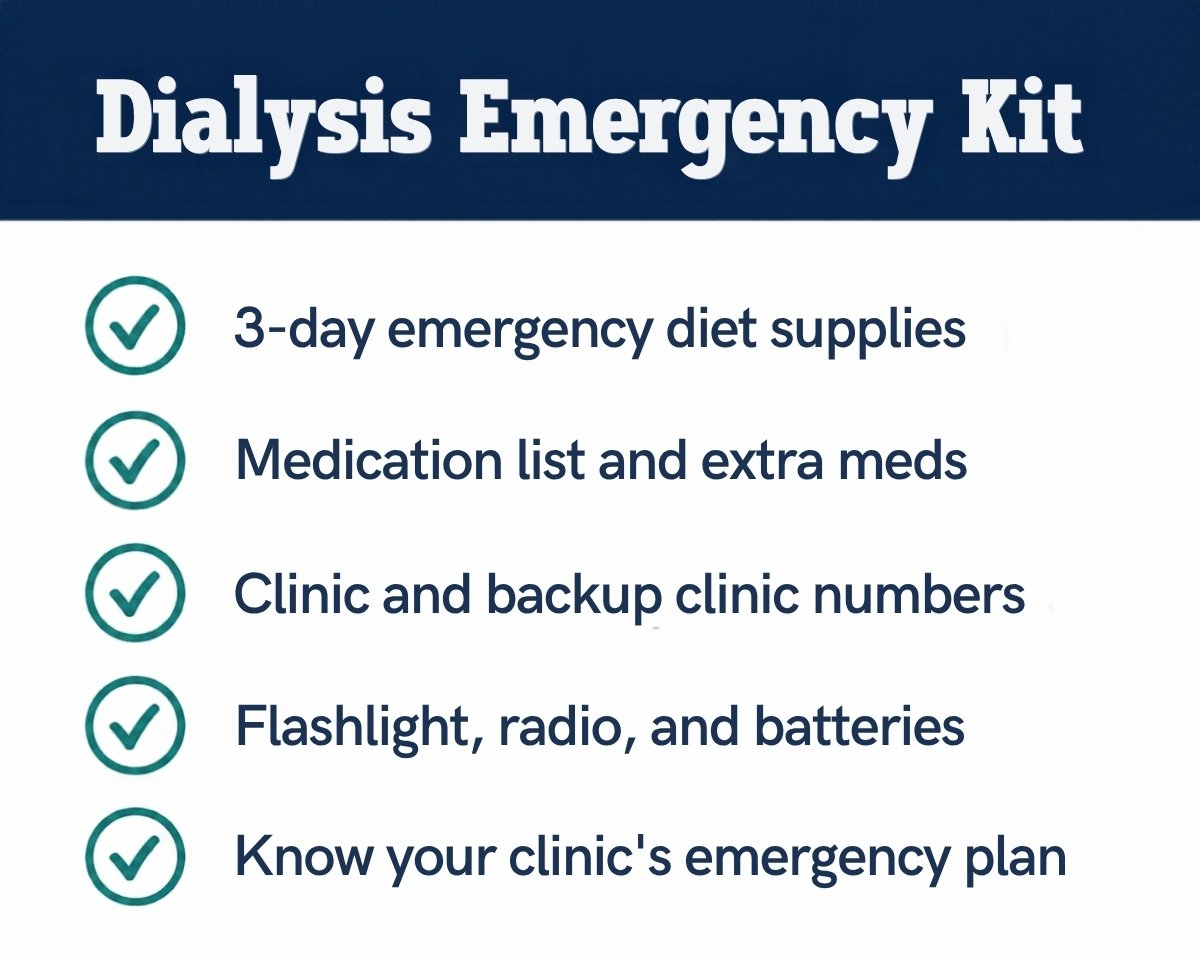
Write it down before you need it
Keep your medication list and care team contacts current and printed, so they are ready to grab with your go-bag.
My Dialysis Care Team & Contacts →
Medication List and other Planning Tools →
Want it all in one place? The 90-Day Dialysis Planner keeps treatment notes, patterns, and questions together for three months.
Where to go next
- You missed a treatment: What Happens If You Miss a Dialysis Treatment?
- Your ride fell through: What to Do If Your Ride to Dialysis Falls Through
- You are managing fluid limits: How to Manage Fluid Restriction on Dialysis
- You are traveling: Can Dialysis Patients Travel?
The main thing to remember
Emergencies are hard to predict, but the plan is simple: know your clinic’s disaster plan and backup clinics, keep a go-bag and your paperwork ready, keep extra medicines, and learn the emergency diet with your dietitian before you need it. Doing it this week, on a calm day, is what makes it work on a bad one.
Sources
- CMS: Preparing for Emergencies, A Guide for People on Dialysis (2026)
- CDC: What to Do When You Need Dialysis During an Emergency
- National Kidney Foundation: Emergency Resources
General education only. This guide summarizes federal emergency preparedness guidance for people on dialysis as of October 2026. It does not replace your clinic’s disaster plan or your care team’s instructions. Do not change your diet, fluids, or medications without talking to your care team. In an emergency, call 911.