
During your first few sessions, the most useful goal is not memorizing every term or number—it is understanding the general order of what happens. The routine usually repeats from visit to visit, and recognizing those steps can make the environment feel much less unfamiliar.
The short version
A typical treatment follows a predictable sequence.
You arrive and check in. Staff complete pre-treatment checks and connect you to the dialysis machine. During treatment, the care team monitors both you and the equipment. When treatment ends, staff complete post-treatment checks before you leave. Your dialysis care team individualizes the treatment and routine for your needs.
Before treatment starts
Staff usually complete several steps before connecting you to the dialysis machine. The exact order can vary from one clinic to another, but the purpose is generally the same: to give your care team a current picture of how you are doing before treatment begins.
Staff will usually weigh you
Your care team uses your pre-treatment weight as one piece of information when evaluating fluid changes between treatments. Staff will usually weigh you again after dialysis.
During this process, you may hear terms such as target weight or fluid removal. Your care team individualizes those goals, so ask them what your numbers mean for your treatment.
Staff will check your vital signs
Before dialysis begins, staff commonly check your blood pressure and other pre-treatment observations. They may also ask how you have felt since your last treatment and whether anything has changed.
This is a good time to mention symptoms, changes with your vascular access, recent medical care, or anything else your clinic has asked you to report.
Staff will assess your vascular access
Hemodialysis requires a way for blood to move between your body and the dialysis circuit. The three main types of vascular access are an AV fistula, AV graft, and central venous catheter.
If you have a fistula or graft, staff assess the access before treatment and use needles to connect it to the bloodlines. If you have a dialysis catheter, staff connect the catheter directly to the dialysis bloodlines instead.
Tell the dialysis staff before treatment begins if your access looks or feels different, painful, warm, swollen, or otherwise unusual.
Getting connected to the dialysis machine
After the pre-treatment checks, the care team prepares you and the dialysis circuit for treatment.
During hemodialysis, blood travels from your vascular access through tubing called bloodlines. The blood then passes through a filter called a dialyzer before returning to your body. The dialysis machine controls and monitors this process according to your treatment prescription.
The machine may look complicated at first because its screen displays pressures, rates, timers, and other treatment information. You do not need to understand every number on your first day.
Useful term: The dialyzer is the filter used during hemodialysis. You may also hear people informally call it the “kidney” or “artificial kidney.”
What happens while you are on treatment?
In-center hemodialysis commonly takes several hours. The National Kidney Foundation notes that treatments often last about 3 to 5 hours. Your dialysis care team determines your individual treatment time.
Once dialysis is running, you will usually remain in the treatment chair while staff monitor you and the machine.
Staff will check on you throughout treatment
Staff may check your blood pressure and other treatment information at regular intervals. They also monitor the vascular access, bloodlines, dialyzer, machine readings, and how you are feeling.
If you feel different during treatment—such as dizzy, nauseated, crampy, unusually weak, uncomfortable, or simply “not right”—tell the staff rather than waiting for the next routine check.
The dialysis machine will alarm sometimes
Dialysis machines use alarms to alert staff when something needs attention. An alarm does not automatically mean something dangerous is happening.
Movement, pressure changes, the position of an access arm, or another condition detected by the machine can trigger an alarm. Staff identify the cause and respond as needed.
As the routine becomes familiar, the sounds usually become much less mysterious.
What do people do for several hours?
That depends on the clinic and the person. Many patients spend treatment resting, watching television, reading, listening to music or podcasts, using a phone or tablet, doing light work, or talking with people around them.
Before bringing a particular item, ask your dialysis center about its rules and what works safely with your treatment setup.
What happens when treatment ends?
When your treatment time ends, the care team begins the process of disconnecting you from the dialysis circuit.
You may hear the term rinse-back. In simple terms, rinse-back describes the process staff use at the end of treatment to return blood from the dialysis circuit before disconnecting you.
If you have a fistula or graft, staff remove the needles and allow the access sites time to stop bleeding before you leave. If you have a catheter, staff disconnect and care for it according to the facility’s procedures.
Staff will complete post-treatment checks
After dialysis, staff will generally weigh you again and check post-treatment observations. The care team may also ask how you feel before you leave.
Some people feel tired after dialysis, especially while adjusting to the routine. Others may feel relatively normal. Your experience can vary from one treatment to another.
What should you bring to your first treatment?
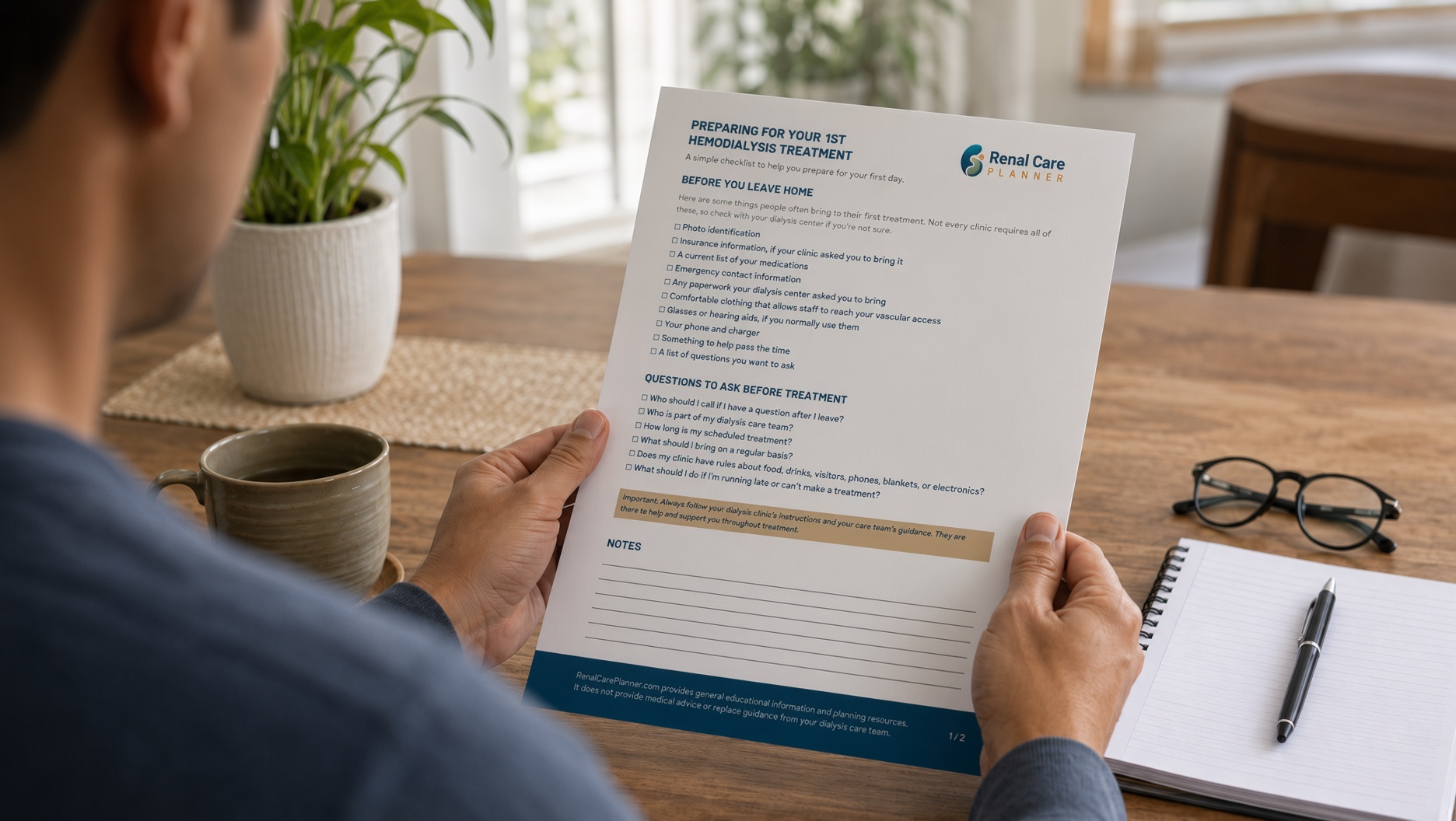
Your clinic should tell you what it wants you to bring for your first visit. Beyond those instructions, many people find it helpful to think about personal comfort, something to do during chair time, and a simple way to keep important information organized.
- Information or documents your clinic asks you to bring
- An up-to-date medication list if your clinic requests one
- Questions you want to ask your care team
- Comfortable clothing that works with your vascular access
- A phone, tablet, book, headphones, or another activity your clinic permits
- A small bag or organizer for personal items you bring regularly
Clinic policies differ, so ask before assuming you can bring a particular food, drink, electronic device, visitor, or other item onto the treatment floor.
Questions you can ask during your first few treatments
- Who should I ask if I have a question during treatment?
- Who should I contact if I have a question between treatments?
- What type of vascular access do I have?
- What changes with my access should I report?
- What do you want me to tell you before each treatment?
- Which treatment numbers or terms would be useful for me to understand?
- Which items can I bring to the treatment floor?
- What should I expect after treatment?
For a longer list of questions organized by topic — including vascular access, symptoms, and medications — see Questions to Ask Your Dialysis Care Team.
One practical suggestion
Write things down as they come up.
The first few weeks of dialysis can bring a lot of new information. You do not need to memorize all of it. Keep a note on your phone or use a small question sheet to record unfamiliar terms and questions between treatments.
The routine gets more familiar
During the first treatment, every sound, step, and piece of equipment may stand out because everything feels new. After several visits, many parts of the routine become recognizable: weighing in, getting settled, connecting to the machine, hearing it run, completing treatment, and getting ready to go home.
You do not need to become an expert in dialysis equipment to become a more informed patient. Start by understanding the routine, learning the terms you hear most often, and asking questions when something does not make sense.
Related Renal Care Planner Resources
- What Happens During Hemodialysis?
- What to Bring to Dialysis: A Practical Treatment-Day Packing Guide
- What Is Dry Weight (Target Weight) in Dialysis?
- Why Am I So Tired After Dialysis?
- What to Wear to Dialysis: A Practical Guide for Treatment Days
- Free First Hemodialysis Treatment Checklist (printable PDF)
Sources
General education only. Renal Care Planner provides general educational information and planning resources. Discuss treatment prescriptions, fluid goals, medications, diet, vascular access care, symptoms, and other individualized health decisions with your dialysis care team.