

Being a grandparent is one of the joys many people worry dialysis will take away. Treatment eats up time, and fatigue can make babysitting or keeping up with toddlers harder. But plenty of grandparents on dialysis stay deeply involved. It just looks a little different. Here’s how to explain dialysis to grandkids, stay close on low-energy days, and keep everyone safe.
Quick answer
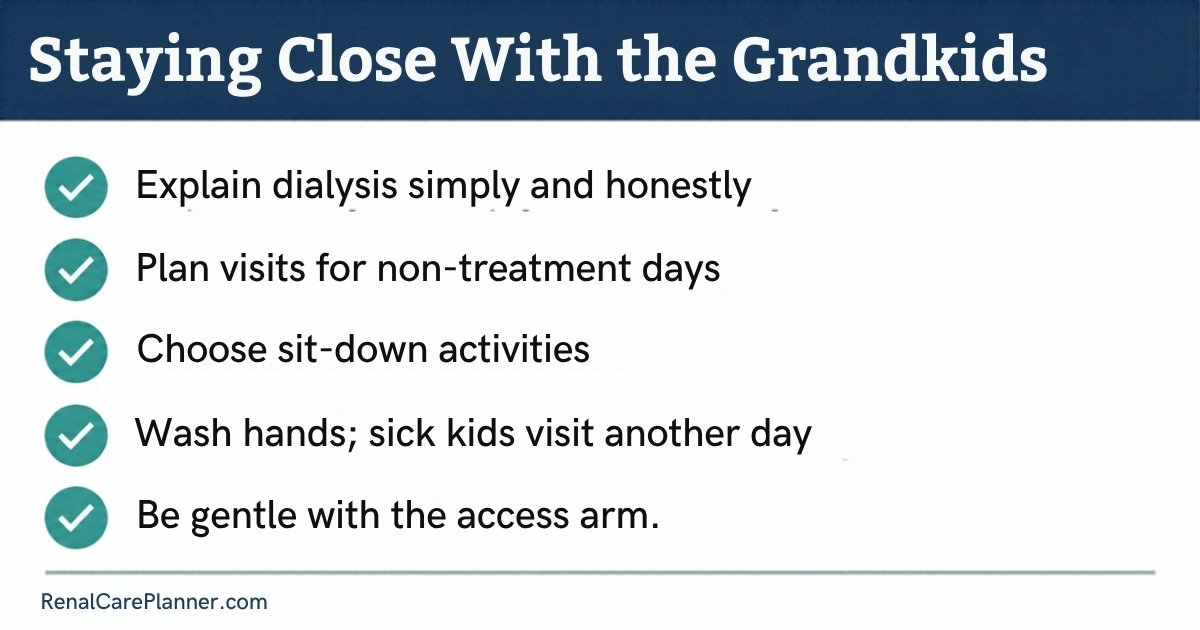
Explain dialysis simply and honestly, matched to the child’s age. Plan visits and babysitting for non-treatment days when you have more energy. Choose sit-down activities like reading, games, cooking together, or video calls. Teach kids to be gentle with your access arm, and ask families to keep sick kids home and wash hands. Talk with your adult children about what help you can realistically give.
Explaining dialysis to kids
- Little ones (about 3 to 6): “Grandpa’s kidneys are sick, so a special machine cleans his blood a few times a week. It helps him feel better.”
- School-age kids: Explain that kidneys clean the blood, and dialysis does that job now. Let them ask questions. If the clinic allows it, a short visit or photos of the machine can make it less scary.
- Teens: Be straightforward. They may want to help, or may worry quietly. Invite them to ask anything.
Kids often worry they caused it or that it’s contagious. Tell them clearly that neither is true.
Low-energy ways to connect
- Read together or record yourself reading a bedtime story
- Board games, cards, puzzles, and drawing
- Teach a family recipe from a chair while they do the stirring
- Tell family stories and look through old photos
- Video calls or texting games during your treatment, if your clinic allows
- Watch their game or recital and save your energy for the celebration after
Germs and the access arm
- Ask families to keep visits short or postpone when kids are sick
- Make handwashing part of every visit
- Stay current on flu and other vaccines your care team recommends
- Teach kids not to lean on, squeeze, or hang on your access arm. A fistula “buzz” can be a fun thing for older kids to feel gently, with permission.
- If you have a catheter, keep it covered and away from small hands
More: Protecting Your Fistula or Graft.

If this sounds familiar
You used to watch your granddaughter three days a week, and now you feel guilty saying you can’t. Try offering what you can do: one non-treatment afternoon, homework help over video, or being the backup on sick days. Your family likely values the time more than the number of hours.
Babysitting and expectations
Be honest with your adult children about energy, especially right after treatment. Babysitting toddlers alone on dialysis days may not be safe if you get dizzy or tired. Older kids who can be independent are often easier. Agree on a backup plan in case you don’t feel well, and keep your emergency info where the parents can see it.
Grandkids far away
Regular video calls, mailed letters, and shared online games keep you close. Visiting is possible with planning, since you can arrange treatment at a clinic near them. See Can Dialysis Patients Travel?
Plan visits around your treatment week
Share your contacts and schedule with family so they know your good days and who to call.
Where to go next
- Keep it all in one place: The 90-Day Dialysis Planner
- Parenting: Parenting While on Dialysis
- Holidays: Holidays and Family Dinners on Dialysis
- Feeling like a burden: “I Feel Like a Burden”
The main thing to remember
Dialysis changes how you spend time with your grandkids, not whether you matter to them. Explain it simply, plan around your good days, keep germs and your access in mind, and lean into the things you can do sitting down.
Sources
General education only. This article offers general information and is not medical advice. Ask your care team about vaccines, infection precautions, and activity limits that apply to you.