

Many people stop working when they start dialysis, then later feel ready to go back, part-time or full-time. The biggest fear is usually losing disability benefits or health coverage. Social Security has rules designed to let you test work safely, and free programs can help with job training and planning. Here’s how they fit together.
Quick answer
If you get SSDI, the Trial Work Period lets you test work for nine months (not necessarily in a row) and keep your full benefit. In 2026, any month you earn over $1,210 counts as a trial month. After that, an extended period gives you more protection. Ticket to Work is a free, voluntary program that connects you with job services. California’s Department of Rehabilitation helps with training and job placement. Before you start, talk to a free work incentives counselor so you know exactly how your income affects benefits and coverage.
Start with a benefits counselor
The rules are complicated, and mistakes can lead to overpayments you have to pay back. Free Work Incentives Planning and Assistance (WIPA) counselors explain how work affects your specific benefits. Call the Ticket to Work Help Line at 1-866-968-7842 to be connected. In California, Disability Rights California runs a WIPA program.
SSDI Trial Work Period
- You get nine trial work months within a rolling 60-month window
- In 2026, a month counts if you earn more than $1,210 gross (or work more than 80 hours if self-employed)
- You keep your full SSDI check during trial months
- After nine months, a 36-month Extended Period of Eligibility begins. You get benefits for months when earnings are under the substantial gainful activity (SGA) limit.
- Report all work and earnings to Social Security promptly
Ticket to Work
Ticket to Work is free and voluntary for people ages 18 to 64 who get SSDI or SSI. You assign your “ticket” to an Employment Network or state vocational rehab agency, which helps with career planning, job search, and support after you’re hired. While you’re making timely progress in the program, Social Security generally won’t start a medical continuing disability review.
California Department of Rehabilitation
The California Department of Rehabilitation (DOR) helps people with disabilities prepare for, find, and keep jobs. Services can include career counseling, training or school costs, job placement, and help with workplace accommodations. People who get SSDI or SSI are generally presumed eligible. Contact your local DOR office to apply.

If this sounds familiar
You’ve been on SSDI for two years, feel steadier on evening dialysis, and a friend offered you part-time office work. Before you say yes, call a WIPA counselor, figure out how many trial months you’ve used, and ask DOR whether they can help with training to move into something better paid later.
Health coverage
If your Medicare is based on kidney failure (ESRD), it’s tied to your dialysis or transplant, not to whether you work, so working generally doesn’t end it. If you have employer insurance too, see The Medicare Coordination Period. For Medi-Cal, California’s Working Disabled Program may let you keep coverage while earning more. Ask your counselor.
If you get SSI
SSI works differently. Your check is reduced gradually as you earn, not cut off right away, and special rules (often called 1619(b)) may let you keep Medi-Cal even if your SSI payment stops. A benefits counselor can run the numbers for you.
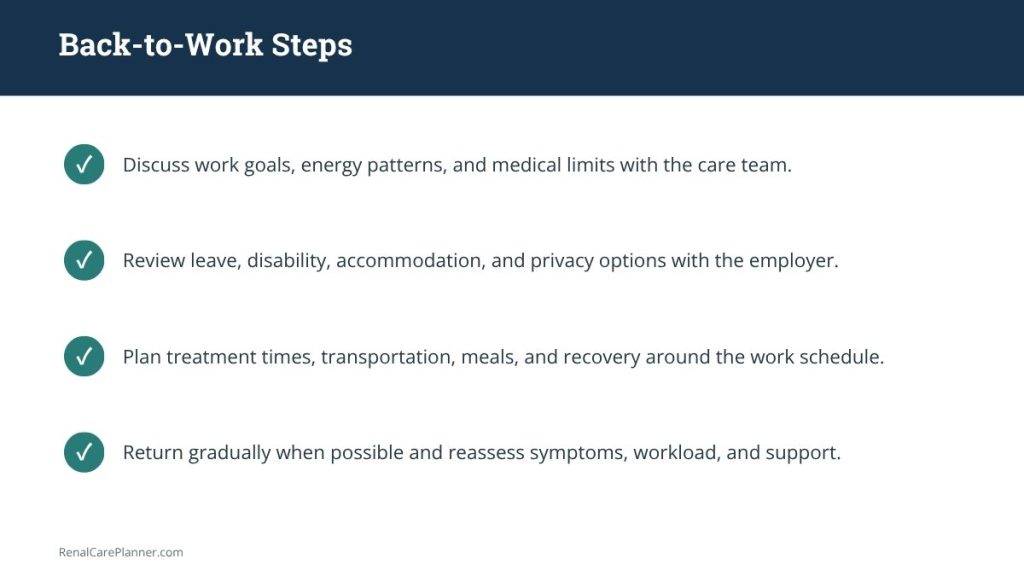
Plan work around your treatment
Bring your work goals to your care team. Your schedule or dialysis type may be adjustable.
Where to go next
- Keep it all in one place: The 90-Day Dialysis Planner
- Working vs. disability: Working vs. Disability on Dialysis
- Telling your boss: How to Tell Your Boss You’re Starting Dialysis
- Self-employment: Self-Employed or Gig Work on Dialysis
The main thing to remember
You can test going back to work without immediately losing your safety net. Talk to a free benefits counselor first, use Ticket to Work and DOR for job support, and report your earnings to Social Security on time.
Sources
- SSA Red Book: Trial Work Period
- Disability Rights California: Trial Work Period in 2026
- SSA: Ticket to Work (Choose Work)
- California Department of Rehabilitation
General education only. This article offers general information, not legal or benefits advice. Dollar amounts change each year. Confirm your situation with Social Security or a benefits counselor before making work decisions.