

For someone who needs dialysis to live, losing a spot at a clinic is frightening. Some patients hear a staff member say “you could be discharged” during a conflict and worry about it for months. Federal rules for Medicare-certified dialysis facilities limit when a clinic can involuntarily discharge a patient and spell out the steps it must take. Knowing those rules helps you respond calmly and get help early.
Quick answer
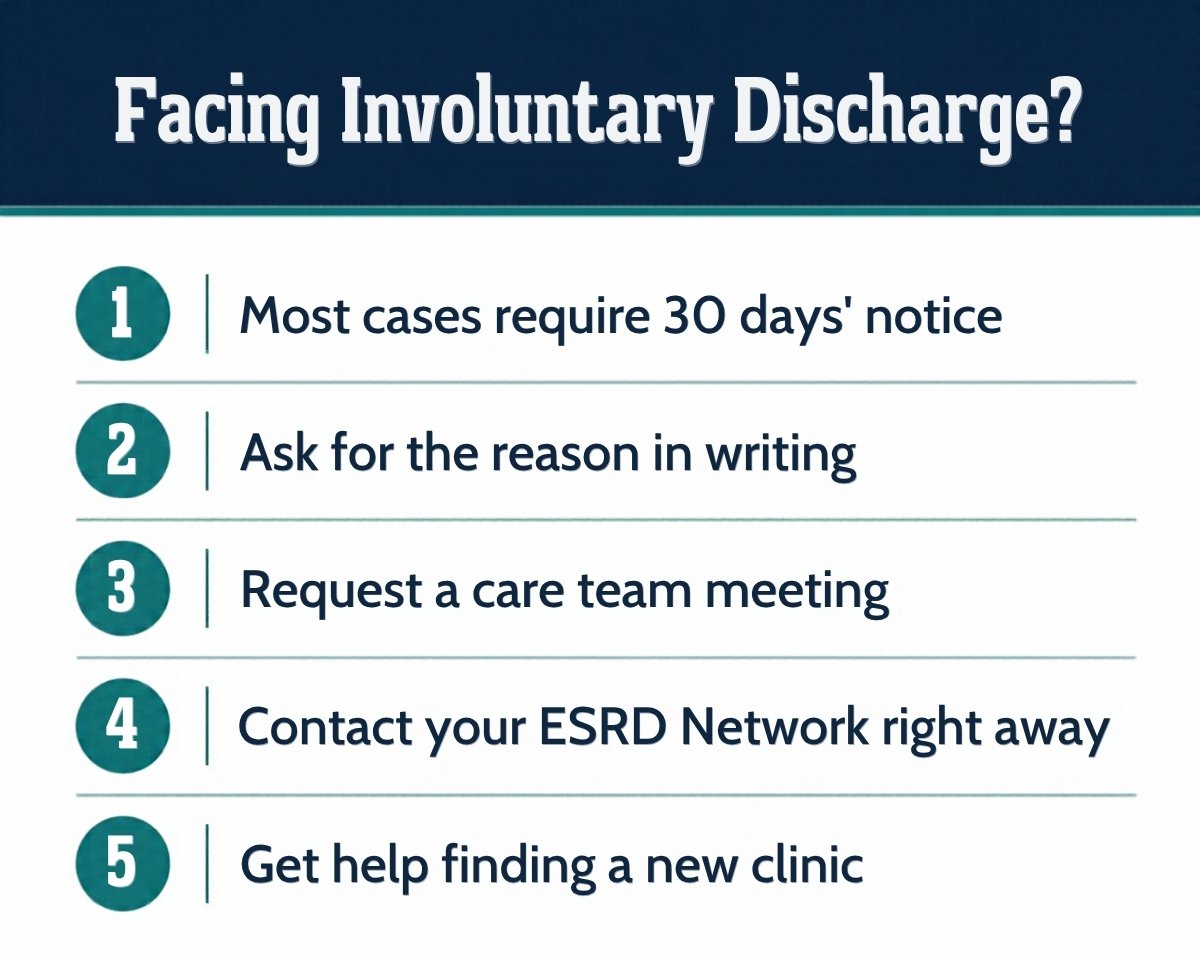
Under federal rules, a dialysis facility may involuntarily discharge or transfer a patient only for specific reasons: nonpayment for services, the facility closing, medical needs the facility can’t meet, or disruptive or abusive behavior that seriously impairs care or the facility’s operation. For behavior-based discharges, the clinic must reassess and document the problems and efforts to fix them, give you and the ESRD Network 30 days’ written notice, get an order signed by both the medical director and your doctor, try to place you at another facility, and notify the state survey agency. An abbreviated process is allowed only for immediate, severe threats. If you’re warned or receive a notice, contact your ESRD Network right away.
The allowed reasons
Federal Conditions for Coverage for dialysis facilities (42 CFR 494.180) say the medical director may involuntarily discharge or transfer a patient only if:
- The patient or payer no longer pays the facility for the ordered services
- The facility is closing
- The patient’s documented medical needs can’t be met by the facility, and transfer is for the patient’s welfare
- After reassessment, the patient’s behavior is disruptive or abusive enough to seriously impair care for other patients or the facility’s operation
The steps a clinic must follow
For a discharge based on disruptive or abusive behavior, the rules require the clinic’s interdisciplinary team to:
- Reassess the patient and document the ongoing problems and efforts made to resolve them in the medical record
- Give the patient and the local ESRD Network 30 days’ notice of the planned discharge
- Obtain a written physician’s order signed by both the medical director and the patient’s attending physician
- Contact another facility, try to place the patient there, and document that effort
- Notify the state survey agency of the involuntary discharge or transfer
Separately, patients’ rights rules say patients have the right to receive written notice 30 days in advance of an involuntary discharge. An abbreviated process is allowed only when there is an immediate, severe threat to others’ health and safety.
What isn’t enough on its own
- “Non-compliance.” An ESRD Network’s involuntary discharge guidelines state that discharging a patient for non-compliance is not an acceptable reason. Missing treatments, shortening runs, or not following a diet is not, by itself, grounds for discharge.
- Asking questions or filing a grievance. Federal rules say patients may file grievances without reprisal or denial of services.
If this sounds familiar
After an argument about your chair time, a staff member said, “Keep this up and you’ll be discharged.” You’ve been anxious ever since. A comment isn’t a discharge, and there’s a defined process the clinic would have to follow. Write down what was said and when, ask to meet with the social worker or administrator to clear the air, and save your ESRD Network’s number in case you need it.
If you’re warned about discharge
- Stay calm in the moment. Arguing on the treatment floor rarely helps.
- Write it down: who, what, when, and any witnesses.
- Ask for a meeting with the social worker, nurse manager, or administrator to understand the concern and agree on a plan.
- Call your ESRD Network. Networks consult with facilities to decrease involuntary discharges and can help mediate.
- Bring support. A family member or advocate can help keep conversations productive.
If you receive a discharge notice
- Keep going to every scheduled treatment. Don’t miss dialysis while this is sorted out.
- Call your ESRD Network immediately. It should already have received notice, and it can review whether the facility followed the required steps.
- Ask the clinic in writing for the reason and the documentation of the steps taken.
- Ask about placement efforts. The clinic must try to place you elsewhere.
- Consider the state survey agency as well.
- Get legal help if you need it. Legal aid or disability rights organizations may be able to advise you.
If you are discharged and can’t get dialysis, go to an emergency room. Don’t go without treatment.
Lowering the tension before it gets there
- Raise concerns early and calmly, before frustration boils over. See How to Raise a Problem at Your Dialysis Clinic.
- If treatment days leave you angry or overwhelmed, talk to the social worker. That’s part of their job.
- If depression or stress is making things harder, see Depression and Dialysis.
Questions to ask the clinic
- Can I have a copy of the facility’s discharge and transfer policy?
- What exactly is the concern, and what would resolve it?
- Has the ESRD Network been notified?
- What efforts are being made to place me at another facility?
Keep the right numbers handy
Save your ESRD Network, state agency, and social worker contacts in one place now.
Where to go next
- Keep it all in one place: The 90-Day Dialysis Planner
- Understanding your Network: What Is an ESRD Network?
- Raising concerns the right way: How to Raise a Problem at Your Dialysis Clinic
- Missed treatments: What Happens If You Miss a Dialysis Treatment?
The main thing to remember
Federal rules limit involuntary discharge to specific reasons and require a documented process, including 30 days’ written notice to you and the ESRD Network. If you’re warned or receive a notice, keep going to treatment, document everything, and call your Network right away.
Sources
- 42 CFR 494.180: Governance, Including Involuntary Discharge and Transfer
- 42 CFR 494.70: Patients’ Rights
- IPRO ESRD Network 6: Dialysis Facility Involuntary Discharge Guidelines
- Quality Insights Renal Network 4: Access to Care
General education only. This guide summarizes federal rules for Medicare-certified dialysis facilities as of October 2026. It is not legal advice. If you are facing discharge, contact your ESRD Network and consider legal aid. If you cannot get dialysis, go to an emergency room.