

Dialysis can be a bridge to a transplant, or it can be the long-term plan. Some people live on dialysis for 10, 20, or more years, working, raising families, and traveling. Long-term patients often know more about their own treatment than anyone in the room. They also face issues that build up over time. Here’s what to watch for and what helps people do well for the long haul.
Quick answer
Protect your access like the lifeline it is. Keep phosphorus and calcium in range to protect bones and blood vessels. Get every treatment and full treatment time. Stay active, keep up with heart and other screenings, and watch for new joint or nerve symptoms. Re-check your transplant and home dialysis options every so often. And watch for burnout. Long-term patients often get tired of the routine, which is normal but worth talking about.
Protecting your access
Over years, access sites can narrow, clot, or run out of good spots. Feel for the thrill every day, report changes early, ask about needle site rotation or buttonhole technique, and protect your other arm’s veins too: ask that blood draws and IVs come from your hand when possible. See Protecting Your Fistula or Graft.
Bones and blood vessels
Years of high phosphorus or PTH can weaken bones and harden blood vessels. This is called CKD mineral and bone disorder. Taking binders with every meal, following your dietitian’s advice, and staying on top of your monthly labs matter more the longer you’re on dialysis. See Dialysis Lab Terms Explained.
Other long-term issues to watch
- Heart health. Heart disease is the leading cause of death for people on dialysis. Controlling fluid gains and blood pressure helps.
- Joint pain or carpal tunnel. Long-term dialysis can lead to a protein buildup (dialysis-related amyloidosis) that affects joints and wrists. Report new stiffness, hand numbness, or shoulder pain.
- Nerve problems and itching. Tingling feet or constant itch are worth raising, as treatments exist.
- Strength and balance. Muscle loss creeps up. Regular movement helps protect your independence.
Treatment burnout
After years of three-times-a-week treatment, it’s common to feel worn down, cut sessions short, or loosen up on fluids. These slips add up over time. If you notice it, talk to your team. Changing your shift, trying home dialysis, setting a new goal, or getting counseling can help. See Depression and Dialysis.

If this sounds familiar
You’ve been on dialysis for 12 years. You know the machines better than some new techs, and lately you’ve been signing off 20 minutes early “just this once” more often. That’s a sign of fatigue, not failure. Tell your nurse what’s making the full time hard, whether it’s cramps, boredom, or schedule, and ask what can change.
Revisiting your options
Your health and life change over a decade, and so do the options. Every year or two, ask: Am I a transplant candidate now? Would home dialysis fit my life better? Is my current schedule still right? See Thinking About Home Dialysis? and Life on the Transplant Waiting List.
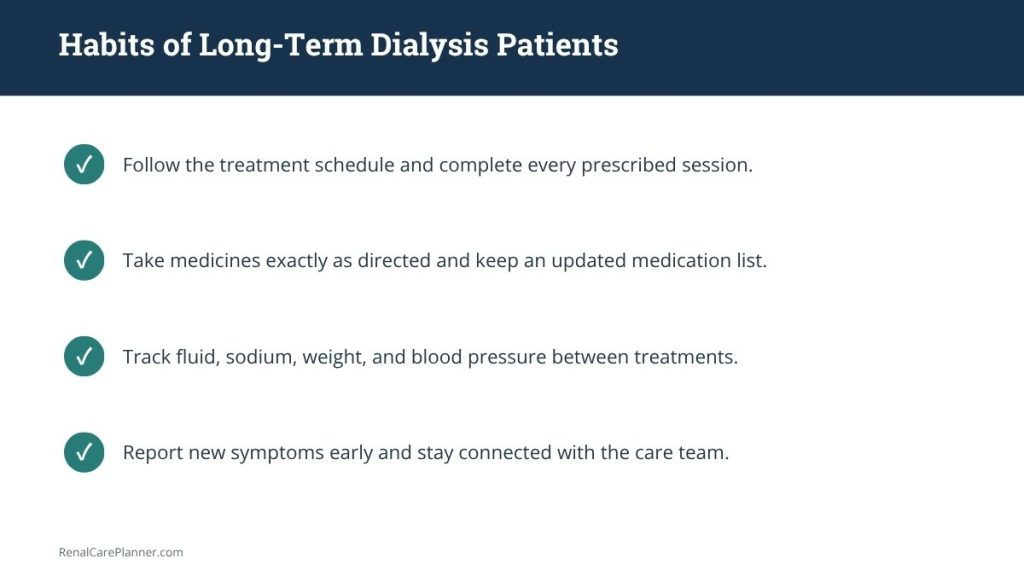
Habits of long-term patients
- They don’t skip or shorten treatments
- They know their numbers and ask about trends
- They speak up early about access changes and new symptoms
- They keep a life outside dialysis: work, hobbies, family, faith, travel
- They share what they’ve learned with newer patients
Review your plan once a year
Bring a fresh list of questions to your annual care plan meeting.
Where to go next
- Keep it all in one place: The 90-Day Dialysis Planner
- Treatment time: Why Dialysis Takes So Long
- Fluid: Managing Fluid Restriction
- Clinic concerns: How to Raise a Problem at Your Dialysis Clinic
The main thing to remember
Doing well on dialysis for many years comes down to steady basics: full treatments, a protected access, controlled phosphorus and fluid, regular screenings, and a life worth showing up for. Revisit your options as things change, and speak up when burnout sets in.
Sources
- National Kidney Foundation: Mineral and Bone Disorder in CKD
- NIDDK: Dialysis-Related Amyloidosis
- United States Renal Data System: Annual Data Report
General education only. This article offers general information and is not medical advice. Talk with your nephrologist and care team about your own long-term plan.