

Not every dialysis caregiver is family. Sometimes it is the neighbor who drives on Wednesdays, the friend from church who brings dinner, the longtime partner who never married, or the coworker who checks in after treatment. Non-family caregivers often do a lot of the same work as family, but without the same built-in standing at the clinic. This guide covers what you can do, what the clinic can tell you, and how to protect the friendship while you help.
Quick answer
You do not need to be related to help someone on dialysis. Under the federal HIPAA privacy rule, a clinic may share relevant information with a friend who is involved in someone’s care when the patient is present and does not object, or agrees. The cleanest way to avoid “we can’t tell you that” is for your friend to tell the clinic, ideally in writing, that you are part of their support team. In California, IHSS also lets recipients choose a friend as their paid provider if they qualify for the program.
What a friend or neighbor can help with
The most useful help is usually practical and predictable. Dialysis runs on a fixed schedule, so small, regular commitments often matter more than big gestures.
- One standing ride a week. Taking a single treatment day off the family’s plate can make a real difference.
- A post-treatment check-in. A text or call a couple of hours after your friend gets home, especially if they live alone.
- Errands on treatment days. Picking up groceries or prescriptions when your friend is too tired to go out.
- Company in the evenings. Dialysis can be isolating. Ordinary social time counts.
- Being the backup. Agreeing to be the person who can step in if the regular ride falls through.
Ask your friend what would actually help. Some people want rides; others mostly want someone to talk to who is not treating them like a patient.
What the dialysis clinic can tell you
Many caregivers assume HIPAA blocks clinics from talking to anyone but family. That is not quite how it works. According to the U.S. Department of Health and Human Services:
- A provider may share relevant information with family members, friends, or others involved in a patient’s care if the patient agrees or, when given the chance, does not object.
- If the patient is not present, staff may use professional judgment about whether sharing is in the patient’s best interest.
- HIPAA does not require a provider to share information with family or friends unless they are the patient’s legal personal representative.
In practice, that means a clinic is allowed to talk with you, but it can also choose to be cautious. Being related is not what makes the difference. What makes the difference is the patient clearly saying you are involved in their care.
How to get added to your friend’s contact list
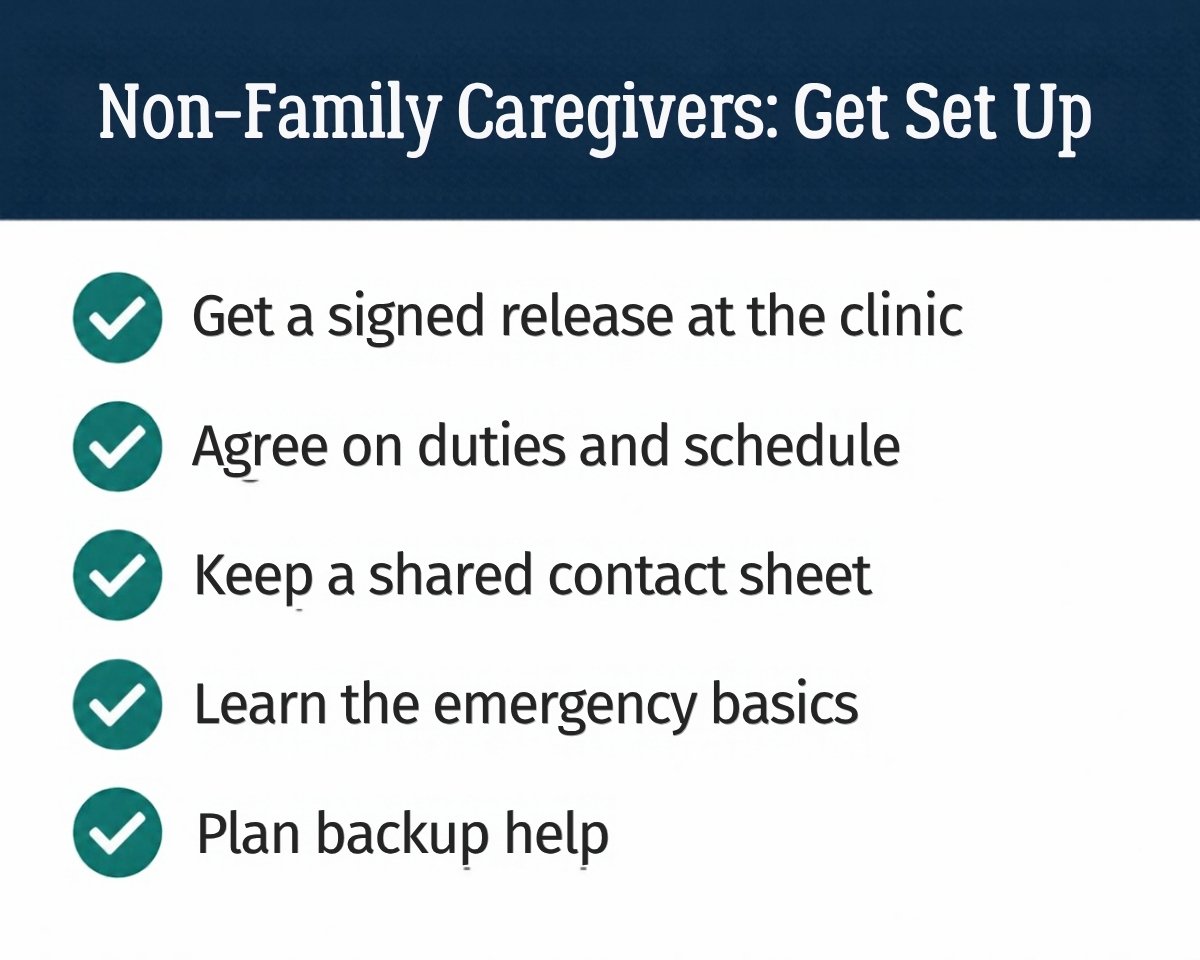
- Have your friend tell the clinic directly. Something like, “This is Maria. She drives me on Mondays, and it is okay to talk with her about my treatment.”
- Ask about a written authorization. Many clinics have a form that lets a patient name people the clinic can share information with. Having it on file reduces confusion when staff change.
- Get listed as an emergency contact if your friend wants that.
- Ask what the clinic needs if plans change, such as a late pickup or a shortened treatment, and who you should call.
For bigger decisions, some people also choose to name a trusted person in a legal document like an advance health care directive. That is a separate step. Your friend can ask their social worker or an attorney about it.
Can a friend be paid to help?
In California, if your friend qualifies for In-Home Supportive Services (IHSS), they can choose their own provider, and that provider does not have to be family. A friend or neighbor can enroll as an IHSS provider, complete the background check and orientation, and be paid for authorized hours.
- IHSS for Dialysis Patients in California explains who qualifies.
- Becoming an IHSS Provider walks through enrollment. The steps are the same for a friend.
- Can IHSS Pay for Time at Dialysis? explains why driving alone usually is not enough to be paid.
Outside of IHSS, informal help from a friend is usually unpaid. If your friend’s family offers to pay you privately, talk openly about expectations and any tax or employment questions before you agree.
If you are an unmarried partner
Long-term partners who are not legally married often do the most care of anyone, yet may be treated as “just a friend” on paperwork. The same steps help: have your partner tell the clinic you are part of their care, put a written authorization on file, and talk with the social worker about whether any legal documents make sense for your situation. How IHSS treats your household can depend on your circumstances, so ask the county directly.
If this sounds familiar
You have been picking up your neighbor from dialysis every Friday for a year. Last week he looked pale and unsteady, and when you asked the front desk whether he was okay, they said they could not discuss it. That was frustrating, but it is fixable. Next time you are together, ask him whether he would like to add you to his list of people the clinic can talk to.
Setting limits so the friendship lasts
Non-family caregivers often drift into doing more and more, because there is no family meeting where roles get decided. A few habits help:
- Be specific about what you can offer. “I can do Wednesday rides through December” is easier to keep than “Call me anytime.”
- Know who the main contact is. If your friend has family, find out who coordinates, so you are not making decisions that are not yours to make.
- Say so early if something changes. A new job or your own health problem is a reason to adjust, not a reason to feel guilty.
- Keep some of the relationship about something other than dialysis. You are still their friend.
Questions to ask (with your friend’s permission)
- Can the clinic add me as someone you can talk to about my friend’s treatment?
- What time should I plan to pick up, and who will call me if treatment runs late?
- Is there anything I should watch for after treatment that means I should call the clinic?
- Who is the dialysis social worker, in case transportation or support needs change?
Keep everyone on the same page
A shared contact sheet with the clinic number, treatment times, and who covers which day makes it easier for friends and family to coordinate.
My Dialysis Care Team & Contacts →
Want it all in one place? The 90-Day Dialysis Planner keeps treatment notes, patterns, and questions together for three months.
Where to go next
- You are new to helping: What Caregivers Should Know: Supporting Someone New to Dialysis
- You noticed something off after treatment: When a Rough Day Becomes a Pattern
- A ride fell through: What to Do If Your Ride to Dialysis Falls Through
- Your friend might qualify for paid help: IHSS for Dialysis Patients in California
The main thing to remember
You do not have to be family to be part of someone’s dialysis support. What opens doors at the clinic is your friend saying, clearly and ideally in writing, that you are involved in their care. Offer specific, steady help, keep the friendship about more than treatment, and adjust honestly when your own life changes.
Sources
- U.S. Department of Health and Human Services: HIPAA and Family Members and Friends
- HHS FAQ: When Does HIPAA Allow a Provider to Discuss Information With Family or Friends?
- California Department of Social Services: IHSS Program
- CDSS: Recipient Designation of Provider (SOC 426A)
General education only. This guide provides general information about privacy rules and caregiver programs in the United States and California as of October 2026. Clinic policies, state programs, and individual situations vary. Renal Care Planner does not provide legal or benefits advice. For questions about legal documents or eligibility, talk with the dialysis social worker, the county, or an attorney.