

Holidays are built around food and drinks: ham, gravy, tamales, potato salad, pie, punch, coffee all afternoon. On dialysis, one big day can mean extra fluid weight, a harder next treatment, or a potassium scare. You don’t have to skip the gathering. A bit of planning lets you enjoy the people and the food without paying for it on the chair.
Quick answer
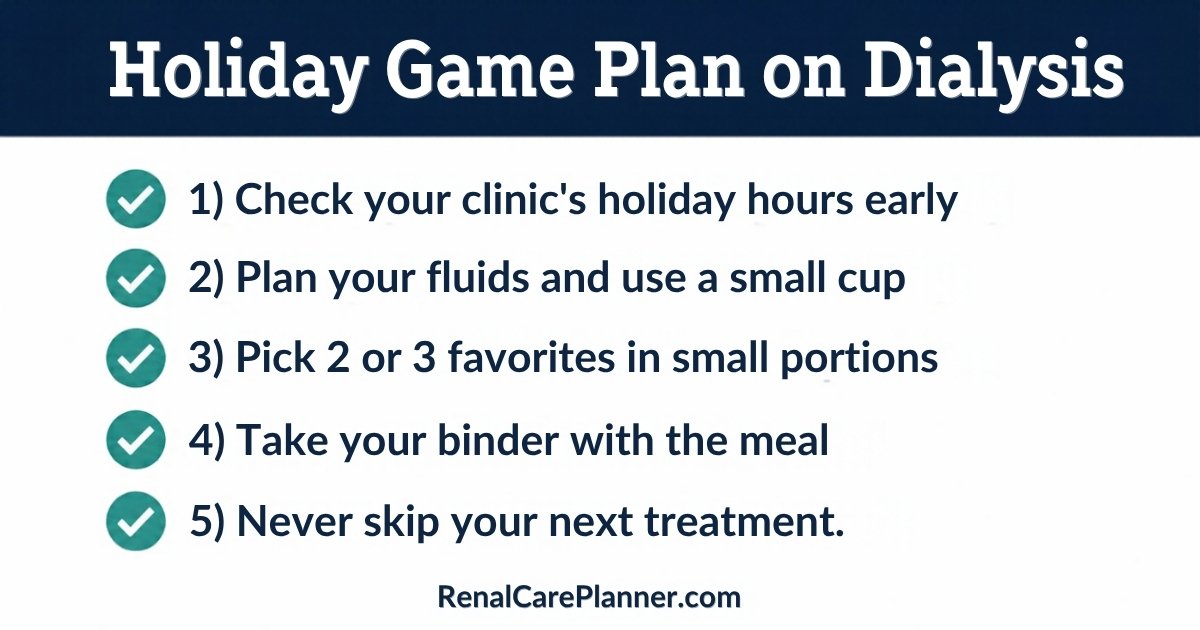
Check your treatment schedule early, since clinics often shift sessions around holidays. Plan your fluids for the day, use a small cup, and go easy on salty foods that make you thirsty. Choose a few favorites in small portions instead of a full plate of everything. Watch high-potassium sides and take your phosphate binder with the meal. Ask your dietitian ahead of time which dishes to limit. If you overdo it, don’t skip your next treatment.
Check the treatment schedule first
Many clinics close or shift hours on major holidays, which can move your session a day earlier or later. Ask a few weeks ahead. A holiday that lands after your longest gap between treatments, like the end of a weekend, is the riskiest time for extra fluid and potassium, so be extra careful then.
Fluid on a long day
- Decide your fluid amount for the day and spread it out
- Use a small cup and sip slowly. Bring your own if needed.
- Remember soups, gravy, ice cream, gelatin, and ice all count
- Limit salty foods. Thirst is what usually breaks a fluid plan.
- Try sugar-free gum, mints, or frozen grapes for dry mouth
More tips: Managing Fluid Restriction on Dialysis.
Building your plate
Pick the two or three dishes you love most and have small portions. Common holiday foods that are often high in sodium, potassium, or phosphorus include ham and cured meats, gravy, stuffing from mixes, mashed or sweet potatoes, beans, tomato-based dishes, cheese trays, chocolate, and nut-heavy desserts. Turkey or chicken, rice, green beans, dinner rolls, and fruit pies like apple or cherry are often easier choices. Your dietitian can tell you what fits your labs.
Take your phosphate binder with the meal, and with any big snack later. See What Can You Eat on Hemodialysis?
Handling food pushers
“It looks amazing. I’m on a special diet for my kidneys, so I’m having a little of the things I love most. Can you save me a small piece for later?”
A friendly, simple answer usually ends the conversation. Ask a family member ahead of time to back you up if someone keeps pushing.
If this sounds familiar
Last Thanksgiving you came in four kilos over and cramped through the whole session. This year, try bringing one kidney-friendly dish you actually like, filling a small plate once, and switching to ice chips after dinner instead of refills. Small changes can make the next treatment much easier.
Hosting or traveling
- Hosting? Cook with herbs, garlic, lemon, and pepper instead of salt, and keep a few low-salt options on the table.
- Bringing a dish? Make something you know you can eat.
- Traveling? Holiday seats at visiting clinics fill fast. Start arranging treatment weeks ahead. See Can Dialysis Patients Travel?
- Pace yourself. Plan the gathering for a non-treatment day if you can, and leave before you’re exhausted.
If you overdo it
Get back on track at the next meal, keep fluids tight, and go to your next treatment as scheduled. Don’t skip it out of guilt. Tell the nurse what happened so they can plan. If you have shortness of breath, chest pain, or heavy swelling, or muscle weakness or an irregular heartbeat, call your clinic or 911 right away. See Missed a Dialysis Treatment?
Ask your dietitian before the holiday
Add “Which of my family’s holiday dishes should I limit?” to your question list.
Where to go next
- Keep it all in one place: The 90-Day Dialysis Planner
- Cramps: Why Do I Get Cramps During Dialysis?
- Blood pressure drops: Why Blood Pressure Drops During Dialysis
- Lab results: Dialysis Lab Terms Explained
The main thing to remember
Check your treatment schedule, plan your fluids, choose small portions of your favorites, take your binder, and keep your next treatment no matter what. The people are the best part of the holiday anyway.
Sources
- National Kidney Foundation: Dietary Guidelines for Adults Starting on Hemodialysis
- NIDDK: Eating & Nutrition for Hemodialysis
General education only. This article offers general information and is not medical or nutrition advice. Your fluid and diet limits are individual. Follow the plan from your dietitian and care team.