

Getting on the kidney transplant list is a big milestone, and then comes the waiting. For many people it lasts years, and the call can come at any hour. The wait is easier when you understand how it works, stay ready, and keep living your life in the meantime.
Quick answer
For adults, waiting time generally counts from when you started dialysis or when you were listed with low enough kidney function, whichever is earlier. Keep your status active by completing required tests, keeping dialysis treatments, and staying in touch with your transplant center. Make sure they can always reach you. Have a bag and a ride plan ready. Ask about living donation, which can shorten the wait. And plan your life as if the call could come next week or in five years.
How waiting time works
Under the national kidney allocation system, adult waiting time generally starts from the earlier of your dialysis start date or the date you were registered with a qualifying low kidney function. That means if you started dialysis before being listed, you may already have time banked. Ask your transplant center what your waiting time date is. How long people wait varies widely by region, blood type, and antibody levels.
Some people register at more than one transplant center, called multiple listing. Each center does its own evaluation, and you’d need to be able to get to each center quickly. Ask your center whether it makes sense for you.
Staying active on the list
You can be listed but put on “inactive” status, which means you still build waiting time but won’t receive offers. Common reasons include overdue tests, a new health problem, or missed treatments. To stay active:
- Complete annual tests and screenings on time (heart tests, cancer screenings, dental clearance)
- Keep your dialysis treatments and labs on track
- Stay as active and strong as you can
- Tell your transplant center about hospital stays, infections, or new diagnoses
- Keep your insurance current, and tell the center if it changes
- Ask every so often: “Am I active?”
Staying reachable
- Give the center several numbers, including a backup person
- Keep your phone charged and the ringer on, and don’t block unknown numbers
- Update your contact info right away if anything changes
- Tell the center before you travel

If this sounds familiar
You’ve been on the list for three years and assumed everything was fine, then learned you’d been inactive for months because a heart test lapsed. Call your transplant coordinator now to confirm your status and get a list of what’s due. Put the due dates on your calendar.
When the call comes
- Keep a bag packed: medication list, ID and insurance cards, phone charger, comfortable clothes
- Have a primary and backup ride, at any hour
- Arrange care for kids and pets in advance
- Follow the center’s instructions about eating, drinking, and dialysis before you go
- Know that sometimes you’ll be called as a backup, and the transplant may not happen. That’s disappointing but common.
Living donation
A kidney from a living donor can shorten or skip the wait and often lasts longer. Asking someone directly can feel impossible, so many people share their story and let potential donors come forward through the transplant center. Paired exchange programs can help if a willing donor isn’t a match for you. Donors are evaluated separately and confidentially.
Coping with the wait
Living “on hold” is exhausting. Many people find it helps to stop treating the list as the main event: keep working, studying, traveling, and making plans, with the transplant as a welcome interruption rather than the thing life is waiting for. Talk with your social worker if the uncertainty is wearing you down.
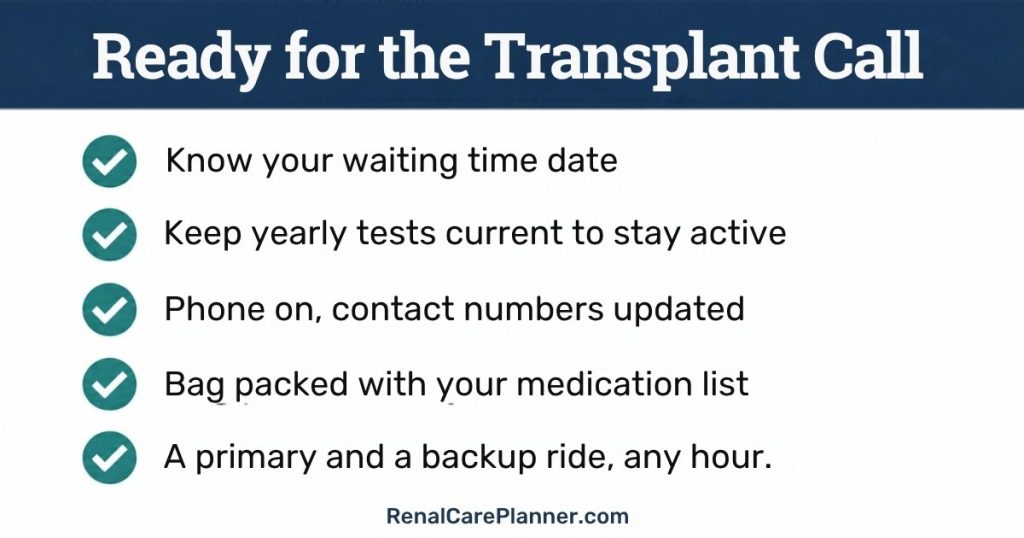
Keep your list-ready info current
Your medication list and contacts are what you’ll grab when the call comes.
Where to go next
- Keep it all in one place: The 90-Day Dialysis Planner
- Travel while listed: Can Dialysis Patients Travel?
- Long-term treatment: Long-Term Dialysis: Thriving After Years on Treatment
- Questions for your team: Questions to Ask Your Dialysis Care Team
The main thing to remember
Know your waiting time date, stay active, stay reachable, and have your bag and ride ready. Ask about living donation. And don’t put your life on hold while you wait.
Sources
- OPTN: Kidney Allocation System FAQs
- OPTN/HRSA: Multiple Listing
- National Kidney Foundation: Kidney Transplant
General education only. This article offers general information and is not medical advice. Transplant policies and center requirements vary. Confirm your status and requirements with your transplant center.