

Whether you’re moving across the state, closer to family, or just want a clinic with a better schedule, you can change dialysis centers. The key is planning ahead. Openings aren’t always immediate, and the new clinic needs your records before it can accept you. Here’s how to make the switch without a gap in treatment.
Quick answer
Tell your current social worker as early as possible, ideally several weeks ahead. Pick a new clinic and confirm it has a chair at a time that works, accepts your insurance, and has a nephrologist who can take you. Your current clinic sends your records, recent labs, and treatment orders. Confirm your start date in writing, and don’t stop at your old clinic until the new one confirms. Set up rides to the new location before day one.
Start early
Tell your social worker as soon as you know you’re moving. They handle most of the paperwork. Clinics in some areas have waits for popular shifts, so the earlier you ask, the better your chance of a good chair time. If you’re moving suddenly, ask about temporary “transient” treatment at the new clinic while the permanent transfer is arranged, the same process used for travel.
Choosing the new clinic
- Use Medicare’s Care Compare tool to find and compare dialysis facilities
- Ask about shifts, including evening or nocturnal options
- Ask whether they offer home dialysis training if you’re interested
- Check how far it is and how you’ll get there
- Visit or call to get a feel for the staff
Records the new clinic needs
- Recent history and physical, and nephrologist notes
- Recent lab results, including hepatitis B status
- Current dialysis orders: dialyzer, time, blood flow, dry weight, bath
- Recent treatment flowsheets
- Access information and history
- Medication list and allergies
- Insurance information and the CMS 2728 form on file
Keep your own copies of key documents. If you’re on the transplant list, tell your transplant center about the move. Your waiting time stays with you, but you may need to change centers if you move far.
Insurance and rides
- Medi-Cal: update your county address. Your managed care plan may change if you move counties.
- Medicare Advantage: check the new clinic is in network and whether you need a new plan in your new area
- Employer insurance: confirm the clinic is in network
- Set up rides to the new clinic. See Medi-Cal Rides to Dialysis.

If this sounds familiar
You’re moving in three weeks, and the new clinic says it hasn’t received your records. Call your social worker, ask them to resend and confirm by phone, and ask the new clinic exactly what’s still missing. Don’t give up your last chair at the old clinic until you have a confirmed first treatment date in writing.
The first few weeks
New staff will be learning your access and preferences. Speak up about what works: which needle sites, how fast you usually go, cramping tips. Bring your medication list and question list to the first visit with your new nephrologist. If your chair time isn’t ideal, ask to be on the list for a better one. See How to Change Your Dialysis Chair Time.
Transfer checklist
- Told social worker and set a target date
- New clinic chosen and chair time confirmed
- Records sent and received
- Insurance confirmed for the new clinic
- Rides set up
- Transplant center notified
- Pharmacy updated
- First treatment date confirmed in writing
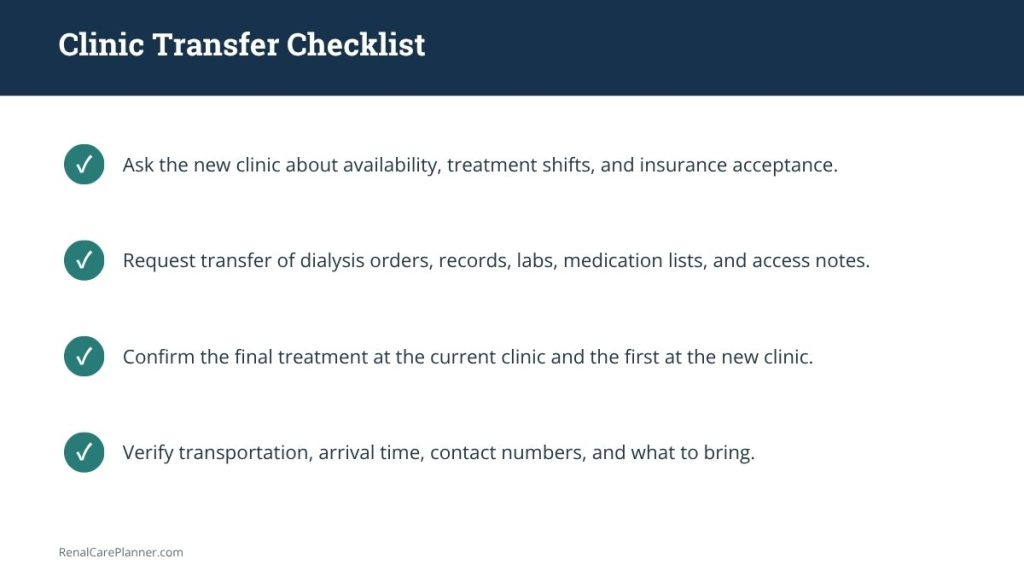
Bring your info with you
A current medication list and contact sheet make the first days at a new clinic smoother.
Where to go next
- Keep it all in one place: The 90-Day Dialysis Planner
- Travel treatments: Can Dialysis Patients Travel?
- Problems at your clinic: How to Raise a Problem at Your Dialysis Clinic
- ESRD Networks: What Is an ESRD Network?
The main thing to remember
Start early, let your social worker drive the paperwork, confirm insurance and rides, and never leave your old chair until the new clinic confirms your first treatment.
Sources
- Medicare Care Compare: Dialysis Facilities
- National Kidney Foundation: Dialysis Patients’ Rights and Responsibilities
General education only. This article offers general information and is not medical or insurance advice. Transfer processes vary by clinic and insurance. Work with your social worker and confirm coverage with your plan.