

Maybe you watch your little brother on treatment days, cook dinner more than your friends do, or keep an eye on your mom when she gets home wiped out. Lots of teens help care for a parent on dialysis, and it says a lot about you. But you’re still a teenager, and your school, friends, and feelings matter too. This page is for you.
Quick answer
Whatever you’re feeling, whether it’s worried, proud, tired, frustrated, or all of it, is normal. Talk to your parent about what you’re doing and what’s too much. Tell one trusted adult at school, like a counselor, so they understand if you’re behind or tired. Know what to do in an emergency. And keep making time for friends and things you enjoy. That’s not selfish. It’s how you keep going.
What you might be feeling
- Worried about your parent’s health
- Proud that you can help
- Annoyed that you can’t do what your friends do
- Guilty for feeling annoyed
- Embarrassed, or like nobody gets it
All of these can be true at the same time. None of them make you a bad kid.
Understanding dialysis
Kidneys clean the blood and remove extra fluid. When they stop working, dialysis does that job, usually three times a week for a few hours. Afterward, it’s common to feel very tired or dizzy. Your parent has limits on how much they can drink and what they can eat. It’s not contagious, and nothing you did caused it. Ask your parent or their nurse any questions you have.
School and friends
- Tell a counselor or teacher you trust what’s going on at home. They can help with deadlines or extra support.
- Keep one or two activities that are just yours
- It’s okay to tell friends as much or as little as you want
- If you’re falling behind or missing school to help, tell an adult. That’s a sign the family needs more help, not that you’re failing.

If this sounds familiar
You quit basketball because practice is on your dad’s treatment days and someone has to watch your sister. Talk to your dad about it. He might not know how much it mattered to you. Maybe a neighbor, relative, or after-school program can cover one or two of those days.
In an emergency
Call 911 if your parent:
- Has chest pain or trouble breathing
- Passes out or can’t be woken up
- Is bleeding heavily from their arm or catheter and it won’t stop with firm pressure
- Seems confused or very weak suddenly
Know where the emergency info sheet is, usually on the fridge, and keep a list of family numbers in your phone. Ask your parent to show you how to hold pressure on their access if it bleeds. See Dialysis Emergency Plan.
Who to talk to
- Your parent, when things are calm
- Another adult in the family
- Your school counselor
- The dialysis social worker, who can help families find more support
- If you ever feel hopeless or like you can’t cope, call or text 988 anytime
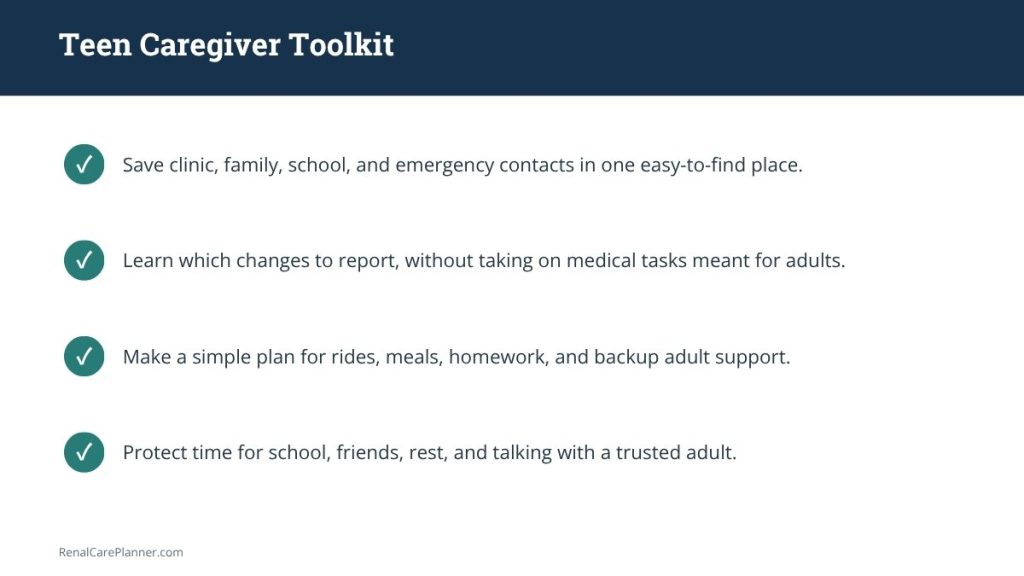
Know who to call
Ask your parent to fill out a contact sheet together and keep a copy on your phone.
Where to go next
- Keep it all in one place: The 90-Day Dialysis Planner
- For your parent: Parenting While on Dialysis
- Teens on dialysis themselves: Teens on Dialysis
- Caregiver stress: Caregiver Burnout
The main thing to remember
Helping your parent is a big deal, and so are you. Talk about what’s too much, tell a trusted adult at school, know what to do in an emergency, and protect time for your own life.
Sources
General education only. This article offers general information and is not medical advice. In an emergency, call 911. If you’re struggling, talk with a trusted adult or call or text 988.