

Dialysis doesn’t take holidays, and neither does caregiving. Rides, meals, medications, appointments, and worry, three times a week, for months or years. Research on dialysis caregivers consistently finds high stress. If you’re running on empty, it’s not a sign you’re doing it wrong. It’s a sign you need support too.
Quick answer
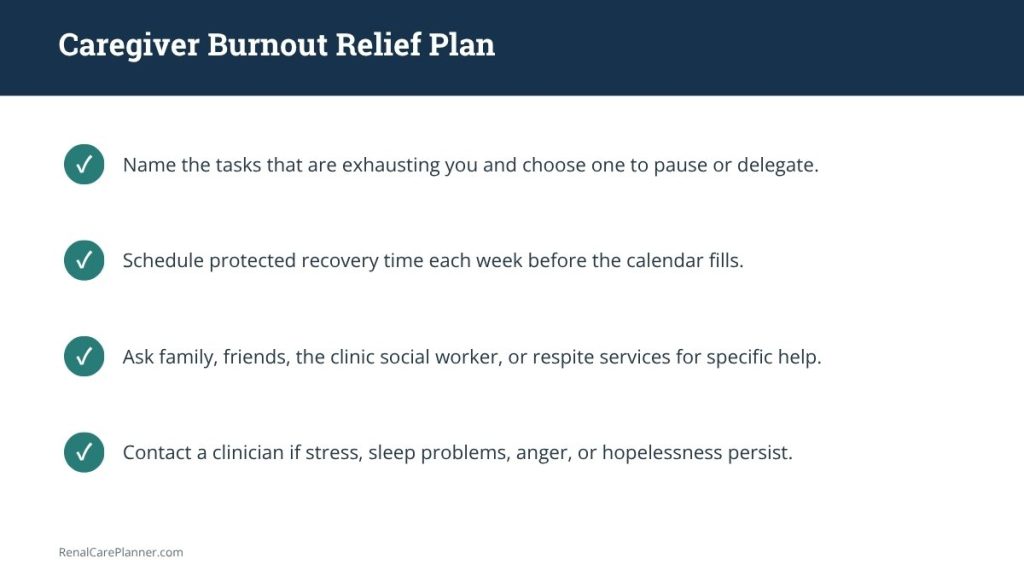
Watch for exhaustion, irritability, poor sleep, getting sick more often, and pulling away from friends. Hand off at least one recurring task, like one ride a week. Use respite care when you can. In California, Caregiver Resource Centers offer free support and respite help. Talk to the dialysis social worker about resources, and see your own doctor. If you feel hopeless or have thoughts of harming yourself, call or text 988.
Signs of burnout
- Constant tiredness, even after sleep
- Snapping at the person you’re caring for, then feeling guilty
- Skipping your own doctor visits and medications
- Dropping hobbies and friends
- Feeling resentful, hopeless, or numb
- Getting sick more often
Quick relief
- Use treatment time for yourself sometimes: a walk, a nap, coffee with a friend, instead of errands
- Drop one task that doesn’t really matter
- Move one recurring ride or meal to someone else
- Protect sleep. Ask about evening or nocturnal shifts only if they fit both of your lives. See Evening and Nocturnal Dialysis Shifts.
- Keep one thing each week that’s just for you
Respite options
- California Caregiver Resource Centers. A statewide network offering free consultation, support groups, and in some cases respite help for family caregivers.
- IHSS. If the person qualifies, another provider can take some hours. See IHSS for Dialysis Patients.
- Adult day programs. Some can work around dialysis days.
- Paid in-home help. See Hiring a Private Caregiver.
- Veterans programs. The VA offers caregiver support and respite for eligible veterans.

If this sounds familiar
You haven’t had a full day off in eight months. Your brother keeps saying “let me know if you need anything.” Text him something specific: “Can you take Dad to dialysis every Friday this month?” Specific asks get yeses far more often than open offers.
Asking for help
Make a list of every task you do in a week, then mark which ones others could do. Share it at a family meeting, or use a shared calendar. Ask the dialysis social worker to help find local resources, and tell your own doctor how you’re doing. See What Does a Dialysis Social Worker Do?
Letting go of guilt
Taking breaks doesn’t mean you care less. A rested caregiver notices more, stays patient longer, and can keep going for the long haul. Your loved one likely wants you to be okay too.
Make it easy for others to step in
A shared contact sheet means a backup helper doesn’t need you on the phone.
My Dialysis Care Team & Contacts →
Want it all in one place? The 90-Day Dialysis Planner keeps treatment notes, patterns, and questions together for three months.
Where to go next
- Sandwich generation: Caring for a Parent on Dialysis and Your Own Kids
- Protecting your job: FMLA and Dialysis
- Spouses: When Your Partner Starts Dialysis
The main thing to remember
Burnout is common among dialysis caregivers. Learn the signs, hand off specific tasks, use respite resources, and take care of your own health. Caring for yourself is part of caring for them.
Sources
- California Caregiver Resource Centers
- VA Caregiver Support Program
- Frequent Hemodialysis Network Trials: Perceived Caregiver Burden
- 988 Suicide & Crisis Lifeline
General education only. This article offers general information and is not medical or mental health advice. If you’re struggling, talk with your doctor or a counselor. In a crisis, call or text 988 or call 911.