

Your mom just started dialysis, and you’re three states away. You can’t drive her to treatment or see how she’s really doing, and every phone call ends with “I’m fine.” Long-distance caregiving is hard, but you can do more from afar than you might think: organizing, advocating, and making sure the right people are close by.
Quick answer
Get written permission so the clinic can talk to you. Meet the social worker, by phone if needed. Build a local team of neighbors, friends, or paid help for rides and check-ins. Take over remote tasks like scheduling, bills, insurance, and prescriptions. Set up regular video calls, and plan visits around care meetings so you see the full picture.
Get permission to be informed
Ask your loved one to sign the clinic’s release form naming you, and ask about patient portal proxy access. Consider a health care power of attorney and, if needed, financial power of attorney. See HIPAA and Dialysis Caregivers.
Build a local team
- A neighbor or friend who can check in after treatment days
- Transportation: rideshare accounts, Medi-Cal or plan rides, or a paid driver. See Dialysis Transportation in California.
- Paid help or IHSS for home tasks. See Hiring a Private Caregiver.
- Faith communities and senior centers
- Exchange numbers with everyone on the team, so they can reach you
What you can do remotely
- Manage appointment calendars and set reminders
- Handle insurance, Medicare, and billing calls (with permission)
- Set up mail-order pharmacy and auto-refills
- Order groceries for delivery that fit the renal diet
- Join care plan meetings by phone or video
- Keep a shared medication list and contact sheet up to date

If this sounds familiar
Your dad always says he’s fine, but a neighbor mentions he looks thinner and missed a session last week. Call the clinic social worker and ask what they’re noticing. Then schedule a video call during a meal so you can see how he’s really doing.
Making visits count
- Time visits around a care plan meeting or nephrologist visit
- Go to a treatment to meet the staff in person
- Check the fridge, medication bottles, mail, and home safety
- Leave time just to enjoy each other, not only tasks
Signs more help is needed
Missed treatments, weight loss, unpaid bills, falls, confusion, or frequent ER trips mean it’s time to add help, consider a move closer to family, or explore other living arrangements. See Is This Normal or a Pattern? and Moving or Transferring Dialysis Clinics.
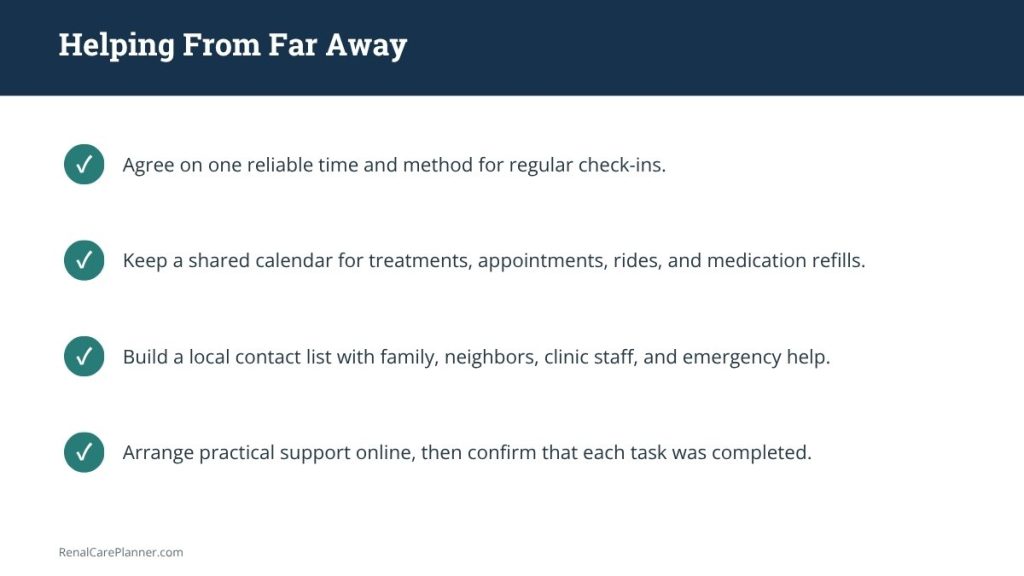
One shared source of truth
Keep contacts and medications in one place that you and the local team can all see.
Where to go next
- Keep it all in one place: The 90-Day Dialysis Planner
- Caregiver basics: What Caregivers Should Know
- Emergencies: Dialysis Emergency Plan
- Your own stress: Caregiver Burnout
The main thing to remember
Distance changes how you help, not whether you can. Get permission to be informed, build a local team, take on the remote tasks, and use visits to see the full picture.
Sources
General education only. This article offers general information and is not legal or medical advice. Talk with the care team and, for legal documents, a qualified professional.