

Many women on dialysis are told pregnancy is impossible. That isn’t quite right. Fertility is usually lower with kidney failure, and pregnancy on dialysis is high-risk, but it does happen, and outcomes have improved a lot as care teams have learned more. Whether you’re hoping to have a baby, trying to avoid pregnancy, or just found out you’re pregnant, here’s what to know and what to ask.
Quick answer
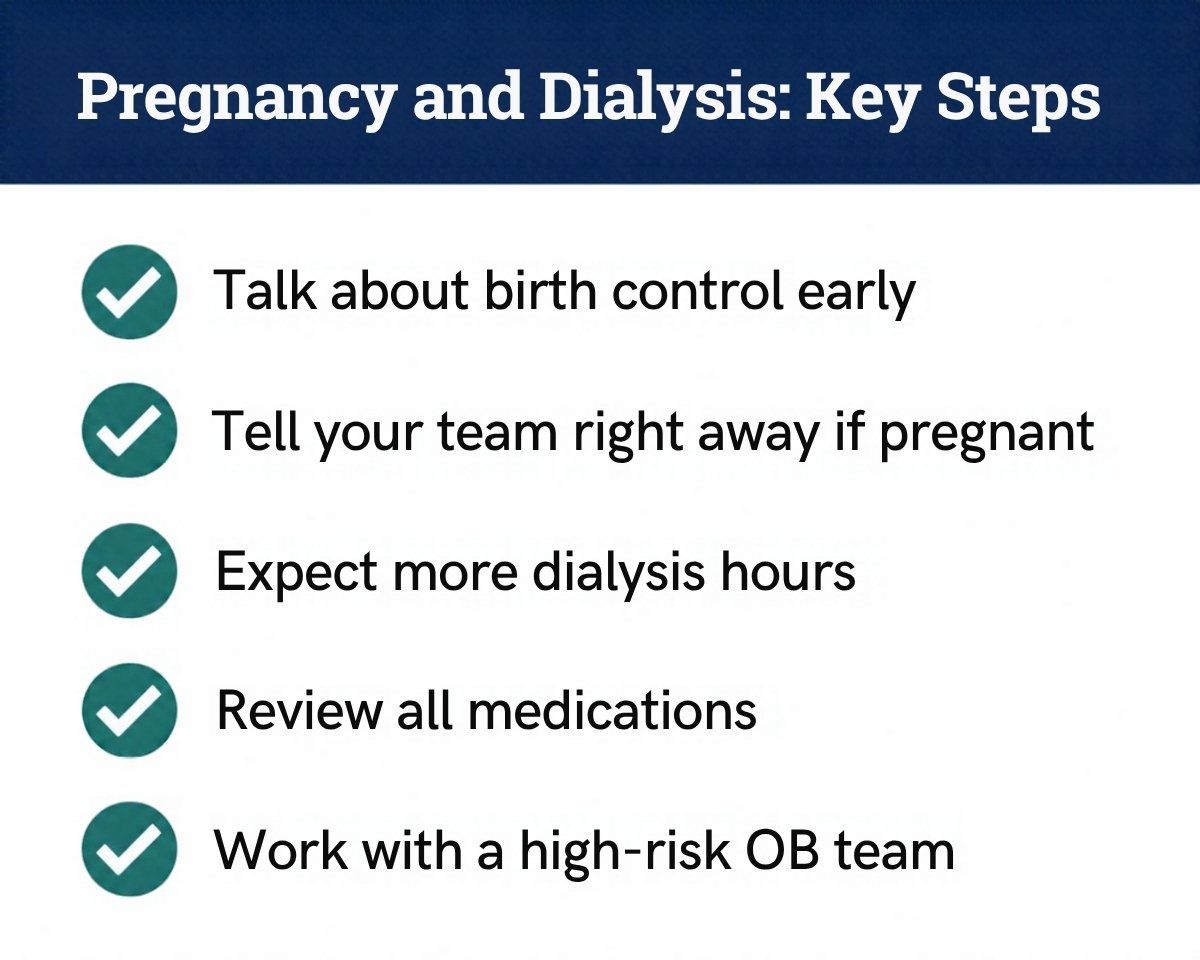
Pregnancy on hemodialysis is possible but carries real risks for both mother and baby, including preterm birth and high blood pressure problems. Research shows much better outcomes with more dialysis hours each week. If you could become pregnant, talk with your nephrologist about birth control or pregnancy plans now. If you think you’re pregnant, tell your dialysis team right away, because several common dialysis medications need to be reviewed and treatment usually changes quickly.
Is pregnancy possible on dialysis?
Yes, though it’s less common. Kidney failure affects hormones and periods, so many women have irregular cycles or none at all. That doesn’t mean you can’t get pregnant. Some women do conceive on dialysis, sometimes unexpectedly. That’s why birth control is worth discussing even if you assume pregnancy can’t happen.
What the research shows
A 2014 study in the Journal of the American Society of Nephrology compared pregnancies in Toronto, where women received intensive dialysis, with pregnancies in a U.S. registry. The live birth rate was about 85% for women getting more than 36 hours of dialysis a week, compared with about 48% for those getting 20 hours or less. More dialysis hours were also linked to longer pregnancies and larger babies.
Even with intensive treatment, risks remain higher than usual, including preterm birth, low birth weight, preeclampsia, and blood pressure problems. A high-risk pregnancy team and the dialysis team need to work together closely.
How care usually changes
- More dialysis. Often five or six sessions a week, with longer total hours.
- Medication review. Some blood pressure medicines and other common drugs are not safe in pregnancy and may need to be switched.
- Anemia treatment. Iron and anemia medication needs often go up.
- Diet changes. More dialysis often means fewer restrictions and more protein. Your dietitian will adjust your plan.
- Close monitoring. Frequent ultrasounds, blood pressure checks, and labs, and careful fluid and weight targets as the baby grows.
If this sounds familiar
Your periods stopped months ago, so you stopped thinking about birth control. Now you’re feeling different and wondering. Take a home test or ask the clinic for one, and tell your nurse or nephrologist the same day. Early notice gives your team time to review medications and adjust your treatment.
Planning or preventing pregnancy
If you want a baby, talk with your nephrologist before trying. Some women choose to wait for a kidney transplant, since pregnancy after a successful transplant generally has better outcomes, though there’s usually a waiting period after transplant and medications must be planned. If you don’t want to become pregnant, ask which birth control options are safe with your health and medications.
Questions to ask your care team
- Could I get pregnant on dialysis? What birth control is safe for me?
- If I want a baby, should I plan before or after a transplant?
- Which of my current medications aren’t safe in pregnancy?
- How many hours of dialysis would I need, and can this clinic provide that?
- Which high-risk obstetric team works with this clinic?
Keep your medications and questions in one place
A current medication list makes the safety review faster for both your dialysis and pregnancy teams.
Where to go next
- Keep it all in one place: The 90-Day Dialysis Planner
- Parenting: Parenting While on Dialysis
- Transplant: Life on the Transplant Waiting List
- Labs: Dialysis Lab Terms Explained
The main thing to remember
Pregnancy on dialysis is possible but high-risk. Talk about birth control or pregnancy plans early, and tell your team right away if you think you might be pregnant. More dialysis and close teamwork between specialists make a real difference.
Sources
- Hladunewich et al., Intensive Hemodialysis Associates with Improved Pregnancy Outcomes, JASN 2014
- National Kidney Foundation: Pregnancy and Kidney Disease
- UK Renal Association: Clinical Practice Guideline on Pregnancy and Renal Disease (2019)
General education only. This article offers general information and is not medical advice. Pregnancy on dialysis requires individual care from your nephrologist and a high-risk obstetric team. Do not stop or change any medication without talking to your care team.