

In-center dialysis is one of the few places where you spend about 12 hours a week sitting a few feet away from the same people, often for years. Some chair neighbors become real friends. Others play videos without headphones or talk on speakerphone for an hour. A little shared courtesy makes the treatment floor easier for everyone, including you, the staff, and the person next to you who’s having a hard day.
Quick answer
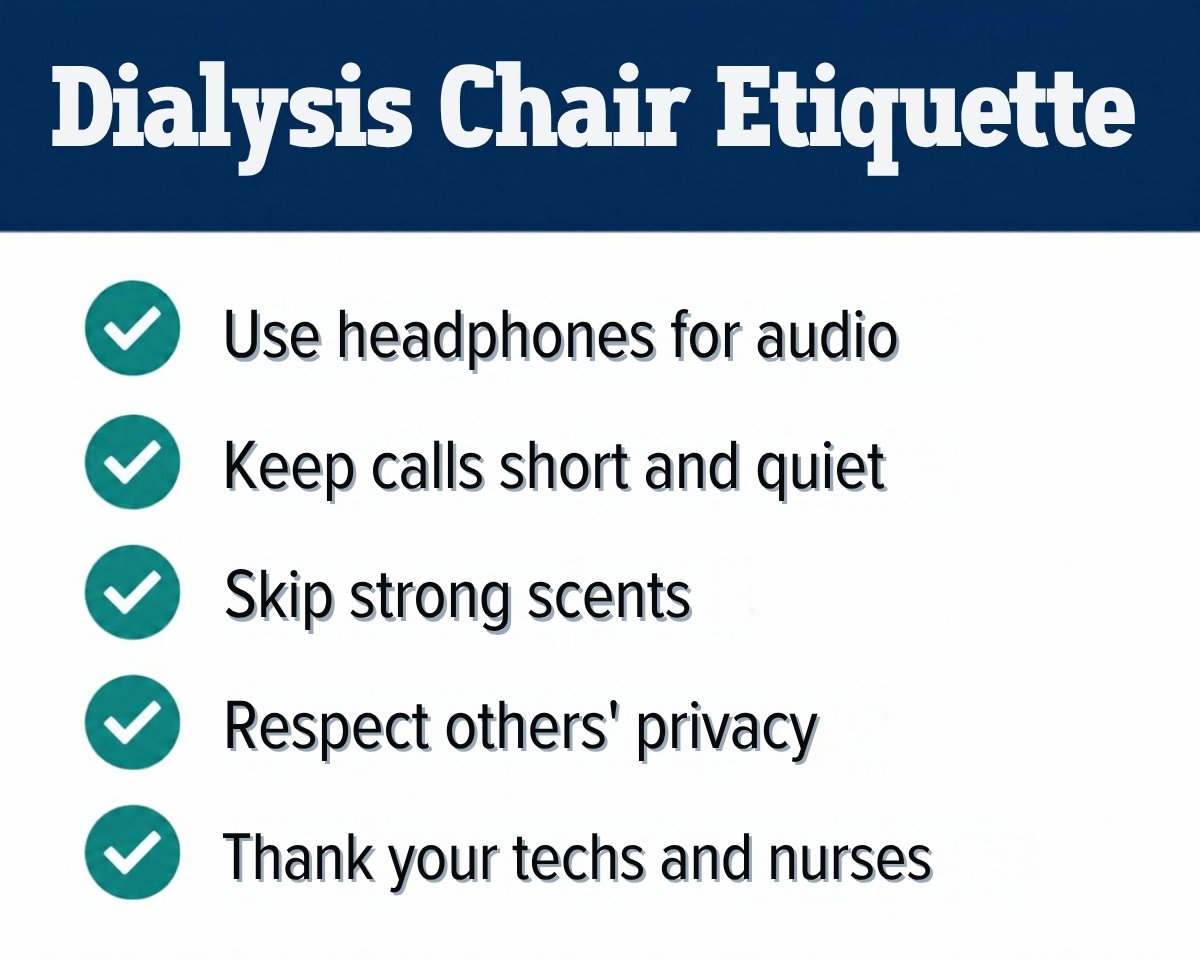
Use headphones for anything with sound, keep phone calls short and quiet, and follow your clinic’s rules on food, phones, and visitors. Respect other patients’ privacy. You’ll often overhear things, and they’re not yours to share. Be friendly, but let people rest if they want to. If a neighbor’s habits are a problem, try a kind, direct request first, then ask staff for help or a chair change if needed.
Sound and screens
- Headphones for everything with audio: videos, music, games, TV if the clinic allows
- Check your volume. If your neighbor can hear your headphones, it’s too loud for your ears and theirs.
- Consider screen content. Graphic or loud content is visible to people around you.
- Noise-cancelling headphones also help you tune out alarms and conversations. See What to Bring to Dialysis.
Phone calls
- Follow your clinic’s phone policy
- Keep calls short, and never use speakerphone
- You can’t step away mid-treatment, so save personal or heated conversations for later
- Silence your ringer when you arrive
Conversation and rest
Chair friendships can be one of the best parts of in-center dialysis. Many patients find comfort in talking with people who understand. At the same time, some people want to sleep, read, or just get through a rough session. Read the signals: closed eyes, headphones, or short answers usually mean “not today.” Try again next time.
Privacy
On an open treatment floor, you will overhear weights, lab results, and conversations with staff. Treat what you hear as private. Don’t repeat it, and don’t comment on someone’s numbers. If you want privacy for your own conversation with the doctor, nurse, or social worker, you can ask to talk somewhere more private.
Working with staff
- Keep your access visible and uncovered so staff can check it
- Pause your call or show when staff need to talk to you or check the machine
- Tell staff right away if you feel unwell. Don’t wait to be polite.
- If an alarm sounds on your machine, let staff handle it. Don’t press buttons.
If this sounds familiar
Your neighbor watches videos at full volume without headphones every session. You’ve been stewing about it for weeks. Try a friendly, direct ask: “Hey, I’m trying to rest. Would you mind using headphones?” Many people simply don’t realize. If it keeps happening, ask the charge nurse for help or a different chair. You don’t have to just endure it.
When a neighbor’s habits get to you
- Ask kindly and directly first
- Use your own tools: headphones, an eye mask, a blanket
- Ask staff to help, especially with clinic rules like phone or headphone policies
- Ask for a chair change if it’s ongoing
- If it’s a safety or harassment issue, tell staff right away. See How to Raise a Problem at Your Dialysis Clinic.
Pack for a better session
Headphones, a blanket, and a charged device go a long way. Use the night-before checklist so nothing gets left behind.
Where to go next
- Pack for a calmer chair: Treatment-Day Packing Checklist
- Keep it all in one place: The 90-Day Dialysis Planner
- What to bring: What to Bring to Dialysis
- Making the time useful: Studying During Dialysis
- Machine alarms: Why Does the Dialysis Machine Alarm?
- Raising a bigger concern: How to Raise a Problem at Your Dialysis Clinic
The main thing to remember
Everyone on the treatment floor is there for the same reason, and most are trying to get through the session as comfortably as they can. Headphones, quiet calls, respect for privacy, and a kind word go a long way. When something bothers you, ask nicely first, then ask staff.
Sources
General education only. Clinic rules on phones, food, visitors, and devices vary. Follow your clinic’s policies and staff instructions. Tell staff right away if you feel unwell during treatment.