

If you’ve never asked for disability accommodations before, the process can feel intimidating, especially if you’re used to handling things on your own. In college, though, asking is how you protect your grades when three dialysis treatments a week cut into your schedule. This guide walks you through it, step by step, with a script you can use.
Quick answer
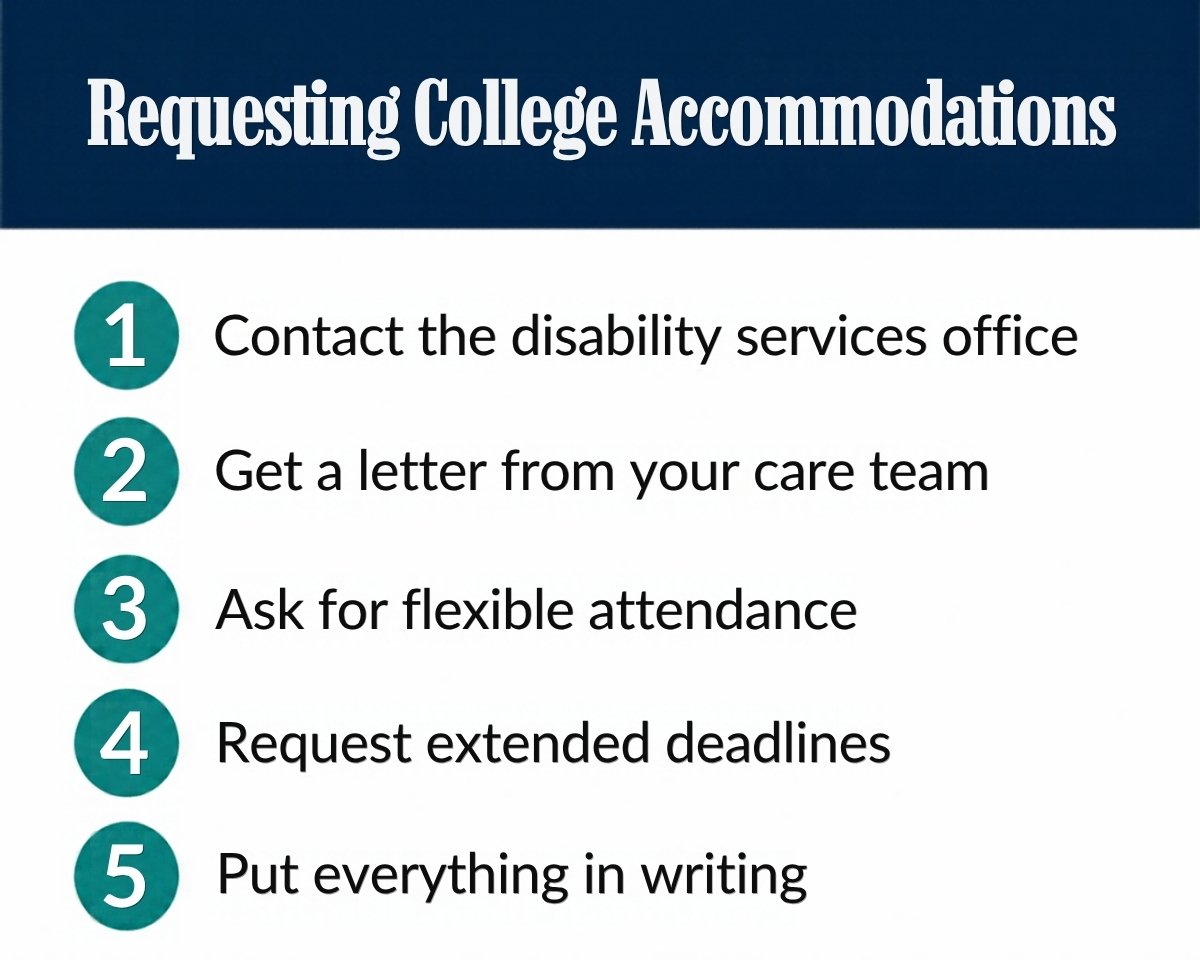
Contact your school’s disability services office as early as you can, ideally before the term starts. Bring a letter from your nephrologist or care team describing your dialysis schedule and how it affects your schoolwork. Explain what you need in plain terms, such as attendance flexibility and a way to make up missed work or exams. Once accommodations are approved, the office usually sends a letter to your professors, and you follow up with each one. If something isn’t working, go back to disability services first.
Before you contact the school
A few basics about how college accommodations work, based on the U.S. Department of Education’s guide for students with disabilities and St. Jude’s college guide:
- You start the process. Colleges don’t come looking for you. You have to contact disability services and ask.
- Documentation is required. Schools usually ask for information from a qualified professional about your condition and how it affects your schoolwork.
- High school plans don’t transfer. An IEP or 504 plan may help as documentation, but it isn’t automatically followed in college.
- Accommodations provide access, not easier standards. They help you meet the same academic requirements, for example by moving an exam, not by changing what’s on it.
What the letter from your care team should cover
Ask your nephrologist’s office or dialysis social worker for a letter. It does not need to list your full medical history. It should cover:
- That you receive in-center hemodialysis for kidney failure, an ongoing condition
- Your treatment schedule, such as three times a week and the usual times
- How it affects school: missed class time, fatigue after treatment, occasional unplanned absences for illness or access problems
- Recommended accommodations, if the care team is comfortable suggesting them
Ask your school whether it has its own form for the provider to fill out. Many do.
What to say to disability services
“Hi, I’m starting classes this fall, and I’d like to register for accommodations. I’m on dialysis for kidney failure, three afternoons a week, Monday, Wednesday, and Friday. Treatment takes about four hours, and I’m often worn out afterward. I’d like to talk about attendance flexibility, a plan for making up work or exams I miss for treatment, and priority registration so I can build a schedule around my chair time. I have a letter from my nephrologist. What else do you need from me?”
That’s it. You don’t have to know the official names of accommodations. Describe the problem and what would help, and let the office help you shape the request.
Accommodation request checklist
- ☐ Find your school’s disability services office and its intake process
- ☐ Ask whether it uses its own provider documentation form
- ☐ Request a letter or completed form from your nephrologist or care team
- ☐ Write down your treatment schedule and typical recovery time
- ☐ List the accommodations you want to discuss
- ☐ Submit the intake form and documentation
- ☐ Attend the intake meeting
- ☐ Get your approved accommodation letter
- ☐ Send or deliver the letter to each professor and follow up
- ☐ Save copies of everything, including emails
- ☐ Renew each term if your school requires it
If this sounds familiar
You don’t like asking for special treatment, and you’d rather just push through. That’s understandable. But accommodations aren’t about getting an easier ride. They make sure a medical schedule you didn’t choose doesn’t decide your grades. Registering costs you an afternoon. Not registering could cost you a semester.
Talking to professors
Once accommodations are approved, a short conversation or email with each professor early in the term goes a long way:
“Hi Professor Lee, I’m in your Tuesday-Thursday section. Disability services has sent my accommodation letter. I have a regular medical treatment on Wednesdays that sometimes leaves me tired on Thursdays. If I need to use the make-up exam option, I’ll let you know at least a week ahead. Thanks for working with me.”
You don’t have to mention dialysis or kidney failure unless you want to.
If accommodations aren’t working
- Talk to the professor if it’s a misunderstanding.
- Go back to disability services if a professor isn’t following your approved accommodations, or if your needs have changed.
- Use the school’s grievance process if the problem isn’t resolved.
- Know there are outside options. The U.S. Department of Education’s Office for Civil Rights handles disability discrimination complaints involving schools.
Ask disability services about options like an incomplete grade or a medical withdrawal if a hospitalization or major change knocks you off track mid-term.
Get the letter you need from your care team
Write down your request for a school letter with your other questions so you remember to ask at your next treatment.
Questions for My Dialysis Team →
My Dialysis Care Team & Contacts →
Want it all in one place? The 90-Day Dialysis Planner keeps treatment notes, patterns, and questions together for three months.
Where to go next
- The bigger picture: Going to College While on Hemodialysis
- Using chair time well: Studying During Dialysis
- A later chair time: Evening and Nocturnal Dialysis Shifts
- Help from your clinic: What Does a Dialysis Social Worker Do?
The main thing to remember
In college, accommodations start with you. Get a clear letter from your care team, describe the problem in plain words, and register early. Then follow up with each professor and keep copies. If something isn’t working, go back to disability services right away.
Sources
- U.S. Department of Education, Office for Civil Rights: Students With Disabilities Preparing for Postsecondary Education (copy hosted by UC Merced)
- St. Jude Together: College Classroom Accommodations
- NephCure: Get College Ready
General education only. This guide offers general information about requesting college accommodations. Processes vary by school. Renal Care Planner does not provide legal or educational advice. Work with your school’s disability services office, and contact the Office for Civil Rights or an attorney if you believe your rights are being violated.