

Being a teenager is already a lot. Being a teenager on dialysis means doing all the normal stuff, like school, friends, sports, and figuring out who you are, while also spending hours a week in a treatment chair and watching what you eat and drink. It’s okay if that feels unfair sometimes. This guide is written for teens, with notes for parents, and focuses on the parts of life that matter most at your age.
Quick answer
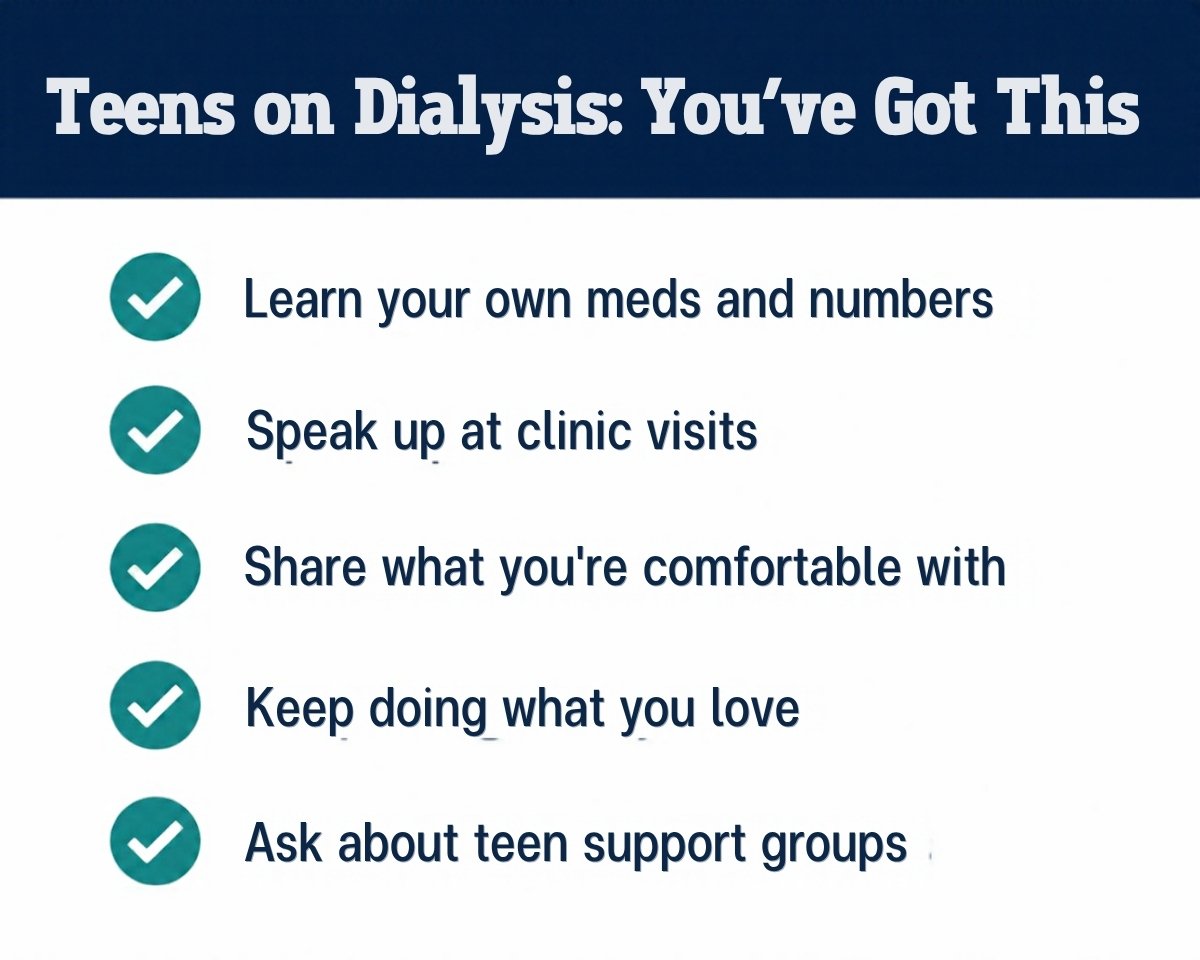
You get to decide who knows about your dialysis and how much they know. Most activities are still possible with planning. Ask your care team what’s safe for your access before sports, swimming, or anything rough. Parties and events can work if you plan ahead for food and drinks. Taking over more of your own care, a little at a time, builds independence for adulthood. If you’re feeling down, angry, or alone for a while, tell someone on your care team. You don’t have to handle it alone.
Telling friends (or not)
It’s your information. Some teens tell everyone, some tell a few close friends, and some keep it private. A few things that can help:
- Have a short version ready. “My kidneys don’t work, so I go to a machine three times a week that does their job.” That’s often enough.
- Tell one trusted friend first. It’s easier with someone on your side.
- Explain the access arm if you have a fistula or graft, so friends know not to grab or squeeze it.
- Expect some awkward questions. Most come from curiosity, not judgment.
Sports and activities
Staying active is good for you, but your access needs protection. Before joining a team or trying something new, ask your care team:
- Which sports are okay for my type of access?
- Do I need padding or a guard over my fistula or graft?
- Can I swim? With a catheter, swimming is usually not allowed. See Can You Swim With a Dialysis Access?
- How should I handle fluid during practice or games?
Non-contact activities, like walking, biking, dance, or strength training with care, are often easier to fit. Your team can help you find what works.
Parties, prom and school events
- Check the schedule. If an event falls on a treatment day, ask your clinic about shifting your time well in advance.
- Plan food and drinks. Eat a kidney-friendly meal before you go, and decide ahead how much you’ll drink. A small cup or ice chips can help you stay within your fluid limit.
- Dress for your access. Many formal outfits can be adjusted so your access isn’t squeezed.
- Bring a friend who knows. It’s easier when someone has your back.
For fluid tips, see How to Manage Fluid Restriction on Dialysis.
School
Missing school for treatment is normal, and schools can plan for it with a health plan and a 504 plan or IEP. Your parent can find more in My Child Is on Dialysis: Working With the School. If you’re thinking about college, NephCure suggests using senior year to plan accommodations and check how close a campus is to kidney care. See Going to College While on Hemodialysis.
Taking over your own care
At some point you’ll move from pediatric care to an adult clinic, and adult clinics expect you to speak for yourself. Start practicing now:
- Learn the names of your medications and what they’re for
- Ask your own questions at treatment, before your parent jumps in
- Keep track of your own appointments
- Learn what your labs mean. See Dialysis Lab Terms Explained.
- Ask your care team when and how the move to adult care will happen
If this sounds familiar
Everyone’s going to the beach this weekend, and you can’t swim with your catheter, and you’re tired of being the one who can’t. That frustration is real. You could still go, hang out on the sand, and be part of the day, or plan something else with a couple of friends. And if feeling left out is happening a lot, tell someone on your care team. It matters.
When it all feels unfair
Feeling angry, sad, embarrassed, or tired of all of it is normal sometimes. If those feelings stick around for weeks, or you stop wanting to do things you used to like, talk to someone: your nurse, social worker, a counselor, or a parent. Some hospitals and kidney organizations have teen support groups or camps where you can meet others who get it.
If you ever have thoughts of hurting yourself, call or text 988 right away, or tell a trusted adult. In an emergency, call 911.
Notes for parents
- Hand over control gradually. Let your teen take the lead on small things first.
- Expect some pushback. Testing limits is part of being a teen, including with diet and fluid. Talk with the care team rather than fighting every battle alone.
- Protect normal life. Friends, activities, and fun are part of their health too.
- Watch for depression. Changes in sleep, mood, grades, or interest are worth bringing to the care team.
Practice speaking up
Write down your own questions before treatment. It’s one of the easiest ways to start taking charge of your care.
Questions for My Dialysis Team →
Want it all in one place? The 90-Day Dialysis Planner keeps treatment notes, patterns, and questions together for three months.
Where to go next
- Protecting your access: How to Protect Your Fistula or Graft
- Clothes that work: Dialysis Clothing Guide
- Feeling down: Depression and Dialysis
- School plans: My Child Is on Dialysis: Working With the School
The main thing to remember
Dialysis is part of your life, not all of it. You decide who knows, most activities can work with planning, and every question you ask your care team now makes you more independent later. When it feels like too much, say so. People want to help.
Sources
- NephCure: Get College Ready
- Council for Exceptional Children: Quick Tip Sheet for Supporting Students on Dialysis
- 988 Suicide & Crisis Lifeline
General education only. This guide offers general information for teens on dialysis and their families. Activity limits, fluid plans, and transition to adult care depend on each person and care team. Renal Care Planner does not provide medical or mental health advice. Talk with your care team about your situation. In a crisis, call or text 988, or call 911.