

For some people, starting dialysis is the moment they decide to finally finish a GED, earn a certificate, or train for a different kind of work, maybe one that’s easier on the body or more flexible around treatment. It can feel like a strange time to go back to school. But self-paced and online programs, plus state programs that help people with disabilities get trained for work, make it more realistic than many people expect.
Quick answer
Look for programs you can do on your own schedule, such as online GED prep, adult school, or community college certificates with online or evening sections. Use dialysis chair time for reading and review. Ask your dialysis social worker for a referral to your state’s vocational rehabilitation (VR) agency, which helps people with disabilities prepare for work. In California, that’s the Department of Rehabilitation (DOR). According to Disability Rights California, people who receive SSI or SSDI are presumed eligible for VR services.
Why now can make sense
- If dialysis has made a physical job harder, training can open a door to less physical work.
- Chair time gives you a predictable block for reading and review.
- Finishing a GED or certificate can rebuild confidence at a time when a lot feels out of your control.
Choosing a program that fits dialysis
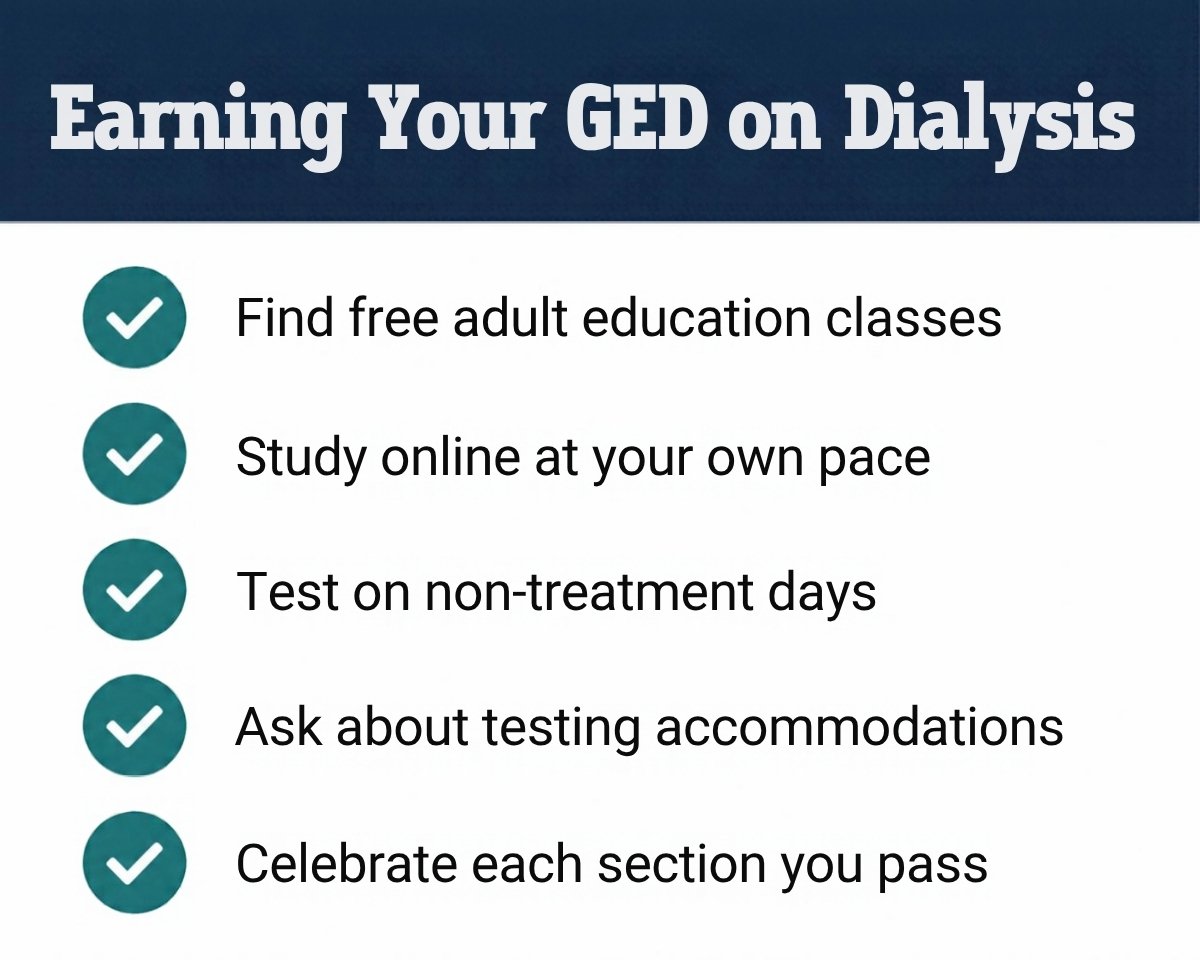
- Self-paced and online options let you study when you feel best.
- Adult schools and community colleges often offer evening classes and short certificates.
- Check the testing and lab schedules. In-person exams or hands-on labs need to fit your non-treatment days.
- Ask about disability accommodations before you enroll. See How to Ask Your College for Dialysis Accommodations.
- Start small. One class or one GED subject at a time is still progress.
Vocational rehabilitation: help with training and costs
Every state has a vocational rehabilitation agency that helps people with disabilities prepare for, find, and keep work. In California, it’s the Department of Rehabilitation. According to Disability Rights California:
- People who receive SSI or SSDI are presumed eligible for VR services.
- You can apply online, by mail, by phone, or in person at a local office.
- The department generally must decide eligibility within 60 days.
- If you have trouble with the process, the Client Assistance Program at Disability Rights California can help (1-800-776-5746).
Depending on your plan, VR may be able to help with things like training, education costs, or job placement. Ask your VR counselor what applies to you. The American Kidney Fund also recommends talking with your dialysis social worker about vocational rehabilitation.
If this sounds familiar
You left high school early, worked construction for 20 years, and dialysis has made the job too hard. You’re not sure what’s next, and school feels like a long shot. A VR counselor’s job is to help people in exactly this spot figure out a realistic path, from a GED to a certificate to a new job. Ask your social worker for a referral this week.
Studying around treatment
- Download lessons and practice tests before treatment
- Use chair time for reading, videos, and flashcards. Save practice tests for off days.
- Study in short sessions when you’re fresher
- See Studying During Dialysis for setup tips
Thinking about the next job
When picking a certificate, think about work that fits life on dialysis: flexible or remote options, schedules that can work around treatment, and physical demands you can manage. Your VR counselor can help with this. If you receive disability benefits, ask about Social Security work incentive programs before you start a new job, so you understand how earnings affect your benefits. See Working vs. Disability When You Start Dialysis.
Questions to ask
- Social worker: Can you refer me to vocational rehabilitation?
- VR counselor: What training or education could you help with, given my goals?
- School or program: Do you offer online or self-paced options, and how do accommodations work?
- Care team: Are there physical limits I should consider when choosing a new type of work?
Write down your goal and your questions
Bring a short list to your social worker so the referral conversation is quick and specific.
Questions for My Dialysis Team →
Want it all in one place? The 90-Day Dialysis Planner keeps treatment notes, patterns, and questions together for three months.
Where to go next
- College instead: Going to College While on Hemodialysis
- Using chair time: Studying During Dialysis
- Work and benefits: Working vs. Disability When You Start Dialysis
- Getting help: What Does a Dialysis Social Worker Do?
The main thing to remember
Dialysis doesn’t close the door on learning. Choose a flexible program, use chair time for review, and let vocational rehabilitation help with the path and the costs. One subject or one class at a time still gets you there.
Sources
- Disability Rights California: Eligibility for Vocational Rehabilitation Services
- Disability Rights California: Educational and Training Services Through the Department of Rehabilitation
- American Kidney Fund: Returning to Work
General education only. This guide offers general information about education and vocational rehabilitation as of October 2026. Program availability and eligibility vary by state. Renal Care Planner does not provide legal, educational, or benefits advice. Contact your state vocational rehabilitation agency and your dialysis social worker about your situation.