

When you’re a parent on dialysis, treatment days don’t just affect you. Someone has to get the kids to school, pick them up, and feed them dinner while you’re in the chair or recovering afterward. And your kids are noticing everything: the bandages, the tired afternoons, the days you’re not around. A plan for childcare and a few honest conversations can make the whole family’s week feel steadier.
Quick answer
Set up a dependable treatment-day childcare plan with a backup for each day. Talk to your kids honestly in words that fit their age, and keep answers short and matched to what they ask. The National Kidney Foundation encourages open communication and reassuring children that a parent’s tiredness or irritability isn’t their fault. Teach kids how to be careful around your access arm. Plan low-energy family activities for treatment days, and ask your social worker for help with childcare resources or if your kids are struggling.
Setting up treatment-day childcare
- Map your treatment days against school times. Note who handles drop-off, pick-up, and dinner each day.
- Name a backup for every day. Treatments run late, and rides fall through.
- Use school options: before- and after-school programs, carpools, and trusted parents of classmates.
- Think about the evening after treatment, not just the treatment hours. Many people are tired for several hours afterward.
- Ask about chair time. A different shift may line up better with school hours. See Changing Your Dialysis Chair Time.
Talking to your kids
The National Kidney Foundation notes that some children ask lots of questions while others stay quiet because they’re afraid of the answers, so you may need to start the conversation. Its tips include:
- Be honest, and keep answers short and matched to the question
- Don’t give more detail than they ask for
- Reassure them that your tiredness or grumpiness isn’t their fault and doesn’t mean you love them less
- Let them know they can still play, be loud, and ask for things
What to say, by age
- Young children: “My kidneys clean my blood, but they stopped working well. So three times a week a machine at the clinic cleans it for me. It makes me tired, but it helps me stay healthy.”
- School-age children: Add a little more about how often you go, why you have a bandage, and that kidney disease isn’t contagious.
- Teens: They may want real details, including about transplant or the future. Answer honestly and invite their questions.
If a child asks whether you’re going to die, NKF suggests an honest, calm answer: that you’re doing treatment so you can stay as healthy as possible. You can also say that’s a good question to ask your doctor together.
Kids and your access
- Show them which arm has the fistula or graft and explain it’s “special”
- Teach them not to lean on, squeeze, or hang on that arm
- Avoid rough play on that side
- If you have a catheter, explain it must stay clean and dry and should never be pulled
See How to Protect Your Fistula or Graft.
If this sounds familiar
Your 7-year-old has started asking to come with you to dialysis and gets upset when you leave. That’s usually worry about what happens when you’re gone. Ask your clinic whether a short visit is possible. NKF notes many units allow family visits. Seeing the chair and meeting the nurse can make it less scary.
Keeping family routines going
- Plan low-energy treatment-day activities: movies, puzzles, board games, reading together
- Share the household jobs in age-appropriate ways, so everyone helps
- Protect the big moments. Plan around treatment for recitals, games, and birthdays.
- Keep one-on-one time with each child, even if it’s short
If your child is struggling
Changes in sleep, school performance, behavior, or mood can be signs a child is having a hard time. Talk to their pediatrician or school counselor, and ask your dialysis social worker for resources. NKF recommends the social worker as a source of help with children’s questions and coping.
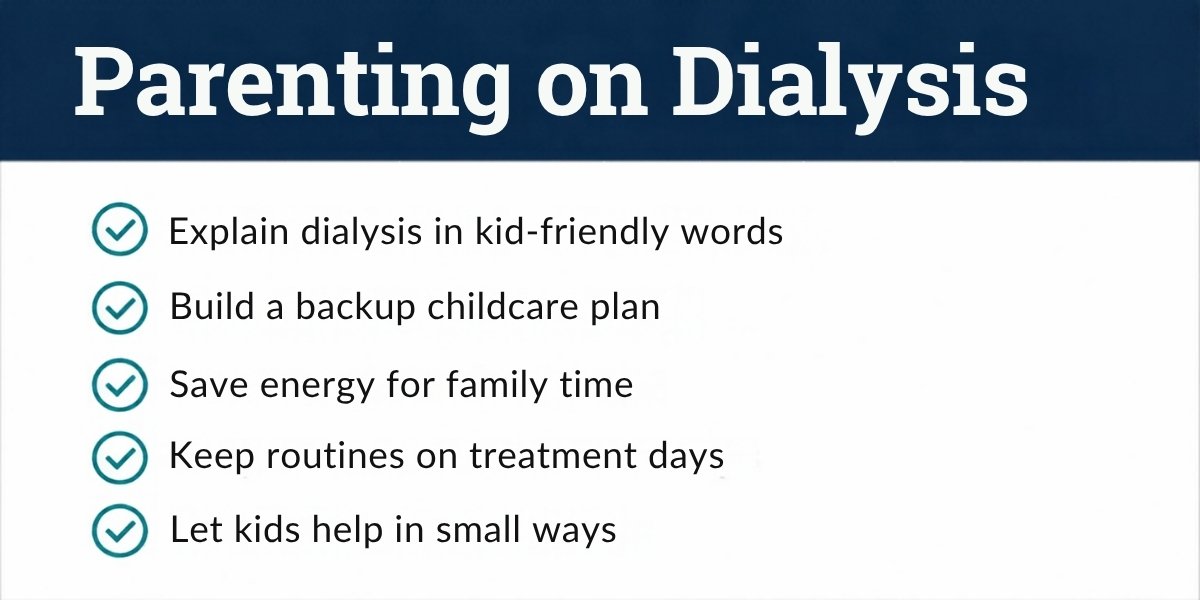
Share the schedule with your helpers
A shared contact sheet with your clinic, treatment times, school, and backups makes it easy for anyone to step in.
Where to go next
- Keep it all in one place: The 90-Day Dialysis Planner
- The first months: Adjusting to Dialysis: The First 90 Days
- Your partner’s side: When Your Partner Starts Dialysis
- Getting help: What Does a Dialysis Social Worker Do?
- Feeling down: Depression and Dialysis
The main thing to remember
Kids handle hard things better with honesty, routine, and reassurance. Build a dependable treatment-day childcare plan with backups, explain dialysis in words that fit their age, and keep the fun parts of family life going. You’re still their parent on treatment days, too.
Sources
- National Kidney Foundation: Helping Children Adjust When a Parent Has Kidney Failure
- DaVita: Talking to Children About Kidney Disease
- NIDDK: Hemodialysis
General education only. This guide offers general information for parents on dialysis. Every family is different. Renal Care Planner does not provide medical or mental health advice. Talk with your care team, your child’s pediatrician, or a counselor about your family’s needs.