

There is a lot of waiting built into dialysis. The most useful treatment-day tech is not necessarily the newest technology. It is the technology that works well while you are in the chair, one arm may need to stay relatively still, and staff still need clear access to your treatment setup.
Affiliate disclosure: This page contains affiliate links. If you purchase through one of these links, Renal Care Planner may earn a commission at no additional cost to you. As an Amazon Associate I earn from qualifying purchases.
Quick answer
For many people, a phone, headphones, and a small power bank are enough. If you prefer a tablet or e-reader, add only what makes it easier to use without getting in the way of your bloodlines, access, or staff.
Why tech can help during treatment
Conventional in-center hemodialysis commonly lasts around four hours per session. Reading, listening to music, watching a movie, working, or playing a game can make that time feel more manageable. NIDDK provides an overview of in-center treatment.
DaVita also suggests bringing books, earphones, and personal entertainment where the facility allows it. See DaVita’s getting-started suggestions.
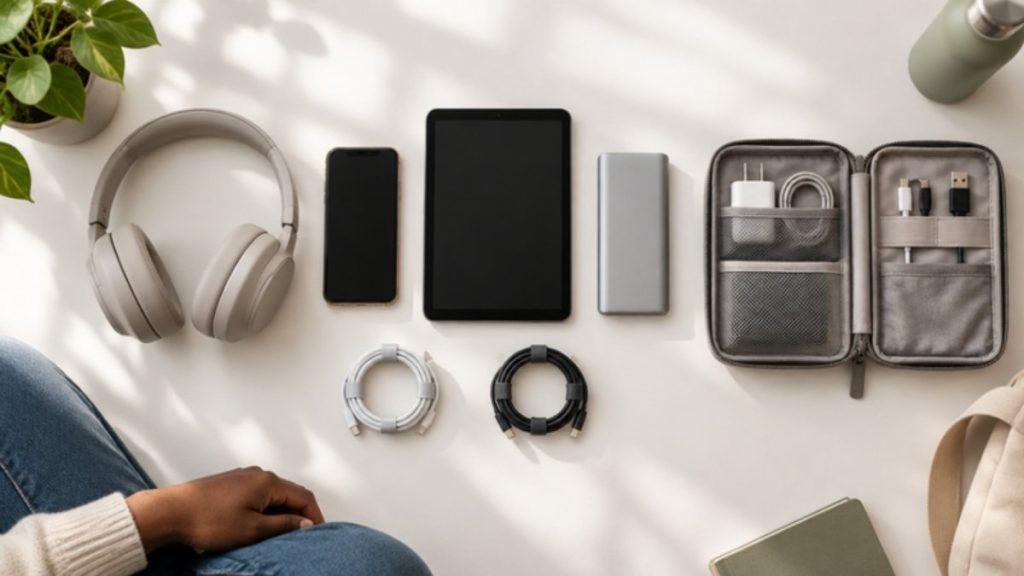
Headphones that work with more than one device
Dialysis centers can be noisy. There may be conversations, television sets, machine alarms, carts, and staff moving through the room. Headphones can make entertainment easier to hear without turning the volume excessively high.
Belkin SoundForm Surround Wireless Over-Ear Headphones
Why we selected them: These support both Bluetooth and a 3.5 mm wired connection. That gives you more flexibility if your personal phone or tablet uses Bluetooth but your treatment-station television has a traditional headphone jack.
RCP practical note: Check your center’s entertainment setup before buying headphones specifically for the clinic. Keep the volume low enough that you can hear staff, or remove one earcup when someone needs to speak with you.
View the Belkin SoundForm Surround on Amazon →
Bring your own backup power
A dead phone halfway through treatment is annoying, but relying on a wall outlet is not always ideal. Facility policies vary, outlets may already be in use, and long charging cables can add clutter around the chair.
Anker 313 Power Bank (PowerCore 10K)
Why we selected it: A compact power bank gives you backup power without assuming an outlet will be available. Its 10,000 mAh capacity is enough to be useful while still fitting easily in a treatment-day bag.
One detail to know: On this model, the USB-C port recharges the power bank itself. Device charging is through the USB-A output, so check that your cable is compatible.
View the Anker 313 Power Bank on Amazon →
Keep cables and adapters together
A small electronics organizer can be more useful than carrying another device. Chargers, earbuds, adapters, a power bank, and spare cables are easier to find when they stay in one pouch instead of the bottom of a tote.
BAGSMART Electronics Organizer Travel Case
Why we selected it: It gives frequently used electronics a dedicated home, which is especially useful when the same treatment-day routine repeats several times each week.
View the BAGSMART Organizer on Amazon →

Keep personal electronics off the dialysis machine
CDC infection-control guidance treats items brought into a dialysis station as potentially contaminated and emphasizes separation of patient belongings from clean clinical areas. Read the CDC infection-control recommendations for hemodialysis settings.
Keep your phone, tablet, bag, and other personal items where your center tells you to put them. Do not use the top of the dialysis machine as a personal shelf.
Download entertainment before treatment
Clinic Wi-Fi can vary. Before leaving home, consider downloading a movie, television episode, audiobook, podcast, playlist, e-book, or offline game.
Avoid cord clutter
Long charging cables can become annoying around the chair, blood-pressure equipment, and staff walking through the station. Use the shortest practical cable and keep it routed away from bloodlines and treatment equipment.
Remember other patients’ privacy
A dialysis clinic is not a private room. Avoid filming, livestreaming, or taking photos that include other patients, staff, computer screens, treatment information, or conversations in the background.
A simple tech setup
You do not need to bring a laptop, tablet, phone, headphones, e-reader, charger, and power bank every treatment. A practical setup might simply be phone + headphones + power bank.
Free tools: Add chargers and headphones to the Treatment-Day Packing Checklist, and keep treatment notes and questions in the 90-Day Dialysis Planner.
Related Renal Care Planner resources
General education only. Renal Care Planner provides general educational information and planning resources. Product suggestions are for general entertainment and organization and do not replace guidance from your dialysis care team or your facility’s policies.