

When people talk about the cost of dialysis, they usually mean the treatment itself. But for many families, the bigger day-to-day squeeze comes from everything around treatment: gas and parking three times a week, a different grocery list, copays and premiums, and the work hours lost to chair time and recovery. Those costs rarely show up on a bill from the clinic, which makes them easy to underestimate. Here is how to see them clearly and where to look for help.
Quick answer
The most common hidden costs of in-center dialysis are transportation, parking, lost income, insurance premiums and copays, food changes, and caregiver time. Start by writing down a real month of these costs. Then ask your dialysis social worker about help, such as Medi-Cal or health plan transportation benefits, American Kidney Fund grants for premiums and uncovered costs, and community programs. Small habits, like batching errands on treatment days, also add up.
The hidden cost list
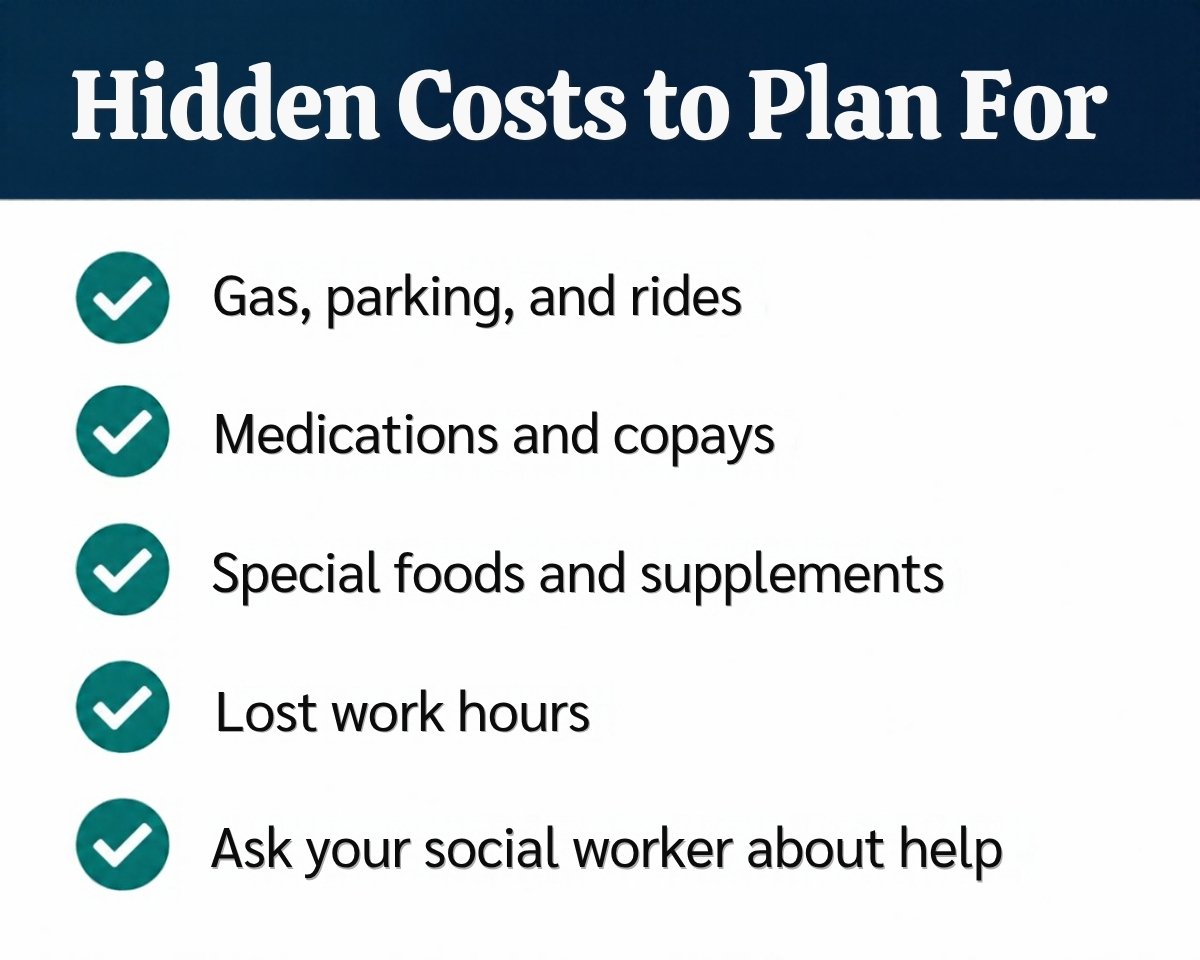
- Getting there: gas, wear on the car, parking fees, rideshares, bus fare
- Time: work hours lost to treatment, travel, and recovery, for you and often a caregiver
- Insurance: premiums, deductibles, copays, and coinsurance for treatment, labs, and medicines
- Medicines: prescriptions and over-the-counter items like skin care for itching
- Food: fresher ingredients, fewer convenience foods, and grocery changes recommended by your dietitian
- Comfort items: blankets, headphones, clothing that makes access easier
- Household help: childcare on treatment days, paid help at home
Step one: track one real month
It’s hard to cut what you can’t see. For one month, write down every dialysis-related expense and every hour of work missed. You’ll often find one or two categories doing most of the damage, usually transportation or lost income. That list is also exactly what your social worker needs to help you find assistance.
Transportation
Three round trips a week is roughly 156 trips a year. Ways to bring that down:
- Check your health plan’s ride benefit. Medi-Cal and many Medicare Advantage plans include transportation to medical appointments.
- Ask about parking. Some clinics validate parking or know of cheaper options nearby.
- Share rides. Patients on the same shift sometimes carpool.
- Batch errands. Do groceries and pharmacy on the way home from treatment.
- Ask about grants. The American Kidney Fund’s Safety Net grants can help with costs like transportation to dialysis.
See also Dialysis Transportation in California.
Premiums and copays
- Understand your Medicare timing. If you have employer coverage, Medicare can act as a second payer during the coordination period and may help with deductibles and coinsurance. See Medicare and Dialysis.
- Ask about premium help. The American Kidney Fund’s Health Insurance Premium Program provides grants toward health insurance premiums for people with kidney failure who can’t afford them.
- Check Medi-Cal and Medicare Savings Programs. Depending on income, these can lower premiums and out-of-pocket costs.
- Ask the pharmacist about lower-cost options for prescriptions.
Food
Eating for dialysis often means cooking more from scratch and buying fewer packaged foods. That doesn’t have to cost more. Cooking in batches, buying store brands, and planning meals around what your dietitian recommends can keep the grocery bill steady. Ask your renal dietitian for budget-friendly ideas, and see What Can You Eat on Hemodialysis? Ask your social worker about food assistance if money is tight.
Lost income
For many working-age patients and caregivers, this is the biggest hidden cost. Options to protect income include:
- A later chair time. See Evening and Nocturnal Dialysis Shifts.
- Job-protected leave or a schedule accommodation. See FMLA and Dialysis.
- California Paid Family Leave for caregivers, or IHSS pay for eligible family caregivers. See IHSS for Dialysis Patients.
- Disability benefits if you can’t keep working. See Working vs. Disability When You Start Dialysis.
If this sounds familiar
Your insurance covers dialysis, but you’re still about $300 behind every month and can’t figure out why. You add it up: $40 a week in gas, $10 a day in parking, two copays, and your daughter missing six hours of work a week to drive you. That’s the hidden cost of dialysis. Bring that exact list to your social worker. Specific numbers make it easier to match you with help.
Where to ask for help
- Your dialysis social worker: the first stop for transportation, grants, benefits, and community resources.
- American Kidney Fund: need-based grants, including help with insurance premiums and uncovered costs. Call 800-638-8299.
- Your health plan: ask about transportation benefits and over-the-counter allowances.
- County programs: Medi-Cal, IHSS, and local food and transportation programs.
Questions to ask your social worker
- Does my insurance include a transportation benefit, and how do I use it?
- Am I a candidate for any American Kidney Fund grants?
- Could I qualify for Medi-Cal, a Medicare Savings Program, or IHSS?
- Are there food or utility assistance programs nearby?
- Can you help me plan for lost work hours?
Bring numbers, not just worries
Write down a month of real costs and your questions before you meet with your social worker. It makes the conversation faster and more useful.
Questions for My Dialysis Team →
Want it all in one place? The 90-Day Dialysis Planner keeps treatment notes, patterns, and questions together for three months.
Where to go next
- Insurance timing: Medicare and Dialysis
- Work decisions: Working vs. Disability When You Start Dialysis
- Getting help: What Does a Dialysis Social Worker Do?
- In-home help in California: IHSS for Dialysis Patients
The main thing to remember
Dialysis costs more than the bill from the clinic. Track one real month, find the one or two categories doing the most damage, and bring those numbers to your social worker. Transportation benefits, grants, benefits programs, and better scheduling can each take a real bite out of the monthly squeeze.
Sources
- American Kidney Fund: Get Financial Assistance
- Medicare.gov: End-Stage Renal Disease (ESRD)
- The Socioeconomic Impact of Transport Costs for Adult Patients Requiring Haemodialysis (2023 study)
General education only. This guide offers general information about costs and assistance programs as of October 2026. Program availability and eligibility vary and can change. Renal Care Planner does not provide financial, insurance, or legal advice. Talk with your dialysis social worker and benefit programs about your situation.