

“I don’t want to do this anymore.” Few things are harder for a family to hear. Your first instinct may be to argue, panic, or change the subject. This guide is for families who want to respond with care: how to listen, how to find out what’s really going on, what options exist, and how to support someone through one of the most personal decisions they’ll ever make.
Quick answer
Listen first, without arguing. Ask what’s making them feel this way. Sometimes the reason, like depression, pain, exhaustion, transportation trouble, or a bad stretch of treatments, can be treated or changed. Involve the nephrologist, social worker, and a palliative care team. People on dialysis have the right to decide to stop, and when that decision is made thoughtfully, care focuses on comfort, often with hospice. If your loved one talks about wanting to end their life in other ways, call or text 988 right away.
Start by listening
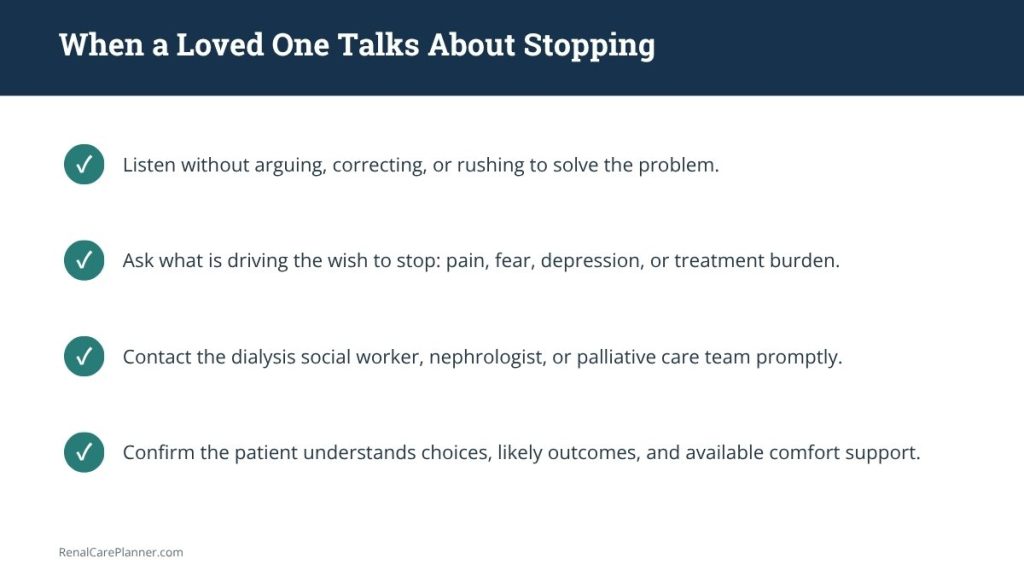
Your loved one may have been thinking about this for a long time before saying it out loud. Arguing or pleading usually shuts the conversation down. Try:
“Thank you for telling me. That must have been hard to say. Can you help me understand what’s been going on and how long you’ve felt this way?”
You don’t need to agree or decide anything in that first conversation. Your job is to understand.
What may be behind it
- Depression. Common on dialysis and treatable. It can make everything feel pointless.
- Physical symptoms. Pain, cramps, itching, nausea, or feeling wiped out after every treatment.
- Burnout. Years of the same routine.
- Practical problems. Rides, money, schedule, or a conflict at the clinic.
- Feeling like a burden. See “I Feel Like a Burden”.
- Declining health overall. Other serious illnesses, frailty, or dementia may mean dialysis is adding more burden than benefit.
Some of these can change. Others can’t. Knowing which is which is the starting point.
Bringing in the care team
Ask for a family meeting with the nephrologist and social worker, with your loved one’s permission. Ask about a palliative care consult. Palliative care focuses on comfort and quality of life and is available at any stage, not just at the end of life. The team can screen for depression, treat symptoms, and help everyone understand what to expect with and without dialysis. See What Does a Dialysis Social Worker Do?
Options between “all” and “nothing”
- Treating depression or symptoms, then revisiting the decision
- Changing the schedule, shift, or type of dialysis
- Setting a time-limited trial with a clear check-in date
- Fixing practical barriers like rides or in-home help
- Adding palliative care alongside dialysis

If this sounds familiar
Your father says he’s done after a month of brutal cramps and two hospital stays. When you ask more, he says he’d keep going “if it didn’t feel like this every time.” That’s important. Share it with his nephrologist. Treating the cramps or adjusting his treatment might change how he feels about continuing.
If they decide to stop
Choosing to stop dialysis is a recognized medical decision that adults with decision-making capacity have the right to make. The National Kidney Foundation notes that, without dialysis, a person with kidney failure usually lives from days to a few weeks, depending on their remaining kidney function and health. Care then focuses on comfort: managing symptoms like shortness of breath, nausea, or restlessness, and time with loved ones.
- Hospice. Ask for a referral early. Hospice provides comfort care at home or in a facility, plus support for the family. Ask how your loved one’s insurance covers hospice and whether any dialysis would continue.
- Advance directives. Make sure wishes are written down, including a POLST form in California, and that a health care agent is named.
- Time together. Many families say the last days held important conversations, visits, and goodbyes.
Family members don’t always agree. A social worker, chaplain, or palliative team can help families talk through disagreements. Ultimately, the decision belongs to the person on dialysis.
Taking care of yourself
You may feel grief, guilt, relief, anger, or all of them at once. That’s normal. Hospice programs offer bereavement support for families, and your own doctor or a counselor can help too. See Caregiver Burnout.
Prepare for the family meeting
Write down your questions in advance so the important ones get asked.
Where to go next
- Keep it all in one place: The 90-Day Dialysis Planner
- Depression: Depression and Dialysis
- Long-term burnout: Long-Term Dialysis
- Is this a pattern? Is This Normal or a Pattern?
The main thing to remember
Listen before you respond. Find out what’s behind the words, because some reasons can be treated. Bring in the care team and palliative care. If your loved one makes a thoughtful decision to stop, the most loving thing families can do is help make the time that remains as comfortable and meaningful as possible.
Sources
- National Kidney Foundation: Dialysis, Deciding to Stop
- National Kidney Foundation: Palliative Care
- Coalition for Compassionate Care of California: POLST
- 988 Suicide & Crisis Lifeline
General education only. This article offers general information and is not medical, legal, or mental health advice. Decisions about stopping dialysis should be made with the care team. If someone is in crisis or talking about harming themselves, call or text 988 or call 911.